
Reviewed · WALKING TOURS
Charming Mostar: Private Mostar Walking Tour
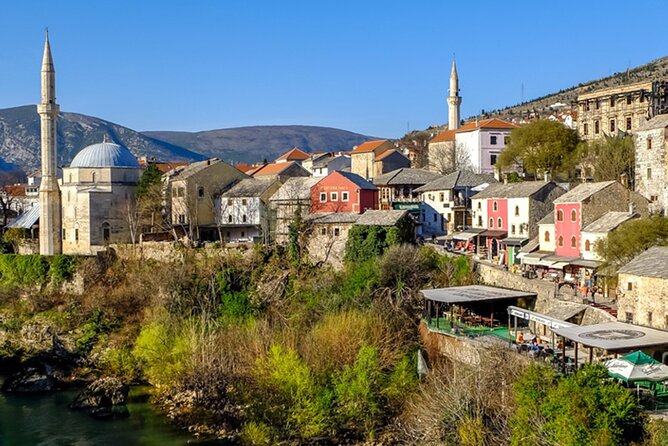
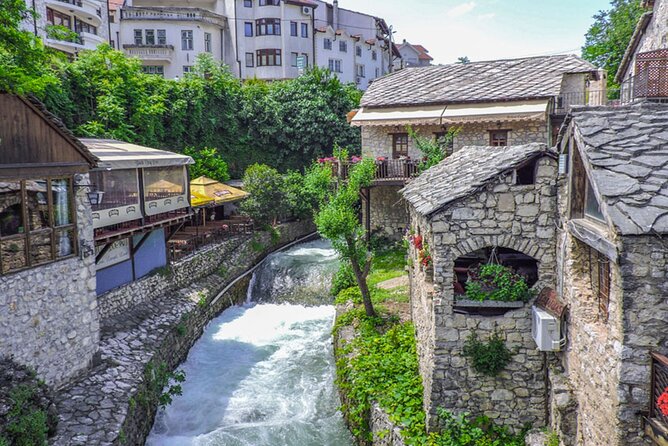
Mostar’s Old Bridge is more than a pretty crossing over the Neretva. It is the city’s main symbol, a place tied to Ottoman-era trade, local courage, wartime destruction, and painstaking rebuilding. This private walking tour uses the bridge and Old Town as a doorway into Bosnia and Herzegovina’s complicated past.
I like the private format, which gives you room to ask direct questions instead of keeping pace with a large crowd. I also like the finish with traditional Bosnian coffee, a small but meaningful custom that shows how daily life here is tied to hospitality.
The main consideration is time. Two hours goes quickly, especially if you want long stops for photographs, shopping, or a full meal. The tour covers a lot, but it works best as an introduction rather than a complete exploration of Mostar.
Key points to know before you book
- The Old Bridge is the tour’s anchor: You’ll learn how it shaped Mostar’s identity and see the best-known views of the city.
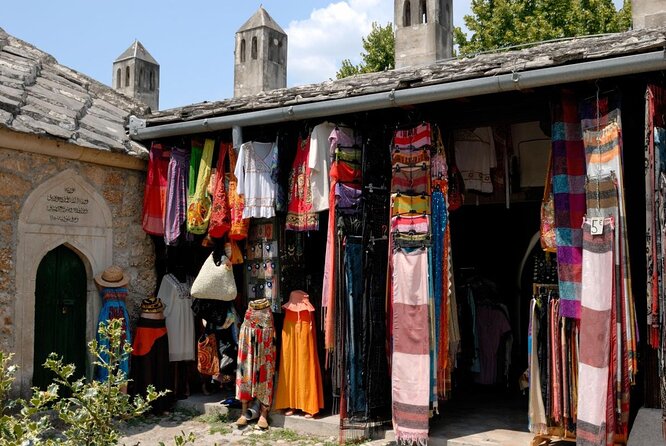
- Kujundžiluk keeps its old bazaar character: The narrow street has retained its look since the mid-16th century.
- You hear personal accounts of the 1990s conflict: Guides such as Adi, Sanja, and Esmer have shared family perspectives that add human detail to the facts.
- The group is private: Only your party takes part, so questions and the pace are yours to manage.
- Bosnian coffee is part of the experience: You’ll learn how the unfiltered coffee is prepared and consumed as a social ritual.
- Hotel transfers are included: Pickup and drop-off in Mostar make this easy to arrange, though you should send your accommodation address if it is not listed.
Starting beside Mostar’s famous Old Bridge
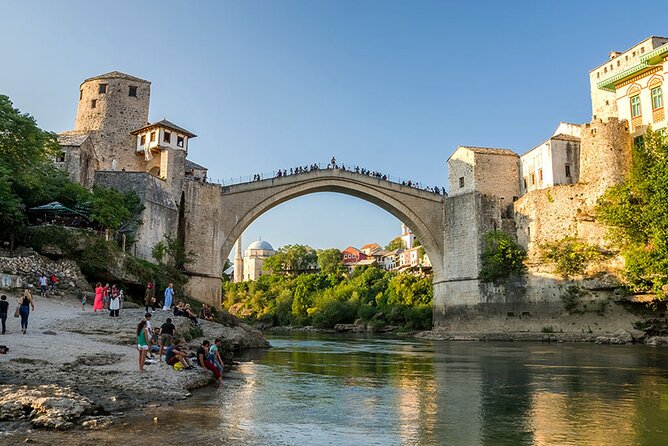
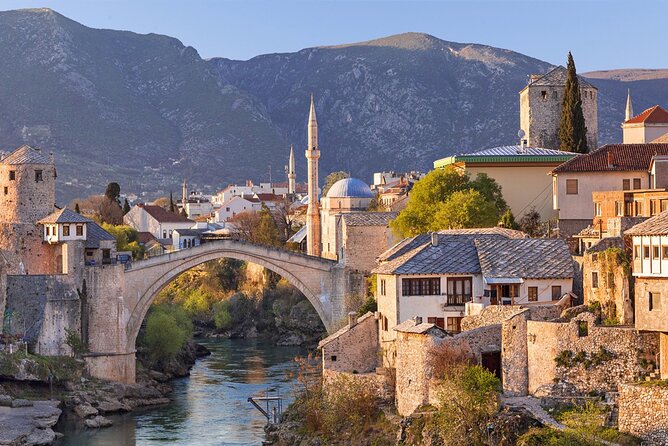
The tour begins in the Old Bridge area, the right place for a first look at Mostar. The bridge links the two sides of the Old Town and gives you an immediate sense of why the city has long been a meeting point for different communities, traditions, and trade routes.
Your guide begins with the broader story of Mostar and Bosnia and Herzegovina. The opening portion lasts about 20 minutes, and it is designed to give you useful bearings before the walk moves into the bazaar. You’ll hear about the city’s past, its cultural traditions, and the events that shaped modern Mostar.
I find this kind of introduction especially useful in Bosnia and Herzegovina, where a monument can carry several layers of meaning. The Old Bridge is beautiful, but the explanation helps you see it as more than a photo stop. It connects architecture with the city’s Ottoman past, its role as a crossing point, and the scars left by the 1990s conflict.
The bridge area also offers some of the tour’s best views. Bring a phone or camera, but do not let photography take over the opening. The guide’s explanation gives context to the details you might otherwise miss, including the relationship between the bridge, the river, and the surrounding Old Town.
The tour has included guides named Amel, Adi, Sanja, Esmer, and Harun. Their strengths differ slightly, but the common thread is a focus on clear storytelling and local perspective. Adi, for example, has spoken about his Muslim and Christian family background, while Sanja has explained her family’s wartime experience and the reconstruction that followed. Esmer has used visual material and personal perspectives to answer questions in detail.
That range matters. Mostar’s recent past is not a tidy story with one easy point of view. A private guide can explain difficult subjects while allowing you to ask about the parts that interest you most.
More walking tours in Mostar:
- Mostar Private Walking Tour
★ 5.0 · 93 reviews - Best of Mostar – Private Walking Tour
★ 5.0 · 21 reviews - Mostar Private Walking Tour – where East meets West
★ 5.0 · 15 reviews
Walking through Kujundžiluk, Mostar’s old bazaar
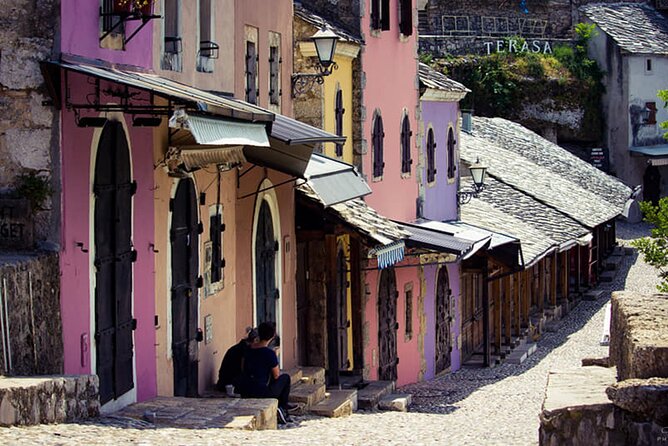
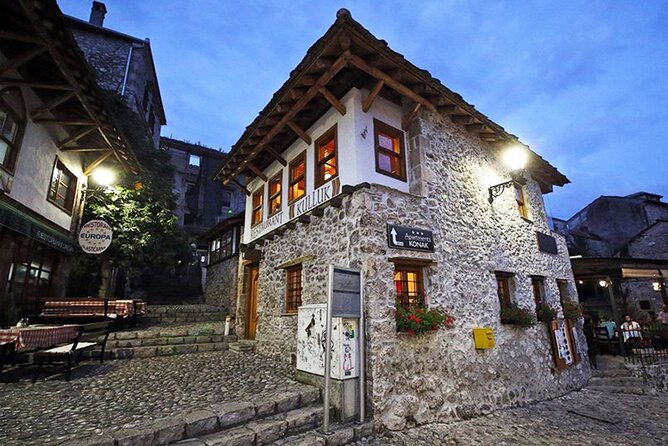
After the opening discussion, the tour spends about 40 minutes in Bazar Kujundžiluk, the oldest part of Mostar. The street forms part of the architectural complex around the Old Bridge and has kept its traditional appearance since the mid-16th century.
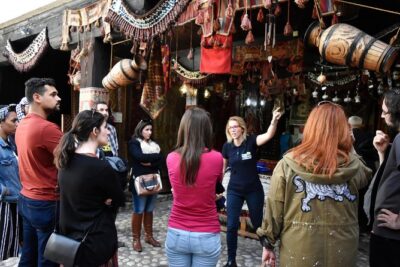
This is where the tour becomes more sensory and street-level. You’ll walk among old-style shops and handcraft displays, with time to notice the materials, patterns, and small details of the bazaar. The tour description places emphasis on cuisine, coffee, monuments, tradition, and craft, so the guide’s role is not limited to naming buildings.
Kujundžiluk is also a good place to understand Mostar’s identity as a city shaped by different faiths. In less than one square kilometer, you can find five mosques, two Orthodox churches, two Jewish synagogues, and one Catholic church. That mix explains why Mostar is sometimes called the European Jerusalem.
The point is not simply to count religious buildings. The value lies in learning how several communities have shared the same urban space, sometimes peacefully and sometimes under severe pressure. The guide can connect the buildings you see with the larger story of Bosnia and Herzegovina.
The bazaar portion also covers Mostar’s long-running bridge-jumping tradition. The famous local test of courage dates back more than 450 years. It is an important part of the city’s identity, but the tradition should be understood as a serious act of skill and nerve, not a casual stunt for visitors to copy.
You’ll want comfortable shoes here. The old streets can be uneven, and the walking portion is compact but active. The tour is not described as difficult, and most people can take part, but anyone who dislikes historic paving or slow walking through crowded shopping streets should keep that in mind.
One advantage of a private visit is flexibility. If you want to ask about an architectural detail, a religious building, local food, or a shop, you can do so without holding up a large group. Guides have also offered practical suggestions about where to eat and shop, which can make the rest of your time in Mostar easier.
A personal look at Mostar’s wartime past
The tour does not treat Mostar as an old stone town frozen in time. It also addresses the 1990s conflict and the years of rebuilding that followed. This is one of the strongest reasons to choose a private guide rather than relying only on photographs or a guidebook.
The subject can be painful, and your guide’s personal connection may make the discussion more direct. Adi has been described as having parents from different religious backgrounds, Muslim and Christian, giving him a distinctive family perspective. Sanja has shared what her family experienced during the war and how reconstruction changed the city. Amel has covered both the period before the conflict and the years afterward.
These details help you understand why Mostar can feel both welcoming and divided. The Old Bridge was destroyed during the war and later rebuilt, making it a powerful symbol of repair. The tour’s strength is not just in giving dates and names. It gives you a chance to ask how the past is remembered and how it still affects the city.
You should not expect a full academic lecture in two hours. The experience is meant to be a friendly, accessible introduction. If the war period is your main reason for visiting Mostar, ask your guide early how much time can be given to it. The private setup makes that request possible.
The language is English, and guides such as Harun have been praised for speaking it clearly. That matters when the subject is complex. You want the difference between historical fact, family memory, and personal interpretation to be understandable.
Learning the Bosnian coffee ritual
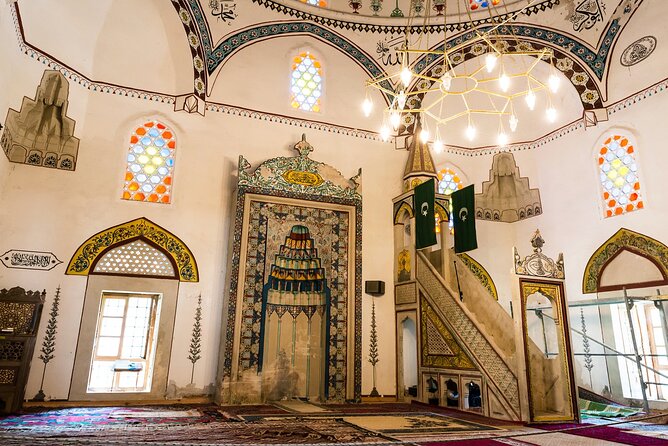
The final section returns to the Old Bridge area and lasts about 40 minutes. It introduces you to traditional Bosnian coffee in a local restaurant, with an explanation of how it is prepared and served.
Bosnian coffee, or bosanska kafa, is unfiltered and follows a particular procedure. It is not simply a strong drink poured into a cup. The preparation and serving carry social meaning, and taking time over coffee is part of how people welcome one another and talk.
I like this ending because it slows the tour down. After the bridge, the bazaar, religious diversity, and wartime history, coffee gives you a quieter way to connect the information with ordinary life. You can ask final questions and absorb the experience without rushing straight to the next sight.
Food and drinks are not included in the tour price, so check whether the coffee itself is purchased separately. The information provided confirms the coffee stop and the ritual, but not a set food menu or a full meal. Think of it as a cultural tasting and demonstration, not a restaurant tour.
If you want to order more food, ask your guide for suggestions. Guides including Adi have shared local advice about eating and shopping, which can be useful after the formal tour ends.
A few more Mostar days to weigh up
- From Dubrovnik: Mostar and Kravica Waterfall Day Trip
★ 4.7 · 4,709 reviews - Dubrovnik: Kravica Waterfalls, Mostar and Pocitelj Day Trip
★ 4.5 · 3,045 reviews - Discover Herzegovina Day Tour from Mostar: Kravice Waterfalls, Blagaj, Počitelj
★ 5.0 · 742 reviews - Herzegovina Day Tour from Mostar: Blagaj, Pocitej, Kravice falls (Join Us! :D)
★ 5.0 · 372 reviews
Is $47.29 good value for a private two-hour tour?
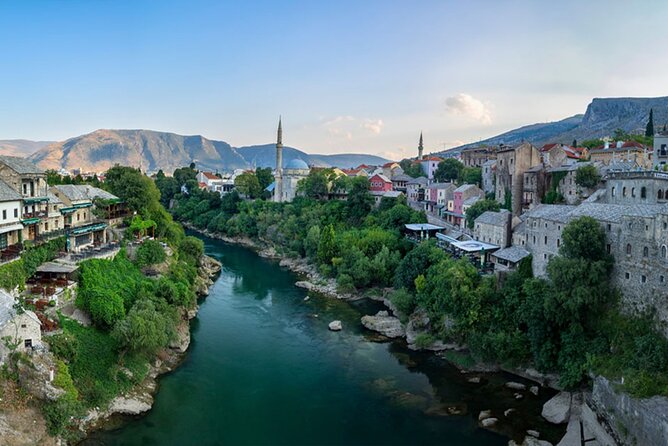
The listed price is $47.29 per person. Value depends heavily on the size of your party. For one or two people, it costs more per person than a large group walk, but you are paying for a private guide, hotel pickup and drop-off in Mostar, and the chance to shape the conversation.
That private format is the key value. If you want only a quick orientation and a few bridge photographs, a cheaper group walk may be enough. If you want to ask about the war, faith communities, family experiences, food, or daily life, private guiding makes more sense.
The tour also saves some planning time. You do not need to arrange a separate route through the Old Bridge area, Kujundžiluk, and the coffee stop. Pickup is offered from Mostar accommodations, and if your lodging is not on the pickup list, you can send the full address.
Group discounts are available, though the exact amount is not specified. If you are traveling with family or friends, check the final price for your party before booking. The per-person cost may become more attractive as the group grows.
Because the tour is about two hours, it also fits neatly into a day of sightseeing. You can book it early to get your bearings, then return to the bazaar or bridge later. Or you can take it after arriving in Mostar and use the guide’s restaurant and shopping tips for the rest of your stay.
The experience is often booked well ahead, with an average booking lead time of 69 days. That does not guarantee that every date sells out, but it is a useful reason to reserve early if your Mostar schedule is fixed.
Who will get the most from this Mostar walk?
I would choose this tour for a first visit, especially if you want the city explained by someone who lives there. It suits couples, families, and small groups who prefer questions and conversation over a fixed speech.
It is also a good fit if you care about recent history. The guides have addressed the prewar period, the 1990s conflict, reconstruction, and the way different religious communities have shaped Mostar. That is more useful than seeing the Old Bridge with no context.
Families should note that children must be accompanied by an adult. Most people can participate, and the tour is near public transportation, but the provided information does not specify a particular accessibility arrangement. If you have mobility concerns, ask the operator before booking.
You may want a different experience if you prefer a long, food-focused outing, extensive museum time, or a full-day excursion beyond Mostar. This is a compact walking tour with a coffee ritual, not a broad regional tour.
The personality of your guide can shape the experience. Amel has been described as strong on presentation and historical explanation. Adi has offered a personal family perspective and practical local suggestions. Sanja has focused on wartime memory and reconstruction. Esmer has used visual guides and answered many questions. Harun has provided a friendly first-visit introduction in clear English.
You cannot necessarily request a particular guide from the information available, so book for the format and subject matter rather than expecting one specific person.
Practical details that affect your day
The tour is offered in English and includes a mobile ticket. Confirmation is sent within 48 hours of booking, subject to availability. Hotel pickup and drop-off are included in Mostar, and you should provide your accommodation address if it is not among the listed pickup points.
The experience requires good weather. If poor weather causes cancellation, you are offered another date or a full refund. You can also cancel for a full refund if you do so at least 24 hours before the start time. Cancellations or changes inside that window are not accepted.
Wear shoes suitable for walking through an old bazaar and bring water, especially in warm weather. The provided details do not specify a dress code, meal inclusion, or a set coffee charge, so plan to pay separately for any food or drinks.
A private tour gives you the best chance to control the tone and pace. At the start, tell your guide if you care most about architecture, the war, religion, food, shopping, or photography. You will get more from two hours if the guide knows what you want.
Should you book Charming Mostar?
Book it if you want a personal introduction to Mostar, with the Old Bridge, Kujundžiluk, religious diversity, recent conflict, and Bosnian coffee all tied together. The private setting and hotel transfers add real convenience, while the named guides have brought strong personal and local perspectives to the walk.
The tour is less suitable if you want a long food experience, a full historical course, or plenty of unstructured time for shopping. At two hours, it covers the essential Old Town rather than every corner of Mostar.
For most first-time visitors, I think the format makes sense. You see the city’s central sights, learn why they matter, and leave with practical ideas for where to eat and what to explore next. Just reserve ahead, confirm your pickup address, and allow the guide to turn the bridge from a photograph into a story.
FAQ
How long is the Mostar walking tour?
The tour lasts approximately two hours.
What sights are included?
The tour includes the Old Bridge area, Mostar Old Town, and Bazar Kujundžiluk. It also covers the city’s history, religious diversity, bridge-jumping tradition, and Bosnian coffee.
Is the Old Bridge UNESCO listed?
Yes. The Old Bridge is part of the UNESCO-listed Old Bridge Area of the Old City of Mostar.
Is the tour private?
Yes. Only your group participates in the activity.
Is hotel pickup included?
Yes. Round-trip hotel pickup and drop-off in Mostar are included.
What should I do if my accommodation is not listed?
Send the provider the address of your accommodation in Mostar.
Is the tour offered in English?
Yes. The experience is offered in English.
Are food and drinks included?
No. Food and drinks are not included in the tour price.
Can children join the tour?
Yes, but children must be accompanied by an adult.
What happens if bad weather cancels the tour?
You will be offered a different date or a full refund if poor weather causes the experience to be canceled.
Just added around Mostar
- Pocitelj City Tour★ 4.5 · 3 reviews
- Walking Tour in Old Town Mostar★ 5.0 · 5 reviews
- Mystical Sutjeska National Park★ 5.0 · 3 reviews
- Mostar War Heritage Walking Tour★ 5.0 · 6 reviews
- Mostar Shelters tour in Mostar★ 5.0 · 9 reviews
- Mostar gastro and historical treasures★ 5.0 · 6 reviews
- Mostar & Herzegovina Tour★ 3.5 · 6 reviews
- Mostar Guided Tour & Sweet Delights★ 5.0 · 3 reviews
Walking Tours, compared.
Private Walking Tour, Food Tasting and Bosnian Coffee in Sarajevo
Read our review →
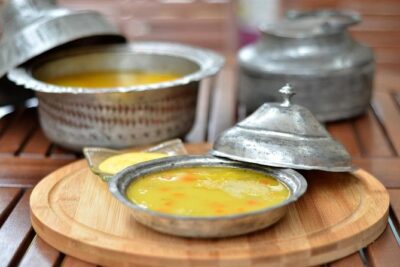
Delicious Sarajevo: Eat, Walk & Discover City Tour
Read our review →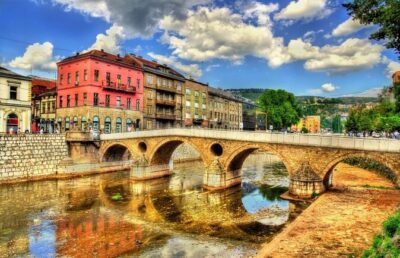
PROFESSIONAL SARAJEVO WALKING TOUR – With guide who guided STING!
Read our review →
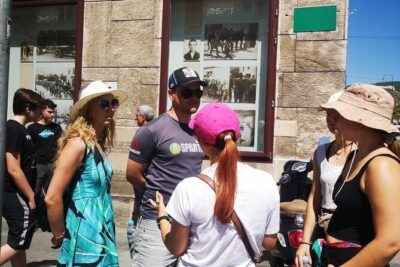
Sarajevo genuine walking tour: Steps through history
Read our review →
Browse the lists this tour appears in