
Reviewed · MOSTAR TOURS
Mostar Shelters tour in Mostar
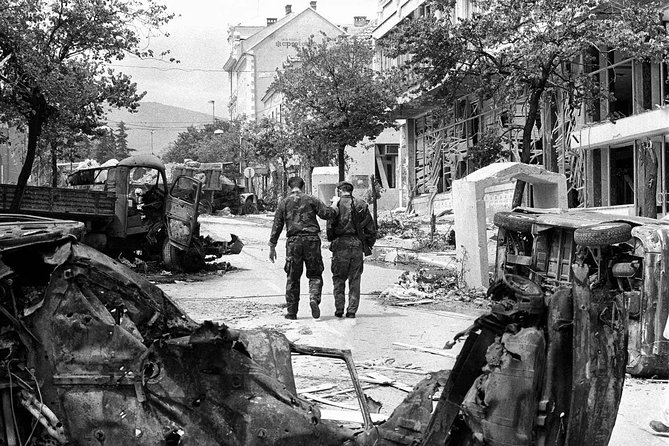
Mostar’s famous bridge is only part of the city’s story. This half-driving, half-walking tour takes you to artillery positions, trench lines, damaged buildings, and the former urban front line, helping you understand what happened behind the bullet holes and burned houses. Guides such as Miran and Dario use wartime photographs, video, and personal stories to explain the conflict.
I like the small maximum group of 16, which gives you a better chance to ask direct questions. I also like the practical format: a van handles the longer distances, while short walks and high viewpoints show you Mostar from angles you will not get in the Old Town.
The subject is painful, and the tour is not light sightseeing. Some explanations may be emotionally heavy, while the roughly two-hour schedule can stretch closer to three hours. You should book it for honest historical context, not entertainment.
Key points about Mostar Shelters
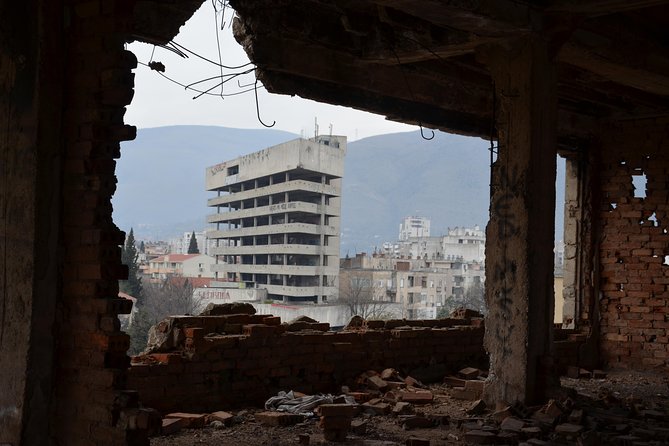
- Wartime sites beyond the Old Town: Visit artillery positions, trench lines, and parts of the former urban front line.
- Guides with personal insight: Miran and Dario explain the war with photographs, video, and stories tied to Mostar.
- Van transport with short walks: You cover more ground without turning the experience into a long hike.
- A different view of the city: The mountain viewpoint with its cross gives you a wide look across Mostar.
- Good value at $41.20: A professional guide, live commentary, and selected hotel pickup are included.
- A serious but open conversation: The guide welcomes questions, and difficult topics are not brushed aside.
Why this tour changes how you see Mostar
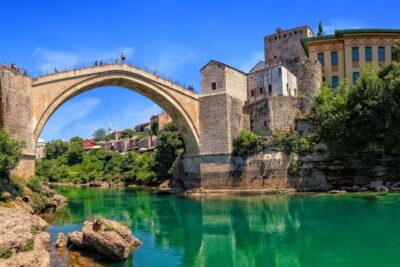
Mostar can feel almost storybook at first. The old bridge curves over the Neretva, stone lanes lead through the historic center, and shops sell copperware and souvenirs. Then you notice the scars: pockmarked walls, empty shells of buildings, and burned structures close to the postcard views.
Mostar Shelters gives those scars a clear setting. Instead of simply pointing at damage and saying it came from the war, the guide explains how the city was divided, where fighting took place, and how civilians lived through it. That context matters. Without it, the surviving damage can become scenery. With it, you begin to understand the human cost behind the architecture.
The tour focuses on the Bosnian War from 1992 to 1995, with special attention to Mostar’s own siege and front lines. This is not a broad European history lecture. It is a local account of what happened in this city, where the evidence remains visible in ordinary streets.
I value that local focus. You are not asked to absorb a long list of dates and military names with no connection to the ground beneath your feet. You are shown places and then given the story that makes those places meaningful.
A few more Mostar days to weigh up
- From Dubrovnik: Mostar and Kravica Waterfall Day Trip
★ 4.7 · 4,709 reviews - Dubrovnik: Kravica Waterfalls, Mostar and Pocitelj Day Trip
★ 4.5 · 3,045 reviews - Discover Herzegovina Day Tour from Mostar: Kravice Waterfalls, Blagaj, Počitelj
★ 5.0 · 742 reviews
A van, short walks, and more ground covered
The format is practical. Part of the tour takes place in a vehicle, and part takes place on foot. That combination lets you reach several locations around Mostar without spending the whole afternoon walking between them.
The walking sections are described as short, but you should still wear sensible shoes. You may stop at damaged urban areas, former defensive positions, and viewpoints rather than follow one continuous sightseeing route. This makes the pace varied, though it also means the tour is not a standard stroll through the center.
The van matters for another reason: you can see more of Mostar’s wartime geography in about two to three hours. The city’s story did not unfold around the bridge alone. Moving between locations helps you grasp how the fighting affected different parts of Mostar.
The group is capped at 16 people. That is not a private tour, but it is small enough to keep the guide’s explanations fairly personal. If your group is full, you may not always get the best position at every stop, but the limit is far more manageable than a large coach outing.
Artillery positions and trench lines
The most distinctive part of the experience is the chance to visit former artillery positions and trench lines. These are not simply historical labels. They help you understand the physical side of the conflict: where people were positioned, how the city could be attacked, and why certain buildings suffered so much damage.
The guide connects the sites to the broader story of Mostar. You will hear how the fighting shaped daily life and what happened to people during and after the war. That second part is important. The tour does not stop at battle locations, but also asks what became of the people who lived through them.
The available information does not promise a fixed list of every stop on every departure, so the exact order may change. Still, the main theme is clear: this is a look at artillery positions, trenches, and the urban front line, not a general city tour with a few war references added.
Expect direct explanations. Questions about the conflict, divided communities, destruction, and recovery are welcome. The guides are described as willing to discuss subjects that can be uncomfortable, which is useful in a place where a neat, simple version of the past would be misleading.
The urban front line and damaged city center
Mostar’s urban front line is where the tour may feel most immediate. You are not looking at a distant battlefield. You are seeing places within the city, close to homes, streets, and the tourist center.
The bullet holes and burned buildings raise obvious questions. Who was firing? How did civilians move around? What happened after the fighting ended? The guide’s job is to connect those visible marks with the events that caused them, using wartime images and video to fill in what the buildings cannot show.
Miran is praised for taking time with photographs and real footage, then explaining the material in a way that invites questions. Dario is also described as making complex information accessible and mixing the wider story with personal accounts. If you are uneasy about asking something sensitive, this conversational style should help.
This is also the point where you should keep your expectations realistic. A tour cannot resolve every political argument surrounding the war in two or three hours. It can give you a grounded account of Mostar and show why the city still carries such visible reminders of the conflict.
A completely different kind of day out of Mostar:
- Herzegovina Day Tour from Mostar: Blagaj, Pocitej, Kravice falls (Join Us! :D)
★ 5.0 · 372 reviews - Mostar and Kravice Waterfalls Full-Day Tour from Split
★ 4.8 · 308 reviews - Break-up of Yugoslavia & The War in Mostar: Life Under Siege
★ 5.0 · 136 reviews - Mostar & Kravice Waterfalls: Guided Day Trip from Dubrovnik
★ 4.3 · 134 reviews
The mountain viewpoint above Mostar
One stop takes you to the top of a mountain with a cross, where you get a broad view over Mostar. The viewpoint adds a welcome visual pause to a serious subject, but it also serves a historical purpose.
From above, the city’s shape becomes easier to read. You can see how close different neighborhoods are and why hills and elevated positions mattered during the fighting. The view is attractive, but it is not just a photo stop. It helps place the earlier explanations on a map you can see with your own eyes.
This may be the most memorable contrast of the tour. Below you is a beautiful city surrounded by dramatic hills. At the same time, the guide is explaining how those same positions affected the lives of people below. You get beauty and painful history in the same frame.
The exact amount of time at the viewpoint is not specified, so do not book this only for a long scenic stop. The focus remains the war and Mostar’s recent past.
Personal stories make the history easier to grasp
The guides do more than recite facts. Miran and Dario are praised for explaining the war with passion, personal stories, photos, and footage. That approach is especially useful if you know little about the Bosnian War or find the subject hard to follow.
The conflict is complex. A short tour cannot turn it into a simple good-side and bad-side tale without losing important truth. A personal story, however, can help you understand what broad terms such as siege, front line, and displacement meant to people living in Mostar.
I would pay close attention to the guide’s wording and ask questions when you need more context. The experience is built for conversation, and no topic is presented as off limits. You will get more from it if you arrive ready to listen rather than expecting a fixed stream of facts.
The guides also help bridge the gap between then and now. The tour looks at what happened later to people affected by the war, not only at the period of fighting itself. That gives the experience more weight than a simple visit to damaged buildings.
Is $41.20 a fair price?
At $41.20 per person, the tour offers solid value for a focused local experience. You receive a professional guide, live commentary in the vehicle, transportation between sites, and hotel pickup at selected hotels. Food and drinks are not included, but a two-hour history tour does not normally need a meal component.
The value comes from access and interpretation. You could walk through Mostar and see bullet holes on your own, but you would not necessarily know what each area meant, how the front line shifted, or how the war affected residents. The guide turns scattered evidence into a connected story.
The price is also reasonable for the amount of ground covered. The van saves time and effort, while the walking sections keep the tour tied to the actual places being discussed. A private tour would give you more control, but the maximum of 16 keeps the shared version fairly contained.
The published duration is about two hours, while the actual experience may run between two and three hours. Leave enough room afterward, especially if you have a dinner booking or another fixed activity.
Timing, pickup, and meeting details
The stated start time is 5:00 pm, with the meeting point at Onešćukova 32 in Mostar. The activity ends back at the same meeting point. Hotel pickup is included for selected hotels, so check your accommodation before assuming a pickup applies.
The tour is offered in English. Confirmation is provided when you book, and at least two people are required per booking. Children must be accompanied by an adult.
The experience is near public transportation, and most people can participate. Since the tour includes short walks and stops at outdoor sites, comfortable shoes and weather-appropriate clothing are sensible choices, even though no special fitness requirement is stated.
The information also notes that it is offered at multiple times during the day, while the listed start time is 5:00 pm. If your schedule depends on a morning or earlier departure, confirm the available time when booking.
Free cancellation is available up to 24 hours before the start time for a full refund. Changes or cancellations made less than 24 hours in advance are not accepted for a refund.
Who should book Mostar Shelters?
I would choose this tour if you want to understand Mostar beyond the bridge and old streets. It suits people interested in recent European history, military history, local voices, and the way a city carries visible scars into the present.
It is also a good fit if you have limited time. The van lets you reach several locations, and the two to three hour format gives you a serious introduction without taking up an entire day.
Families with older children may find it useful, provided the children can handle difficult wartime material and remain with an adult. The subject is not softened into a family attraction, so parents should decide based on the child’s maturity.
I would skip it if you want only food, architecture, and cheerful sightseeing. The tour is deliberately focused on war, destruction, civilian life, and recovery. It asks you to give the subject your attention.
Should you book it?
Book Mostar Shelters if you want the part of Mostar that cannot be understood from a bridge photograph alone. The combination of local guides, wartime footage, personal accounts, former artillery and trench positions, urban front-line sites, and the mountain view gives you a clearer sense of how the 1992 to 1995 war shaped the city.
The strongest reason to go is the guide’s ability to make a complicated subject understandable without treating it casually. The main caution is emotional: this is serious history, and some stories may stay with you. At $41.20, with transport and guide commentary included, it is a worthwhile choice for anyone who wants honest context alongside Mostar’s beauty.
FAQ
How long does Mostar Shelters last?
The advertised duration is about two hours, though the experience may take between two and three hours.
What time does the tour start?
The stated start time is 5:00 pm. The experience is also described as being offered at multiple times during the day, so confirm the available departure when booking.
Where does the tour begin and end?
It begins at Onešćukova 32, Mostar 88000, Bosnia and Herzegovina, and ends back at the meeting point.
Is hotel pickup included?
Hotel pickup is included at selected hotels. You should check if your hotel qualifies when making the booking.
What language is the tour offered in?
The tour is offered in English.
What is included in the price?
The price includes a professional guide, live commentary on board, and hotel pickup at selected hotels. Food and drinks are not included.
Just added around Mostar
- Pocitelj City Tour★ 4.5 · 3 reviews
- Walking Tour in Old Town Mostar★ 5.0 · 5 reviews
- Mostar War Heritage Walking Tour★ 5.0 · 6 reviews
- Mystical Sutjeska National Park★ 5.0 · 3 reviews
- Mostar gastro and historical treasures★ 5.0 · 6 reviews
- Mostar Guided Tour & Sweet Delights★ 5.0 · 3 reviews
- Private group city tour of Mostar and the Old Bridge★ 5.0 · 6 reviews
- Mostar & Herzegovina Tour★ 3.5 · 6 reviews
Mostar Tours, compared.
Kravica Waterfalls, Mostar and Pocitelj Day Trip
Read our review →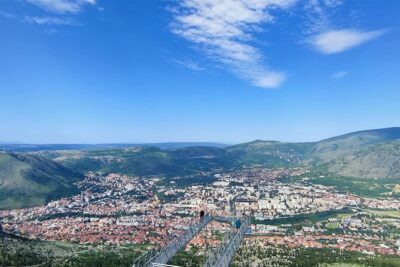
Discover Herzegovina Day Tour from Mostar: Kravice Waterfalls, Blagaj, Počitelj
Read our review →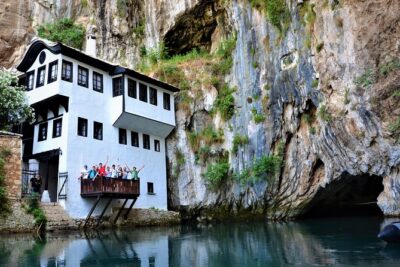
Herzegovina Day Tour from Mostar: Blagaj, Pocitej, Kravice falls (Join Us! :D)
Read our review →
Mostar and Kravice Waterfalls Full-Day Tour from Split
Read our review →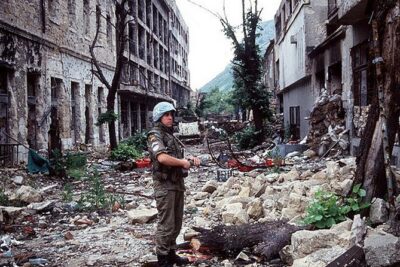
Break-up of Yugoslavia & The War in Mostar: Life Under Siege
Read our review →
Mostar & Kravice Waterfalls: Guided Day Trip from Dubrovnik
Read our review →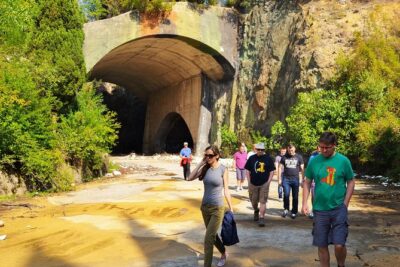
Browse the lists this tour appears in