
Reviewed · WALKING TOURS
Mostar Private Walking Tour – where East meets West
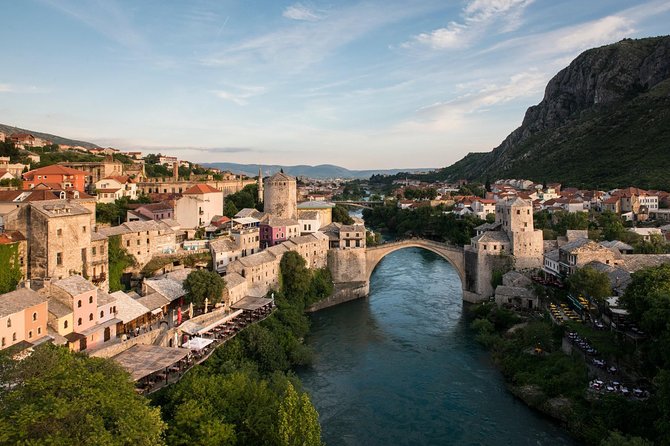
Mostar’s famous Old Bridge is only the beginning. This private walk uses the bridge as a doorway into the city’s Ottoman traditions, handmade crafts, Austro-Hungarian architecture, and painful wartime past. You’ll also hear about the local jumpers who keep the centuries-old diving tradition alive.
I especially like the private format, which lets your group ask questions and set a comfortable pace, and the chance to visit the divers’ club near the bridge. The clear historical context is another strength, though the two-hour schedule means some stops are brief and entrance fees are extra.
Key points at a glance
- Old Bridge and local divers: Learn about Mostar’s UNESCO-listed bridge and visit the club connected with its famous jumpers.
- A balanced city story: The route covers Ottoman, Austro-Hungarian, and postwar Mostar rather than showing only the postcard views.
- Koski-Mehmed Pasha Mosque: Enter the mosque and, with the separate admission fee, climb its minaret for a strong Old Bridge view.
- Kujundziluk Bazaar: See traditional crafts and meet people connected with long-standing handicraft families.
- Small private setting: Only your group joins the guide, making questions and conversation easier.
- Short but full route: About two hours covers the Old Town, Spanish Square, Park Zrinjevac, and the Peace Bell Tower.
Why the Old Bridge is only the starting point
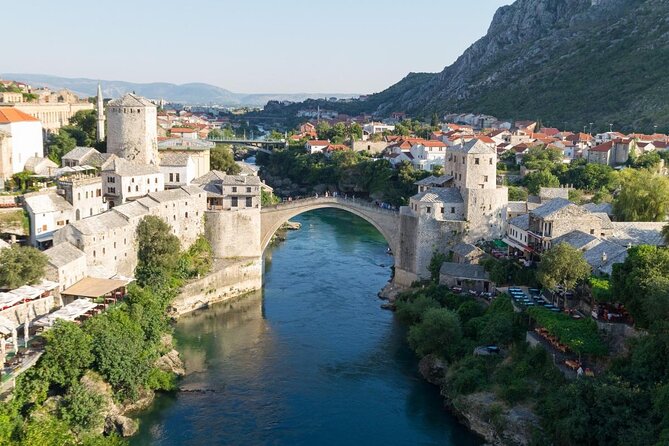
Mostar is often reduced to one image: a graceful stone bridge over the Neretva River. The bridge deserves the attention, but the city makes more sense when you connect that landmark with the streets, markets, mosques, parks, and scars around it.
This tour gives you that wider view in roughly two hours. An accredited local guide leads the walk in English and explains the important places as you go. Because the tour is private, your group has a better chance to stop for questions instead of moving along with a large crowd.
The strongest part is the range of subjects. You get Ottoman-era architecture, old trades, the bridge-diving custom, Austro-Hungarian buildings, and the 1990s conflict. That combination helps you understand why Mostar feels like a meeting point between East and West, rather than simply a pretty old town.
The route is also fairly brisk. Seven stops, plus the connecting streets, fit into a short visit. If you want long museum visits or lots of time for shopping, you’ll need to explore again on your own.
More walking tours in Mostar:
- Mostar Private Walking Tour
★ 5.0 · 93 reviews - Charming Mostar: Private Mostar Walking Tour
★ 5.0 · 23 reviews - Best of Mostar – Private Walking Tour
★ 5.0 · 21 reviews
Starting at Franjevačka Church
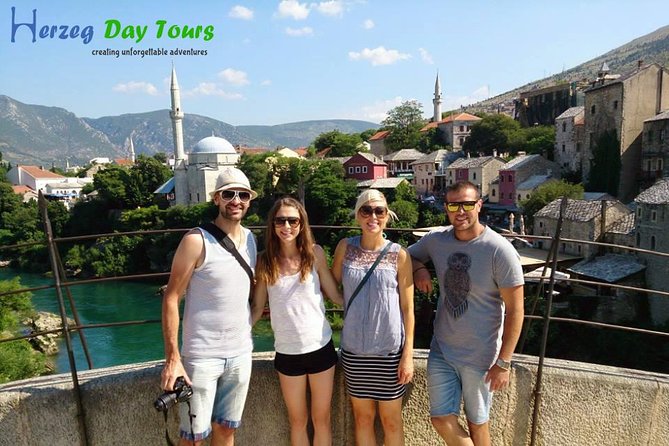
The stated meeting point is Franjevačka Church on Franjevačka Street, near the Old Town. The activity is scheduled daily from 9:00 a.m. to 6:00 p.m., from December 19, 2025, through December 18, 2026.
The tour information also describes hotel pickup and drop-off as a feature, but the specific meeting details say the walk begins and ends at Franjevačka Church. I would confirm the pickup arrangement before booking, especially if you are staying outside central Mostar.
You’ll want comfortable shoes. This is a walking tour through historic streets, pedestrian areas, and bridges, with stops where you may pause for photographs and explanations. Children can take part, but they must be accompanied by an adult. At least two people are required for each booking.
Meeting the bridge jumpers at Mostar Old Bridge
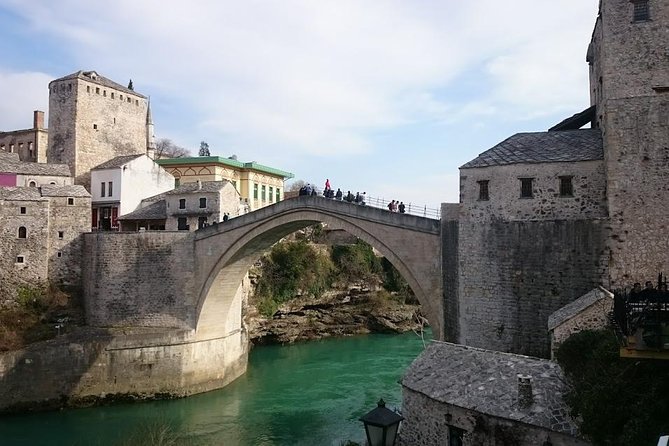
The tour opens with Mostar’s most important landmark, the Old Bridge. Your guide explains its place in the country’s history, then adds a local detail that many quick sightseeing stops miss: the tradition of jumping from the bridge into the Neretva.
Through the guide’s connection with the famous jumpers’ club, your group may visit the club premises and hear about the custom from people connected with it. That gives the bridge a human side. You are not just looking at a stone arch and taking a photograph. You are learning about a daring local practice passed down through generations.
The scheduled stop is about 20 minutes, with no admission fee. That is enough time for an explanation and photographs, but not an extended visit. If the jumpers are not preparing for a demonstration, you should not assume you will see a jump. The valuable part here is the access and the story behind the tradition.
The Old Bridge is also the place where the tour’s title makes sense. Its design and setting reflect the Ottoman period, while the surrounding town has layers from later European rule and modern conflict.
A quick pause at the Crooked Bridge
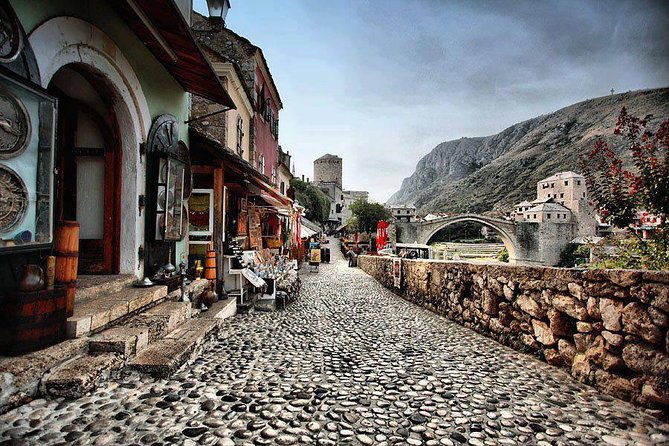
A short walk brings you to Kriva Cuprija, or the Crooked Bridge, over the Radobolja River. The small bridge is linked with the idea of a bridge of love and sits in a more intimate setting than the Old Bridge.
The stop lasts about five minutes, so treat it as a photo pause and a short story rather than a full sightseeing visit. The Radobolja is a tributary of the Neretva, and this smaller crossing helps you see how waterways shape Mostar’s old quarter.
I like this stop because it breaks up the grand scale of the Old Bridge. The drawback is simple: five minutes goes quickly. If you want careful photographs or a quiet look at the water, you may need to return later.
A few more Mostar days to weigh up
- From Dubrovnik: Mostar and Kravica Waterfall Day Trip
★ 4.7 · 4,709 reviews - Dubrovnik: Kravica Waterfalls, Mostar and Pocitelj Day Trip
★ 4.5 · 3,045 reviews - Discover Herzegovina Day Tour from Mostar: Kravice Waterfalls, Blagaj, Počitelj
★ 5.0 · 742 reviews - Herzegovina Day Tour from Mostar: Blagaj, Pocitej, Kravice falls (Join Us! :D)
★ 5.0 · 372 reviews
Traditional work in Kujundziluk Bazaar
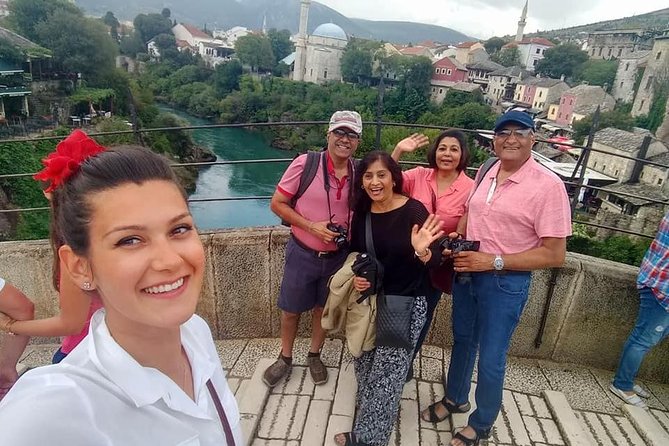
Kujundziluk is the oldest bazaar in Herzegovina, and the tour uses it to explain more than shopping. Your guide introduces old crafts and talks with members of families who have made authentic handicrafts for centuries.
This is one of the most useful stops for understanding daily culture. Buildings and monuments tell you about rulers and dates. A working bazaar shows how skills, family businesses, and hospitality continue in ordinary life.
You will have about 20 minutes here. That gives you time to see the craft stalls and ask questions, but it is not a dedicated shopping session. If something catches your eye, you may need to return after the tour to browse without watching the clock.
The private format helps in this setting. Your guide can explain what you are seeing and point out the difference between a traditional craft and a generic souvenir. Still, the tour does not include purchases, so bring your own judgment and check prices before buying.
Climbing above the Neretva at Koski-Mehmed Pasha Mosque
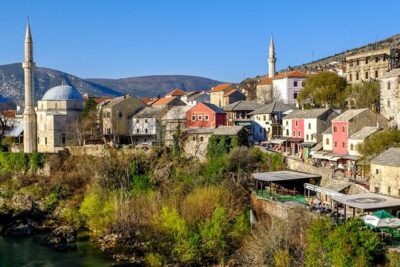
Koski-Mehmed Pasha Mosque is one of the tour’s main highlights. It sits high above the Neretva and is described as one of the few mosques in Bosnia and Herzegovina where tourists may enter and climb the minaret.
The mosque visit adds an important religious and architectural layer to the walk. You can learn about the building beneath its dome, then climb for one of the best views of the Old Bridge. For photographers, this may be the most useful stop of the morning because the elevated view shows the bridge, river, and surrounding roofs together.
Admission is not included. The tour information lists entrance fees to monuments and museums as extra, so budget for this stop separately. The climb may also require care if you are uncomfortable with heights or narrow stairs, though no specific accessibility details are provided.
The scheduled time is 15 minutes. That is enough for a short visit and view, but not a leisurely architectural study. If the minaret is a priority, ask the guide at the start how the timing will work and whether the climb is open during your visit.
Crossing from the Old Town to Spanish Square
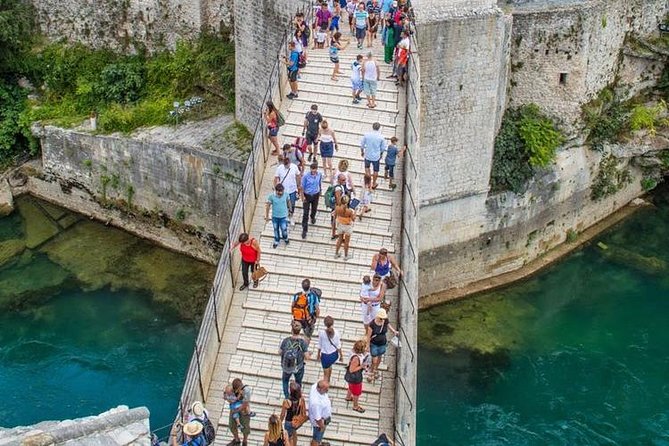
The walk then moves toward a different side of Mostar. You cross one of the city’s attractive Austro-Hungarian-era bridges and head toward the area around Bulevar Road.
This transition matters because it changes the visual character of the tour. The Old Town reflects Ottoman influence, while the later streets show the mark of Austro-Hungarian planning and architecture. You get a clearer sense of Mostar as a layered city instead of a single historic district.
Spanish Square brings the conversation to the last war. The former front line ran along Bulevar Road, and the square honors members of the Spanish battalion who served with United Nations peacekeeping forces. King Juan Carlos of Spain opened the square.
The stop is brief, about five minutes, but its subject is not light. The tour does not skip the conflict that shaped modern Mostar. That honesty is a major strength, especially if you want context for the damaged buildings, divided urban spaces, and continuing questions about the city’s identity.
One important point: a two-hour walk can introduce the conflict, but it cannot explain every political and military detail. If that period is your main interest, use this tour as an orientation and seek a longer specialist visit afterward.
Austro-Hungarian streets and Park Zrinjevac
From Spanish Square, the route follows Stefania’s promenade, a pedestrian area dating from the Austro-Hungarian monarchy. Along the way, you see buildings and villas in pseudo-Moorish style, a distinctive architectural language that combines European planning with forms associated with Islamic design.
Park Zrinjevac is described as Mostar’s largest and most beautiful park. The guide also explains why public parks were used as cemeteries during the last war. That detail shows how ordinary city spaces can take on an entirely different role during conflict.
The stop lasts about 15 minutes. You’ll get a guided look at the promenade, buildings, park, and wartime story, but not a long rest break. The park is a useful place to slow down mentally after the heavier discussion at Spanish Square.
This section is especially good for anyone who likes cities as living records. The architecture is not just decoration. It reflects changing governments, cultural influences, and the ways people adapted public space during difficult years.
Closing at the Mostar Peace Bell Tower
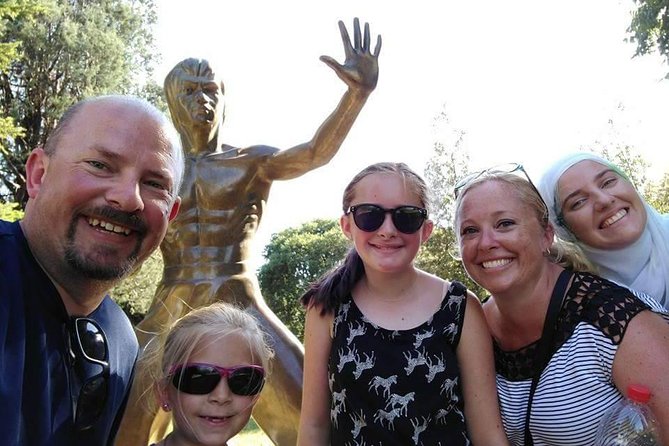
The walk ends at the Mostar Peace Bell Tower, where the guide returns to the idea of multiculturalism. The location provides a fitting final point because the tour has moved through Ottoman, Austro-Hungarian, religious, commercial, and wartime parts of the city.
Admission is not included at this stop. The scheduled time is about five minutes, so expect a short explanation rather than a lengthy tower visit.
The activity ends back at the meeting point according to the stated details. Since the route also mentions hotel pickup and drop-off, confirm the exact end arrangement when you book.
What the two-hour format is worth
No price is provided here, so I cannot judge the exact cost. The value depends on how much you want a private introduction rather than a basic walk through the Old Town.
For a couple, family, or small group, a private guide can be good value because the cost is shared only among your own party and the conversation can follow your interests. The tour includes the guide and the private format, but not museum or monument entrance fees.
You are paying for interpretation, local connections, and a carefully chosen route. The visit to the divers’ club is a particularly unusual feature. The bazaar conversations and direct explanation of the wartime front line also add value that you may miss while walking alone.
The main limit is time. The tour gives you a well-rounded first look, not a full day of sightseeing. The mosque, bazaar, bridge, and park each receive a short visit. I would pair the walk with free time afterward for photographs, shopping, or a slower return to the places that interested you most.
The published score is 4.9 from 15 ratings, with 100 percent of participants recommending the experience. The strongest praise focuses on the guide’s historical explanation, the sensible pace, and the extensive overview of Mostar. One especially useful point is that the guide gave a firsthand account of the conflict and explained the events leading to it, providing context rather than simply pointing out damaged buildings.
Who should book this Mostar walk
I would choose this tour if you have only a short time in Mostar and want the city explained by a local guide. It suits first-time visitors, history-minded people, couples, families with older children, and anyone who prefers a private walk to a large group.
It is also a good choice if you want more than photographs of the Old Bridge. The route connects the bridge with the diving tradition, traditional crafts, religious architecture, Austro-Hungarian buildings, and the war.
You may want a different plan if you dislike walking, want a slow shopping visit, or expect long time inside every monument. The route is compact and busy, and extra entrance fees apply. The two-hour schedule is best viewed as a strong introduction, not the final word on Mostar.
Should you book it?
Book this private walk if you value context, local stories, and a broad look at Mostar in a short period. The Old Bridge and minaret view provide the classic sights, while the bazaar, Spanish Square, Peace Bell Tower, and wartime discussion give the visit more weight.
Before paying, confirm hotel pickup, the exact meeting arrangement, and current entrance fees for the mosque and Peace Bell Tower. If those details suit you, this is a practical way to get your bearings and understand why Mostar is more than a beautiful bridge town.
FAQ
How long does the Mostar private walking tour last?
The tour lasts approximately two hours.
What language is the tour offered in?
The tour is offered in English.
Is this a private tour?
Yes. Only your group participates in the activity.
Where does the tour begin?
The stated meeting point is Franjevačka Church, Franjevačka 1, Mostar 88000, Bosnia and Herzegovina.
Does the tour include hotel pickup and drop-off?
Hotel pickup and drop-off are listed as features, but the specific meeting details identify Franjevačka Church as the start and return point. Confirm the pickup arrangement before booking.
Are entrance fees included?
No. Fees for museums and monuments are not included. The Koski-Mehmed Pasha Mosque and Mostar Peace Bell Tower are specifically listed with admission not included.
Can children join the tour?
Yes. Children may participate, but they must be accompanied by an adult. A minimum of two people is required per booking.
Just added around Mostar
- Pocitelj City Tour★ 4.5 · 3 reviews
- Walking Tour in Old Town Mostar★ 5.0 · 5 reviews
- Mostar War Heritage Walking Tour★ 5.0 · 6 reviews
- Mystical Sutjeska National Park★ 5.0 · 3 reviews
- Mostar gastro and historical treasures★ 5.0 · 6 reviews
- Mostar Shelters tour in Mostar★ 5.0 · 9 reviews
- Mostar & Herzegovina Tour★ 3.5 · 6 reviews
- Mostar Guided Tour & Sweet Delights★ 5.0 · 3 reviews
Walking Tours, compared.
Private Walking Tour, Food Tasting and Bosnian Coffee in Sarajevo
Read our review →

Delicious Sarajevo: Eat, Walk & Discover City Tour
Read our review →
PROFESSIONAL SARAJEVO WALKING TOUR – With guide who guided STING!
Read our review →
Sarajevo genuine walking tour: Steps through history
Read our review →Browse the lists this tour appears in