
Reviewed · HERZEGOVINA DAY TOURS
Transfer from Sarajevo to Kotor+Herzegovina tour
The clever idea here is to turn a long transfer into a full day across Herzegovina. Instead of sitting on a bus from Sarajevo to Montenegro, you stop at Konjic, Mostar, Buna, and Počitelj, then continue to Kotor by road.
I like the door-to-door pickup and the chance to see several important places in one day. I also like the small-group format, with no more than 15 people, bottled water, private transport, and an air-conditioned vehicle. Guides such as Kemal, Muamer, Almedin, Mohammed, and Kamal have been used for different departures.
The main caution is communication. The experience is sold in English, but the quality of guiding can vary by driver. A few bookings have also involved confusion over private-tour pricing and border paperwork, so confirm the final price, vehicle, and cross-border arrangements before setting out.
Key points at a glance
- A one-way tour with real sightseeing: You travel from Sarajevo to Kotor while visiting four major Herzegovinian stops.
- Mostar gets the longest visit: Expect a walking tour, the Old Bridge, the bazaar, and a museum before lunch.
- Konjic adds an Ottoman touch: Its restored Old Bridge is one of Bosnia and Herzegovina’s finest historic crossings.
- Buna and Počitelj bring a change of pace: One offers a powerful spring and riverside setting, while the other feels like an open-air historic village.
- Private pickup makes the day easier: Hotel or apartment pickup and drop-off in Kotor are especially useful with luggage or a child.
- Confirm the details in advance: Ask about the guide’s English, the total price, border permits, and whether your departure is private or shared.
Why this Sarajevo to Kotor transfer works so well
The road between Sarajevo and Kotor crosses some of the most interesting parts of Bosnia and Herzegovina. The trip takes about 12 hours, but the time is broken into short visits rather than one long ride.
That matters because a normal point-to-point transfer gives you transport but little sense of the country between the two cities. This outing gives you river valleys, Ottoman architecture, wartime history, religious heritage, and a medieval stone village before you reach Montenegro.
You start at 8:00 a.m. in Sarajevo. Pickup can be arranged at a hotel or apartment, and the operator also organizes one-way transfers from Sarajevo to Kotor. At the other end, you are taken to Kotor, making this useful for a multi-city Balkan itinerary.
The group can be as large as 15 people, though some departures are arranged as private tours. The difference matters. A private ride gives you more control over photo stops, meal timing, and bathroom breaks. One family traveling with a baby found that flexibility especially useful, since the driver adjusted stops to suit their needs.
The listed cost is $139.38 per person. That is more than a basic bus fare, but the value comes from combining transport with several guided visits. You are paying for a full day of driving, a private or small-group vehicle, fuel, border travel, hotel pickup, and a sightseeing route that would be difficult to reproduce by public transport in one day.
More full days across Herzegovina:
- Mostar & Herzegovina 4 Cities Day-tour from Sarajevo (fees incl.)
★ 5.0 · 225 reviews - Sarajevo to/from Dubrovnik Transfer Tour via Mostar & Herzegovina
★ 5.0 · 115 reviews - Visit Herzegovina from Sarajevo in one day
★ 5.0 · 80 reviews
Konjic and the Old Bridge
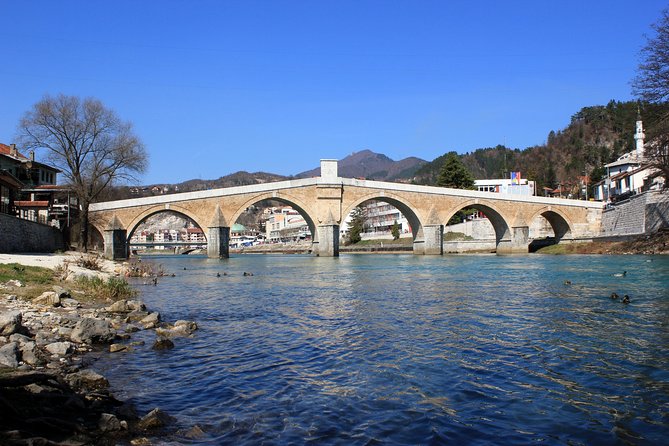
Your first stop is Konjic, about 60 kilometers southwest of Sarajevo. The town sits along the Neretva River in a wooded mountain area, and its history reaches back almost 4,000 years.
The main sight is the Konjička Stara Ćuprija, or Old Bridge. Built in 1682 and 1683, it crosses the Neretva on six slightly pointed stone arches. It is regarded as the best-preserved Ottoman bridge in Bosnia and Herzegovina.
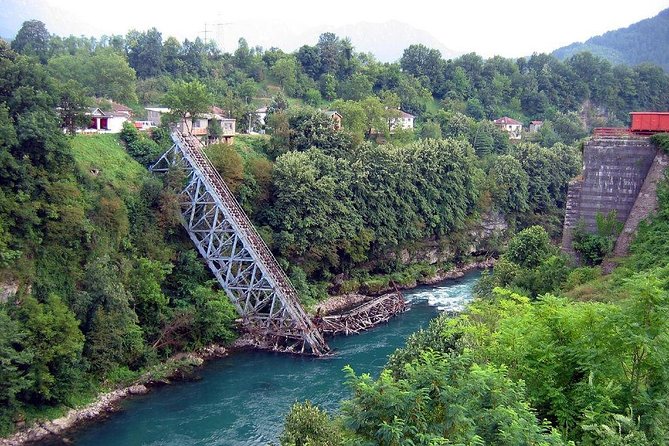
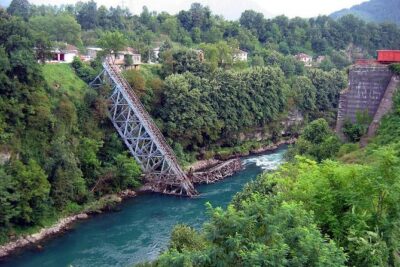
The bridge has had a rough modern history. The retreating German army destroyed its arches in March 1945, and the bridge was rebuilt between 2003 and 2009 in its original form. Today it is a National Monument of Bosnia and Herzegovina.
You get about 30 minutes here. That is enough to walk across the bridge, take photographs, and hear the basic story, but not enough for a full exploration of Konjic. Treat this as a sharp introduction to the town rather than a complete visit.
The bridge is also a useful first stop because it gives you a strong visual sense of the Ottoman influence that appears again in Mostar and Počitelj. If your guide is good, the short visit can set up the architectural themes of the whole day.
Jablanica and the Battle on the Neretva
The next stop is Jablanica, another Neretva-side town. You visit the Memorial Complex of the Battle on the Neretva, which opened in 1978 to mark the 35th anniversary of the battle.
The memorial sits at an important wartime location. In 1943, the Partisans crossed the Neretva while trying to save wounded and sick people and protect a central hospital. The complex was built near the place connected with that crossing, while a separate monument at Makljen marked fighting near Prozor.
The site became a National Monument of Bosnia and Herzegovina in 2009. Its importance is not only military. It also shows how socialist Yugoslavia used architecture and memorial sites to shape public memory.
You have about 30 minutes here. That short time means you should expect an overview, not an extended museum visit. The value is in seeing a place tied to a major event in the region and understanding how the Neretva valley has repeatedly shaped movement, conflict, and settlement.
If you prefer architecture, old towns, and scenery to 20th-century history, Jablanica may feel less immediately rewarding than Mostar. Still, it breaks up the drive and adds context that you will not get from a standard transfer.
Two hours in Mostar
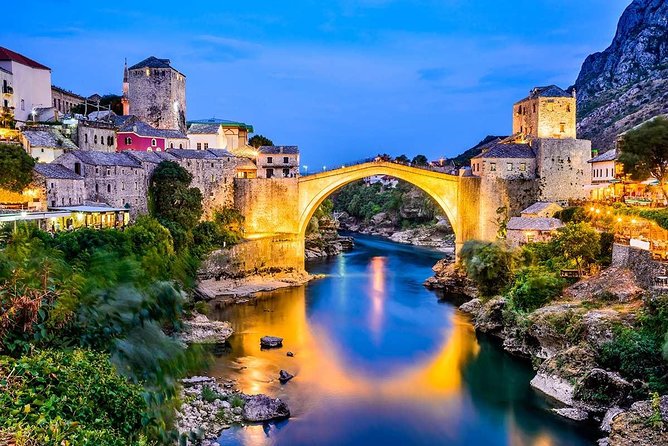
Mostar is the heart of the day. You have about two hours for a walking tour, with time for the bazaar, the Old Bridge, a museum visit, and lunch.
Mostar is famous for the Stari Most, its graceful stone bridge over the Neretva. The city around it brings together Ottoman and Austro-Hungarian influences, with narrow market streets, stone buildings, and later European-style architecture.
The tour takes you through the bazaar and to the bridge, where your guide explains the story of this famous crossing. The museum visit adds a useful layer by presenting the bridge, local traditions, and domestic culture through exhibits.
Two hours is enough to get your bearings, walk through the old center, visit the museum, and eat. It is not enough for a leisurely museum visit, long shopping session, and relaxed meal all at once. You will need to keep an eye on the meeting time.
Lunch is not included, so budget separately. That is a small advantage in one sense, since you can choose how much time and money to spend. The trade-off is that a long restaurant meal cuts into your limited Mostar visit.
Mostar can be crowded around the Old Bridge, but the tour’s structure helps you focus. I would stay close to the guide during the bridge explanation, then use free time for photos and a quick look through the market.
The quality of this part depends heavily on the person leading your walk. Muamer has been praised for explaining the history along the road and answering questions, while Almedin has been singled out for strong local knowledge and a pleasant manner. Those names give you an idea of what a good departure can offer, but you may receive a different guide.
More private drivers working out of Sarajevo:
- Sarajevo to Belgrade: Transfer With East Bosnia Tour
★ 5.0 · 63 reviews - Sarajevo to/from Belgrade UNESCO Transfer Day Tour (Fees Incl.)
★ 5.0 · 54 reviews - Sarajevo to Split (or opposite): Transfer With Herzegovina Tour
★ 5.0 · 28 reviews - Sarajevo to Dubrovnik: Transfer With Herzegovina Tour
★ 5.0 · 26 reviews
Buna and the spring at Blagaj
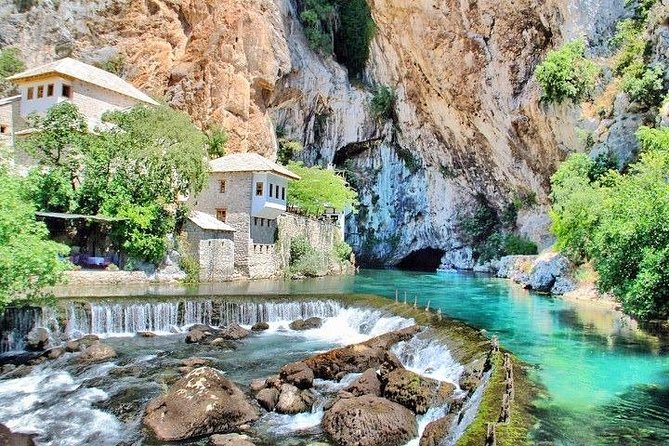
After Mostar, the route turns to the Buna River. The stop lasts about one hour and focuses on Vrelo Bune, the spring near Blagaj.
The Buna begins at a powerful karst spring and flows for roughly nine kilometers before joining the Neretva. The water is famously cold, and the spring is considered one of the strongest in Europe.
This is a welcome change after the streets of Mostar. Instead of bridges and stone lanes, you get moving water, a dramatic natural source, and a quieter riverside setting. The stop also connects to the religious and cultural importance of Blagaj, though the information provided for this tour specifically centers on the spring.
Some departures describe the visit as including a look at the Dervish retreat near the spring. Confirm with the operator exactly what your guide plans to cover, since the listed stop is Buna and the schedule allows one hour.
You will want comfortable shoes here. The tour does not promise a long walk, but the spring is a place to see on foot rather than from inside the vehicle. Keep the time in mind, since the road to Kotor still lies ahead.
Počitelj, an open-air historic village
Počitelj is the final major sightseeing stop before Montenegro. Located on the left bank of the Neretva, about 30 kilometers south of Mostar, the village is often described as an open-air museum.
The route takes you through one of the most striking historic settings in Herzegovina. Your guide explains the story of Počitelj as a jewel of the Bosnian kingdom and points out the village’s place in the region’s past.
You have about one hour. That gives you time to walk through the old settlement, take in the views, and listen to the guide’s explanation. It is not a long archaeological visit, so do not expect every corner to be covered.
Počitelj is a particularly good stop for people who enjoy old stone settlements more than formal museums. The village feels different from Mostar, even though both show strong Ottoman influence. Mostar is a living city with a busy old center. Počitelj offers a smaller, more concentrated historic setting.
The route can be tiring by this point. You have already spent hours on the road and visited several places, so Počitelj works best if you accept that the day is about sampling rather than mastering each destination.
The final road to Kotor
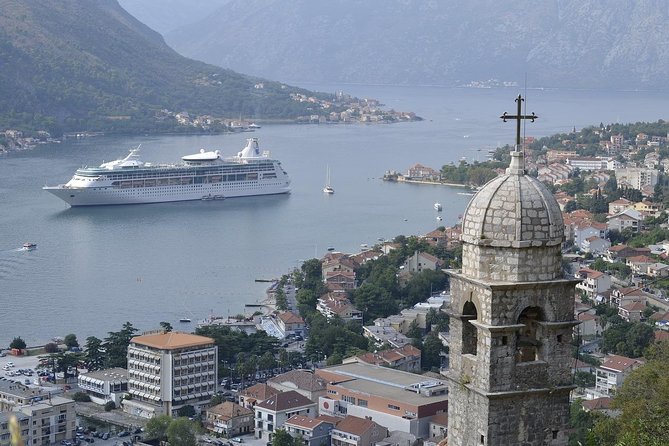
After Počitelj, you continue toward the Montenegrin border and Kotor. The final listed stop is two hours in Kotor, but the supplied details do not describe a separate walking tour or specific Kotor sights.
That means you should think of Kotor mainly as the destination of the transfer, with the day’s sightseeing concentrated in Bosnia and Herzegovina. Confirm the final drop-off point and what the two-hour Kotor portion includes before booking if you want a guided introduction to the city.
Border crossings can affect the schedule. One booking encountered trouble because the driver reportedly lacked the proper permits for paid cross-border transport. This is a serious practical point, not a reason to reject the entire experience, but you should ask the operator to confirm that the vehicle and driver are authorized to take passengers from Bosnia and Herzegovina into Montenegro.
Guides, vehicles, and the human side of the day
The experience is offered in English, but the guiding standard may depend on the individual driver. Some guides have provided detailed historical explanations, answered questions, helped with photographs, and waited patiently at stops. Mohammed, for example, has been described as friendly, safe, patient, and willing to point out good photo locations.
Kamal has also been praised for flexible service and careful driving, though one booking raised a safety concern after observing the driver texting while driving. You should expect professional driving, but it is reasonable to speak up immediately if you see unsafe behavior.
The vehicle is air-conditioned, private transportation is included, and bottled water is provided. Those details matter on a long summer transfer, especially when you are carrying luggage and moving between several countries.
The maximum group size is 15. That is smaller and more personal than a large coach, but it is not the same as traveling alone. A private departure is the better choice if you want to control stops or need extra room for a child, stroller, or luggage.
Who should book this experience?
I would choose this transfer if you need to get from Sarajevo to Kotor and want to make the road itself part of your trip. It is especially useful for first-time visitors who want a broad introduction to Herzegovina without arranging several separate taxis, buses, and local guides.
It suits you best if you enjoy a full day with frequent changes of scenery. You should be comfortable with roughly 12 hours of travel, short visits, border procedures, and a schedule that leaves little room for delays.
Families may appreciate the door-to-door service and the ability to request extra stops. Couples and small groups may find the price worthwhile because it combines sightseeing with practical transport.
I would hesitate if you want deep time in Mostar, a slow lunch, or a relaxed visit at each historic site. I would also ask more questions before booking if English guiding is essential to you or if you are not comfortable with possible uncertainty over private-tour pricing.
Is the Sarajevo to Kotor tour worth booking?
For most people making this exact journey, yes. The route gives you far more than a simple transfer, and the strongest stops are well chosen: Konjic for its Ottoman bridge, Mostar for its old center, Buna for its spring, and Počitelj for its stone village setting.
Book it after confirming four things: the final price, whether your departure is private or shared, the assigned guide’s English, and the driver’s cross-border permits. If those details are clear, the $139.38 price can be good value for a long, door-to-door day that combines transport with meaningful stops across Herzegovina.
FAQ
How long does the Sarajevo to Kotor tour take?
The experience lasts approximately 12 hours.
What time does the tour start?
The scheduled start time is 8:00 a.m.
Where can pickup take place?
Pickup can be arranged at a hotel or apartment in Sarajevo.
Is the tour offered in English?
Yes. The experience is offered in English, though the quality of English guiding may vary by assigned driver.
What places are visited along the way?
The route includes Konjic, Jablanica, Mostar, Buna, and Počitelj before continuing to Kotor.
Is lunch included?
No. Lunch is not included in the price.
What is included in the tour price?
The price includes bottled water, an air-conditioned vehicle, private transportation, and all fees and taxes.
How many people can join the tour?
The maximum group size is 15 people. Some departures may be arranged as private tours.
Can I cancel for a full refund?
Yes, you can cancel up to 24 hours before the experience begins for a full refund. Changes or cancellations made less than 24 hours before the start time are not accepted for a refund.
Just added around Sarajevo
- Private Full Day Safari Tour★ 5.0 · 8 reviews
- Walking Tour in Sarajevo★ 5.0 · 3 reviews
- Sarajevo Under Siege: A War History Tour★ 5.0 · 10 reviews
- Mysterious Visoko Pyramids Driving and Walking Tour★ 5.0 · 7 reviews
- Secret Tito’s Bunker/Konjic Tour★ 5.0 · 4 reviews
- Travnik, Jajce, Pliva Lakes & Mills –Medieval & Ottoman Bosnia Full Day Tour★ 5.0 · 3 reviews
- Sarajevo to/from Zagreb Transfer Day Tour (North-central Bosnia)★ 5.0 · 4 reviews
- Tour of Herzegovina – From Sarajevo★ 5.0 · 3 reviews
Herzegovina Day Tours, compared.
Discover Herzegovina Day Tour from Mostar: Kravice Waterfalls, Blagaj, Počitelj
Read our review →
Herzegovina Day Tour from Mostar: Blagaj, Pocitej, Kravice falls (Join Us! :D)
Read our review →
Mostar & Herzegovina 4 Cities Day-tour from Sarajevo (fees incl.)
Read our review →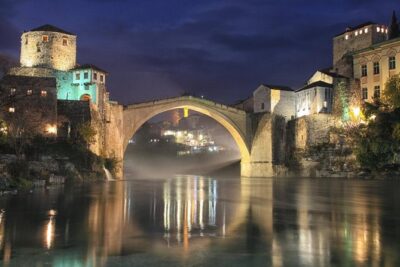
Sarajevo to/from Dubrovnik Transfer Tour via Mostar & Herzegovina
Read our review →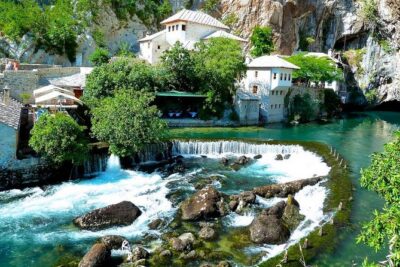
Sunny Herzegovina: Mostar, Kravice Waterfalls & 4 Cities Tour
Read our review →
Full-Day Tour in Herzegovina, Blagaj, Počitelj, and Kravice
Read our review →Browse the lists this tour appears in