
Reviewed · JAJCE & TRAVNIK TOURS
Travnik, Jajce, Pliva Lakes & Mills –Medieval & Ottoman Bosnia Full Day Tour
Jajce gives this day its big moment: a 22-meter waterfall drops right through the town center, where the Pliva River meets the Vrbas. Add a medieval fortress, underground catacombs, Ottoman Travnik, emerald lakes, and old wooden mills, and you get a strong introduction to central Bosnia in one long outing.
I like the small group limit of eight, which gives your guide room to explain Bosnia’s Ottoman, medieval, Austro-Hungarian, and Yugoslav chapters. I also like the food stops in Travnik, where you can try ćevapi and local cheese instead of treating lunch as an afterthought.
The catch is the distance. You spend roughly 10 to 11 hours on the road and return from Jajce to Sarajevo takes about 2.5 to 3 hours. Lunch is not included, and the Pliva Waterfall entrance costs 4 euros in high season or 2 euros in low season.
Key points to know before you book
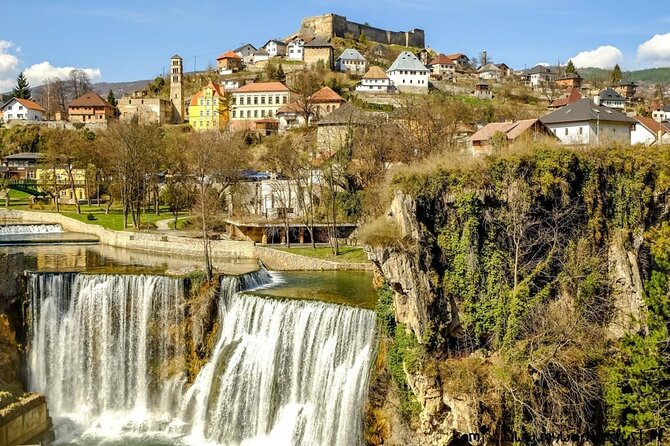
- Jajce’s waterfall is the day’s signature sight: It is one of the rare major waterfalls found in a town center, with a 22-meter drop.
- Travnik explains Ottoman Bosnia: Visit the old fortress, Colorful Mosque, Plava Voda, and the town linked to writer Ivo Andrić.
- Jajce brings several eras together: The fortress and catacombs tell medieval and religious stories, while later history reaches into the Ottoman, Austro-Hungarian, and Yugoslav periods.
- The Pliva Lakes and mills slow the pace: After several historic sites, you get time beside the water and a cluster of small wooden mills.
- Eight people is the maximum: The compact group suits anyone who prefers questions and conversation over a large coach tour.
- Budget for extras: You pay separately for lunch and the Pliva Waterfall entrance.
Why this day reaches beyond Sarajevo
Sarajevo is the natural base for learning about Bosnia, but central Bosnia gives you a wider view. This tour links several periods that are often taught separately: medieval Bosnian kings, Ottoman governors, Austro-Hungarian administration, Yugoslav-era memory, and modern interest in the Bosnian Pyramid of the Sun.
The route begins with a short ride of about 20 minutes through the Bosnia River valley toward Visoko. The scenery is green and pleasant, and the stop near the Pyramid of the Sun offers a talking point rather than a conventional ancient monument visit.
The pyramid theory claims that the hill may be the largest pyramid in the world. It has drawn interest from scientists and visitors, but the important practical point is that this stop is about discussing the theory. You are not visiting a fully established archaeological site in the same way you visit Jajce Fortress or the catacombs.
From there, the day turns toward Travnik and then Jajce. The route is long, but it lets you see how Bosnia changes from Sarajevo’s urban setting into smaller historic towns, river valleys, lakes, and old waterworks.
More medieval Jajce and Travnik days:
- Jajce, Travnik and Pliva watermills – Day Tour from Sarajevo
★ 5.0 · 295 reviews - From Sarajevo: Travnik, Jajce, Pliva Lakes & Watermills Tour
★ 5.0 · 213 reviews - Jajce, Travnik, Pliva lake and Watermills Tour
★ 5.0 · 104 reviews
Travnik, where Ottoman Bosnia took shape
Travnik was the main city of Ottoman governors in Bosnia for more than 150 years. That gives the town a special role. It was not simply an Ottoman settlement. It was the administrative center from which Ottoman Bosnia was governed.
Your visit begins around the old town and its fortress. The Old Town Fortress of Travnik gives you a physical sense of the town’s defensive position and political importance. Admission is included, so you can spend time inside without treating the visit as only a photo stop.
I like the way Travnik brings history down to human scale. The town is also the birthplace of Nobel Prize winning writer Ivo Andrić, whose work evokes daily life and political tensions in Travnik. A guide can use his stories to explain what it meant for local people to live under Ottoman rule and later governments.
The food matters here, too. Travnik is known for ćevapi and cheese, and the tour includes the chance to try both. Lunch itself is not included, so you should expect to pay for what you order. The setup is useful if you prefer a quick local meal rather than a formal restaurant stop, but ask your guide about timing if you need a longer lunch break.
Inside the Colorful Mosque
The Colorful Mosque, or Šarena Džamija, sits in the center of Travnik’s old bazaar area. It is one of the most visually distinctive mosques in Bosnia and Herzegovina, with painted decoration inside and out.
You get about 20 minutes here. That is enough for a focused visit, but not a long architectural study. The unusual colors make this one of the easiest places on the tour to remember, especially after the more severe stonework of the fortresses.
The mosque also helps explain the Ottoman layer of Travnik in a direct way. Instead of only hearing about Ottoman administration, you see the religious and civic setting that shaped the old town. Dress and entry arrangements can matter at religious sites, so follow your guide’s instructions during the visit.
After the mosque, the stop at Plava Voda adds a calmer setting within Travnik. The name means Blue Water, and the site is described as an ambient part of the old town. It provides a brief change from walls, streets, and formal history before the route continues to Jajce.
Jajce Fortress and the last Bosnian kings
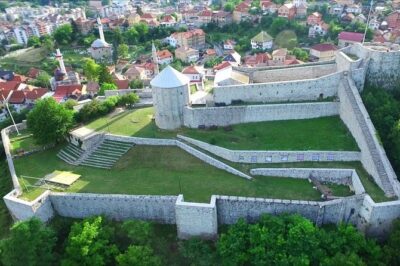
Jajce has an unusually dramatic story. It was founded in the 14th century by Hrvoje Vukčić Hrvatinić, a powerful Bosnian nobleman. In 1421, King Stjepan Tomašević moved his royal court there, making Jajce the capital of the Kingdom of Bosnia.
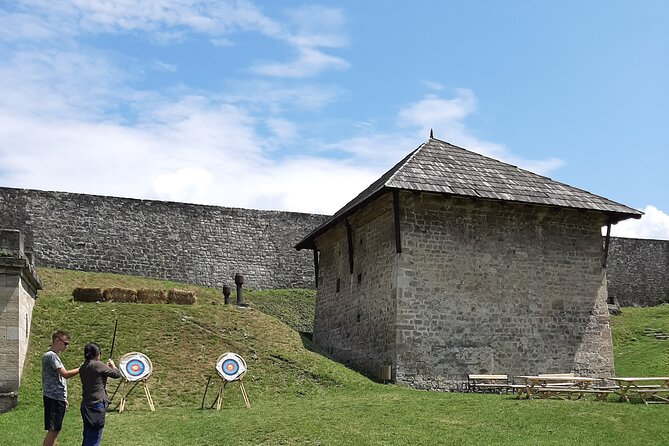
The fortress was tied to the struggle to protect Bosnia from stronger neighbors, especially Hungary and the Ottoman Empire. From its elevated position, you get views over the town and surrounding countryside. The stop lasts about 40 minutes, and admission is included.
I would treat this as one of the tour’s most important history stops. The fortress is not only an old wall with a viewpoint. It helps you understand why Jajce mattered so much before the Ottoman conquest and why the town appears repeatedly in Bosnia’s political story.
The terrain can be uneven around historic fortifications. You do not need to be an expert hiker, but comfortable shoes will make the day easier. The same advice applies to the catacombs and other old structures.
A few more Sarajevo days to weigh up
- From Sarajevo: Full-Day Hike to Lukomir Village
★ 5.0 · 59 reviews - Sarajevo Full Day Tour: History, Culture, Nature, War & Olympics
★ 5.0 · 27 reviews - Sarajevo to Belgrade Full Day Tour one-way
★ 4.5 · 9 reviews - Private Full Day Safari Tour
★ 5.0 · 8 reviews
The catacombs beneath Jajce
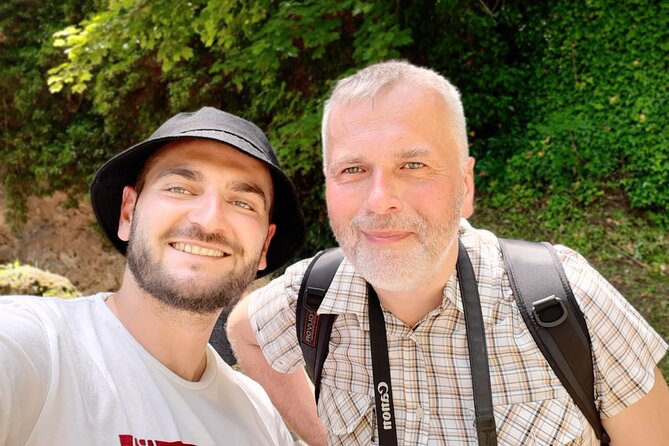
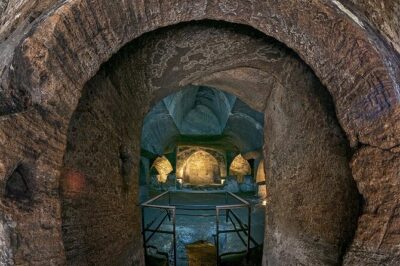
The Catacomb of Jajce offers a different mood from the fortress. This underground church was created as a Christian religious building, and Hrvoje Vukčić Hrvatinić intended it to serve as a family tomb.
The space has passed through several periods and cultures. Local stories connect it with a dervish who was imprisoned there for 40 days during Ottoman times. Because the place was considered sacred, he was later regarded as an awliya, or holy person, and the catacombs became associated with spiritual purification.
You get about 20 minutes inside, with admission included. This is a compact visit, but it adds depth to Jajce. The fortress shows power above ground, while the catacombs show belief, burial, and memory below it.
If enclosed spaces are uncomfortable for you, keep that in mind. The tour information does not describe the full interior conditions, so your guide is the best person to ask on the day.
Bear Tower and the town’s defensive edge
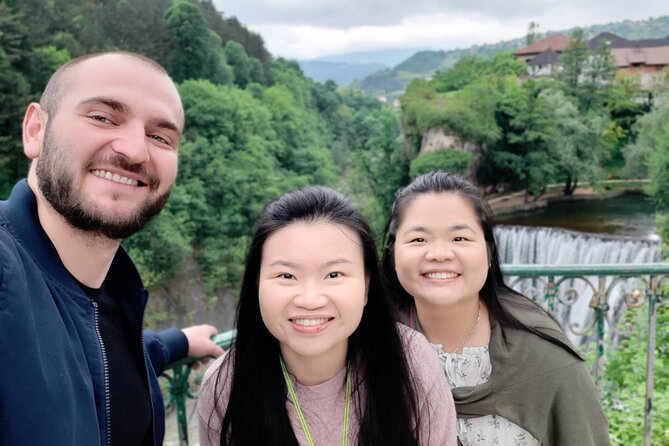
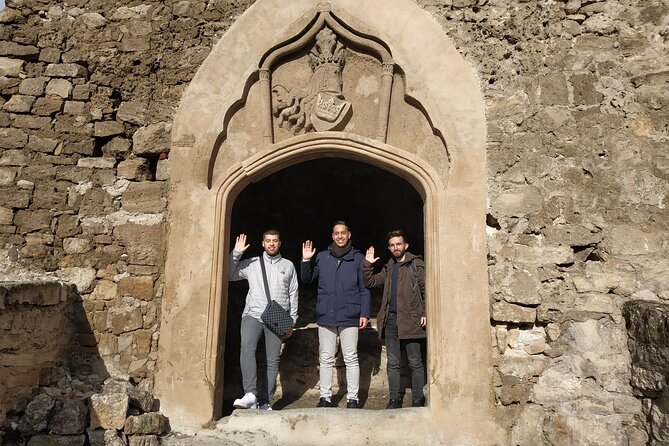
Medvjed Kula, or Bear Tower, is a thick defensive structure from the middle of the 15th century. Its name comes from the tower’s heavy shape, which is said to resemble a Bosnian black bear.
A local legend says a bear was locked inside while captives were thrown in. That tale is grim, but it shows how old military buildings collect stories over time. The tower is among the earliest military structures from Bosnia’s medieval period.
The visit lasts about 20 minutes and admission is included. It is not as grand as the main fortress, but it gives you another look at how Jajce was protected. I appreciate this kind of stop because it keeps the tour from reducing the town to one famous view.
Pliva Waterfall in the town center
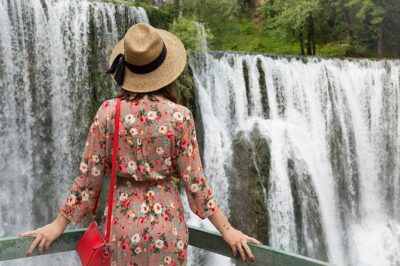
The Pliva Waterfall is the visual payoff. At 22 meters high, it forms where the Pliva River flows into the Vrbas River. The water drops in the middle of Jajce, making it one of the world’s unusual urban waterfall settings.
The waterfall is also on Bosnia and Herzegovina’s tentative UNESCO list. It was formed about 50,000 years ago, and its position at the river meeting point gives it more interest than a simple cascade in the woods.
You have around 30 minutes here. Entrance is not included. Budget 4 euros in high season or 2 euros in low season. That is a small extra cost, but it is worth knowing in advance since most of the major historic admissions are already covered.
Take your time with the viewpoint, but do not expect a long independent walk. The stop is designed to give you a clear look, photographs, and an explanation of why the waterfall matters to Jajce. Weather and water conditions can affect the exact appearance, but the setting remains distinctive.
Pliva’s wooden mills and twin lakes
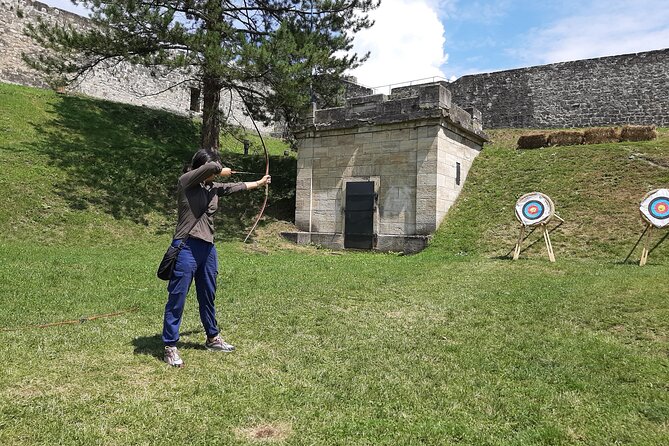
After the waterfall, the day shifts from royal history to old rural technology. At Mlincici, small wooden huts sit above channels of moving water. Instead of one large wheel, the spread-out flow powers a group of little mills.
Most of the huts date from the Austro-Hungarian period, roughly 1867 to 1918. They once ground local farmers’ wheat into flour. Their simple construction makes the stop easy to understand, and the cluster has the look of a small storybook village without being a staged attraction.
You get about 20 minutes at the mills. That is enough to see how the water is used and to take in the setting. The stop is free, and it gives your eyes a rest after the stone fortresses and underground rooms.
The final major setting is the Pliva Lakes, Veliko Plivsko and Malo Plivsko. The Pliva widens into these two lakes before continuing toward Jajce and the waterfall. You have about 30 minutes for a relaxing walk beside the water.
The lakes have hosted World and European Cup events in kayaking and fishing, which points to their practical value as well as their beauty. Do not expect a long lakeside excursion during this tour. The time is enough for a pause and views, not for a full day of boating or hiking.
What the small group and long drive mean
The group is capped at eight people. That is a real advantage on a day with many short stops. You can ask about the Ottoman governors, the royal court, the catacomb stories, or the pyramid theory without trying to catch a guide’s voice from the back of a bus.
Guide Damir is named in the tour’s guest feedback, and his patience is worth noting. On one occasion, he continued with a solo booking after other agencies had canceled because their minimum group size was not met. That suggests the operator may be more willing than some companies to run the tour for one person, though availability still controls final confirmation.
The vehicle arrangements include parking and motorway fees, which are covered in the price. Pickup is offered, and the activity begins at 8:00 a.m. The exact meeting details should be confirmed when you book.
The return from Jajce to Sarajevo takes 2.5 to 3 hours. That drive is the main drawback. After a full day of walking and sightseeing, you may be ready for a quiet ride, but the schedule can feel tiring. This is not the best choice if you want a leisurely day with long meals and plenty of free time.
Is $88 a fair price?
At $88 per person, the tour includes a licensed guide, parking, motorway charges, and entry to Travnik Fortress, Jajce Fortress, and the Jajce Catacomb. It also covers transport between Sarajevo, Travnik, Jajce, the lakes, and the mills.
Lunch is extra, and so is the Pliva Waterfall entrance. Even with those costs, the price is reasonable if you value a guide and door-to-door transport for a complicated day outside Sarajevo. Arranging all these places independently would require managing intercity transport, local transfers, entry fees, and a long return journey.
The value is strongest for a first visit to Bosnia. You are not paying only for admission tickets. You are paying for the links between the sites, especially the way the guide connects Ottoman Travnik with medieval Jajce and later periods.
It is less attractive if you already have a car and prefer to set your own pace. A private driver or independent plan could give you more time at the lakes and mills, though this tour offers the convenience of a fixed route and included transport costs.
Who should book this tour?
I would choose this trip if you have only a few days in Sarajevo and want to see more of Bosnia without renting a car. It suits history-minded visitors, photographers, and anyone who likes a day that moves from mosques and fortresses to rivers and lakes.
It also works well for people who prefer a small group. A maximum of eight gives you a better chance to speak with the guide and adjust small details when time allows.
I would think twice if long road days wear you down. Ten to 11 hours is a serious commitment, and the final drive back to Sarajevo takes up much of the evening. Families and older visitors should also consider how comfortable they are with fortification paths, uneven historic areas, and the underground catacombs.
Booking is safest when you can keep your plans flexible until confirmation arrives. Confirmation is sent within 48 hours, subject to availability. Free cancellation is available until 24 hours before the 8:00 a.m. start, but changes or cancellations inside that window are not accepted.
FAQ
How long is the tour from Sarajevo?
The tour lasts approximately 10 to 11 hours. The return journey from Jajce to Sarajevo takes about 2.5 to 3 hours.
What time does the tour start?
The stated start time is 8:00 a.m.
Is pickup available?
Yes, pickup is offered. The exact meeting arrangements should be confirmed when your booking is accepted.
How many people can join the tour?
The group has a maximum of eight participants.
Is lunch included?
No. Lunch is not included in the tour price. You have the opportunity to try ćevapi and cheese in Travnik, but you pay for your own meal.
How much does entry to Pliva Waterfall cost?
The entrance costs 4 euros in high season and 2 euros in low season.
Which admissions are included?
Admission to Travnik Fortress, Jajce Fortress, and the Catacomb of Jajce is included.
Are parking and motorway fees included?
Yes. Parking fees and motorway fees are included.
Can I cancel for a full refund?
Yes, if you cancel at least 24 hours before the experience starts. Cancellations or changes made less than 24 hours before the start are not accepted for a refund.
Just added around Sarajevo
- Private Full Day Safari Tour★ 5.0 · 8 reviews
- Walking Tour in Sarajevo★ 5.0 · 3 reviews
- Sarajevo Under Siege: A War History Tour★ 5.0 · 10 reviews
- Secret Tito’s Bunker/Konjic Tour★ 5.0 · 4 reviews
- Mysterious Visoko Pyramids Driving and Walking Tour★ 5.0 · 7 reviews
- Sarajevo to/from Zagreb Transfer Day Tour (North-central Bosnia)★ 5.0 · 4 reviews
- Tour of Herzegovina – From Sarajevo★ 5.0 · 3 reviews
- The last day of Franz Ferdinand Walking Tour★ 5.0 · 10 reviews
Jajce & Travnik Tours, compared.
Jajce, Travnik and Pliva watermills – Day Tour from Sarajevo
Read our review →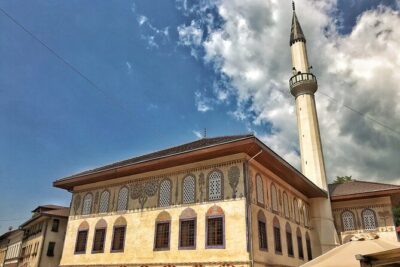
Travnik, Jajce & Pliva Lakes Day Tour From Sarajevo (fees Incl.)
Read our review →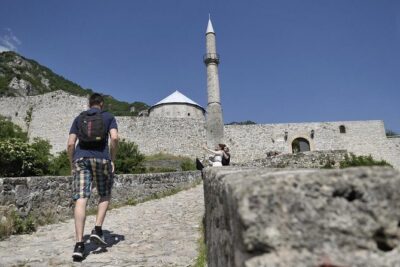
CENTRAL BOSNIA | A medieval tour (Jajce + Travnik + Pliva lakes)
Read our review →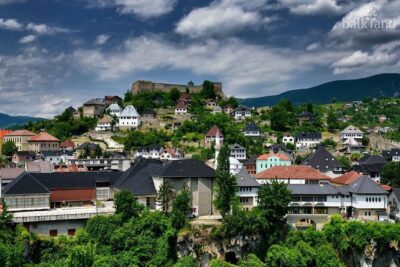
Bosnian Kingdom Capitals: Travnik & Jajce Tour from Sarajevo
Read our review →
Sarajevo to Zagreb: One-Way Tour via Jajce, Travnik, Pliva Lake and Watermills
Read our review →Browse the lists this tour appears in