
Reviewed · MOSTAR TOURS
The Death of Yugoslavia Tour in Mostar
Mostar’s famous bridge tells only part of the city’s story. This tour takes you beyond the postcard view, to abandoned military and political sites tied to Tito’s Yugoslavia, Cold War fear, and the war that broke the country apart. The locations are kept secret until you arrive, which gives the outing a small sense of discovery.
I like two things right away. First, the guide connects large political events to ordinary life, from Youth Work Actions and factory jobs to music, cars, brands, and family memories. Second, the music presentation adds feeling to the history instead of leaving you with a list of dates and names.
The main consideration is simple: these are not polished attractions. Some places are decaying or abandoned, and one past participant felt the sites were poor value even while praising the guide. You are paying mainly for the explanation, transport, and access to places you would not easily find alone.
Key points to know before booking
- Four secret locations: You visit sites around Gornje Gnojnice, Rodoč, Španski trg, and the Partisan Cemetery.
- A guide-led history lesson: Expect clear explanations of Tito, Cold War tensions, Yugoslav popular culture, nationalism, and the Bosnian War.
- Music is part of the tour: Songs help show the mood and changing identity of Yugoslavia across several decades.
- Small group format: The maximum group size is 16 people, making it easier to hear the guide and ask questions.
- About $47 per person: The price includes transport, the driver-guide, and taxes, but not food or drinks.
- Best for history-minded visitors: Choose it for context and personal stories, not pretty views or restored monuments.
Why this Mostar tour tells a different story
Many visits to Mostar focus on Ottoman streets, the rebuilt Old Bridge, river views, and the scars of the 1990s conflict. Those are important parts of the city, but they can leave you with a narrow view of Bosnia and Herzegovina.
This experience widens the frame. It begins before the war, with the creation of socialist Yugoslavia after the Second World War. It then follows the country through Cold War tension, industrial growth, popular culture, economic problems, rising nationalism, and violent collapse.
That order matters. You are not simply taken to a war-damaged building and told what happened there. You first learn why Yugoslavia existed, why it appealed to many people, why it had serious weaknesses, and why its breakup became so destructive.
The tour runs for about two and a half hours, with roughly 30 minutes devoted to each stop and the drive between them used for explanation. The transport saves you from trying to locate scattered sites by taxi or on foot. It also lets the guide keep the story moving from one chapter to the next.
The guide is the heart of the experience. Names associated with the tour include Marko or Marco, Miran, Dario, Marin, and Sebi. The exact guide may vary, but the format calls for someone who can explain politics in plain language and add personal or family memories from life in Yugoslavia and during the war.
A few more Mostar days to weigh up
- From Dubrovnik: Mostar and Kravica Waterfall Day Trip
★ 4.7 · 4,709 reviews - Dubrovnik: Kravica Waterfalls, Mostar and Pocitelj Day Trip
★ 4.5 · 3,045 reviews - Discover Herzegovina Day Tour from Mostar: Kravice Waterfalls, Blagaj, Počitelj
★ 5.0 · 742 reviews
Starting at iHouse Travel in Mostar
You meet at iHouse Travel, at Onešćukova 25 in Mostar, for a 5:00 pm departure. The tour ends back at the same meeting point.
That return arrangement is useful if you are staying in the center and have dinner plans afterward. Hotel pickup and drop-off are not included unless you select that option, so check your booking details rather than assuming a vehicle will come to your accommodation.
The group can include up to 16 people. That is large enough to create some energy but still small enough for a guide to speak directly to the group. Children must be accompanied by an adult, and most people can take part.
The timing also works well in a Mostar visit. You can spend the earlier part of the day in the Old Town, then meet at 5:00 pm for a history lesson that continues into the evening. The listed duration is approximate, and one group finished a little after three hours, so avoid booking a tight dinner reservation immediately afterward.
Stop one: Gornje Gnojnice and Cold War paranoia
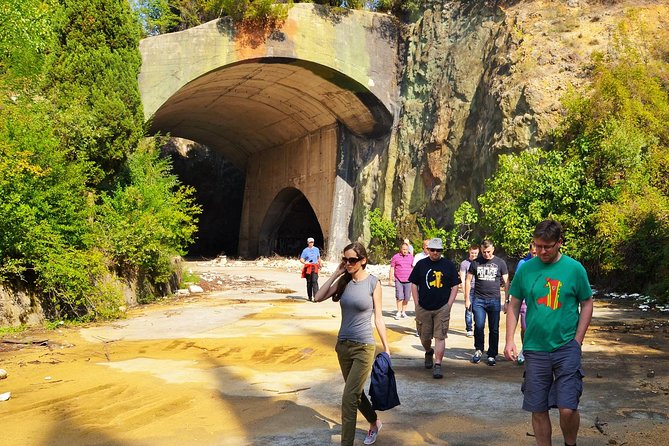
The first chapter begins during the drive to Gornje Gnojnice. The guide sets up the Second World War, the rise of socialist Yugoslavia, and the difficult position the new country occupied after breaking with Stalin and the Soviet Union.
At the first secret location, the focus turns to the Informbiro period. This was the tense era after Yugoslavia’s split with the Soviet bloc, when fear of invasion, espionage, and internal enemies shaped the country’s politics. The site itself is not presented as a pretty attraction. Its importance comes from what it represents: suspicion, secrecy, and the push toward military preparedness in the 1950s.
This is where the secret-location idea works best. You are not given a glossy monument with a neat plaque. You arrive at a place that may look rough or forgotten, then learn why it mattered. The gap between the ordinary appearance of the site and the anxiety attached to it is part of the lesson.
You should also set your expectations correctly. Access to an abandoned location does not mean you will see a preserved museum or a room full of original displays. The guide’s account supplies the structure. If you prefer formal exhibits, this stop may feel thin. If you like physical places that still carry traces of a vanished system, it can be powerful.
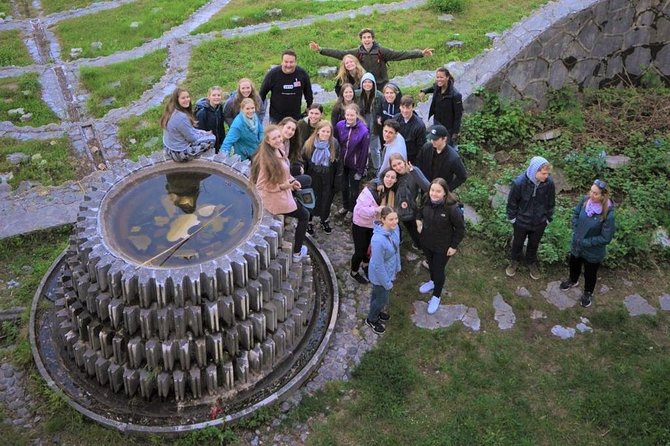
Stop two: Rodoč and everyday life under Tito
The drive to Rodoč shifts from state paranoia to Josip Broz Tito and the daily life of ordinary people. The guide covers Tito’s personal life, political achievements, and attempt to build a form of socialism suited to Yugoslavia rather than copied directly from Moscow.
This is one of the strongest parts of the tour because it avoids treating Yugoslavia as only a political failure. You learn about the hopes attached to the system as well as its limits. The discussion includes Youth Work Actions, industrial growth during the 1950s and 1960s, and the expectations that came with a job, education, and participation in a large national project.
The guide then moves into popular culture in the 1970s and 1980s. You hear about brands, music, cars, and changing lifestyles. These details help you picture a society that was neither the closed Soviet model many outsiders imagine nor a Western democracy. Yugoslav identity had its own habits, products, sounds, and ambitions.
This section is also where personal storytelling can make the biggest difference. Guides such as Marco or Marin have been praised for explaining family experiences and memories from the Yugoslav period. That kind of account cannot replace historical balance, but it can show how broad political ideas affected kitchens, workplaces, schools, and weekends.
The site at Rodoč may again feel plain or worn. Do not book this tour expecting a conventional museum. The reward is the connection between an unremarkable place and a larger story about work, pride, consumer goods, and belonging.
A completely different kind of day out of Mostar:
- Herzegovina Day Tour from Mostar: Blagaj, Pocitej, Kravice falls (Join Us! :D)
★ 5.0 · 372 reviews - Mostar and Kravice Waterfalls Full-Day Tour from Split
★ 4.8 · 308 reviews - Break-up of Yugoslavia & The War in Mostar: Life Under Siege
★ 5.0 · 136 reviews - Mostar & Kravice Waterfalls: Guided Day Trip from Dubrovnik
★ 4.3 · 134 reviews
Stop three: Španski trg and the road to war
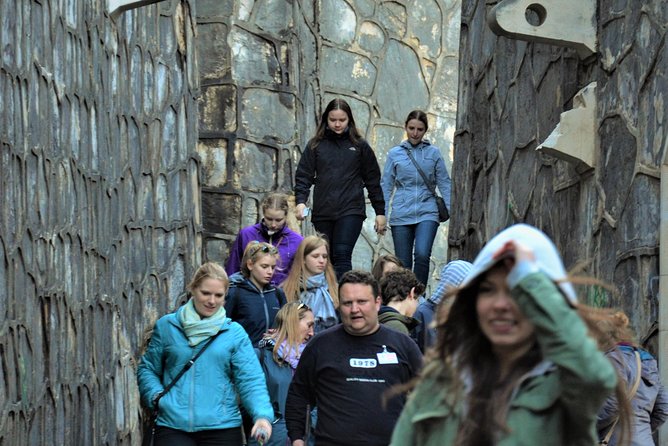
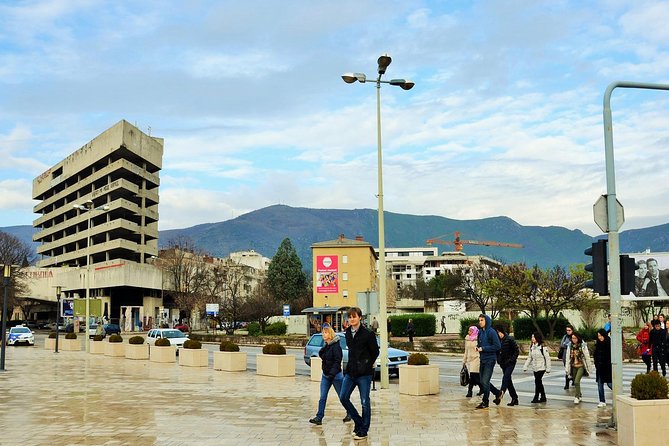
The third chapter looks at the 1980s, beginning with the 1984 Winter Olympics in Sarajevo. The guide explains why the Olympics were seen as a high point for Yugoslavia, a moment when the country appeared confident, modern, and united.
From there, the tone changes. Economic depression, political weakness, and growing nationalism placed pressure on the federation. The guide follows the sequence of conflict in Slovenia and Croatia, then explains how war reached Bosnia and Herzegovina a year later.
Španski trg gives this part of the discussion a direct connection to Mostar. The tour does not treat the war as an abstract event somewhere else. It places the collapse of Yugoslavia beside the city’s own experience of division, destruction, and loss.
The guide also tries to answer a harder question: What happened to the Yugoslav dream? That question has no simple answer, and a two-and-a-half-hour tour cannot cover every political or military detail. Still, the structure helps you understand that the breakup did not come from one cause alone. Financial hardship, national ambitions, weakened institutions, and fear all fed into the disaster.
Expect a serious section here. The discussion includes destruction and loss of life, so this is not light sightseeing. Guides have been praised for making complicated Balkan history easier to follow, often using humor earlier in the tour before giving the war its proper weight.
Stop four: the Partisan Cemetery and Bosnia today
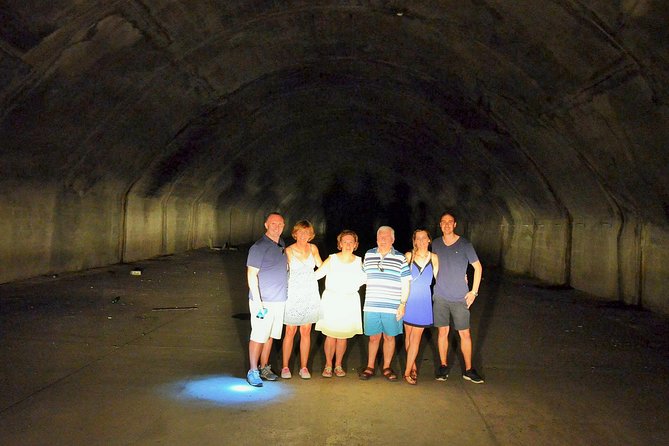
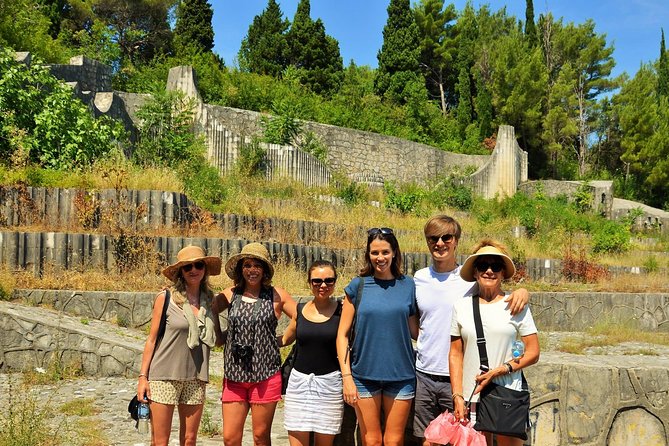
The final stop is the Partisan Cemetery, a place linked to the memory of Yugoslavia’s anti-fascist past. Here the guide brings the earlier chapters together and asks what remains of that old vision in present-day Bosnia and Herzegovina.
The discussion covers the country’s political structure and the problems that continue into the 21st century. You are introduced to the challenge of balancing different communities, institutions, and political interests, along with the need for economic, cultural, and political recovery.
The cemetery is a fitting final setting because it links an earlier struggle against fascism with the later failures and conflicts of the Yugoslav state. The contrast can be uncomfortable. A memorial to shared ideals now sits within a country still dealing with division and difficult political arrangements.
The guide also places Bosnia and Herzegovina in the wider question of possible European Union membership. This does not turn the stop into a political forecast. Instead, it gives you a way to think about the country’s future after the war and about the practical work still required to build stability.
You may find this stop more reflective than visual. The cemetery’s meaning depends on the explanation, and the condition of the site may surprise you. Again, the value comes from the connection between place and story.
Music, personal stories, and the guide’s role
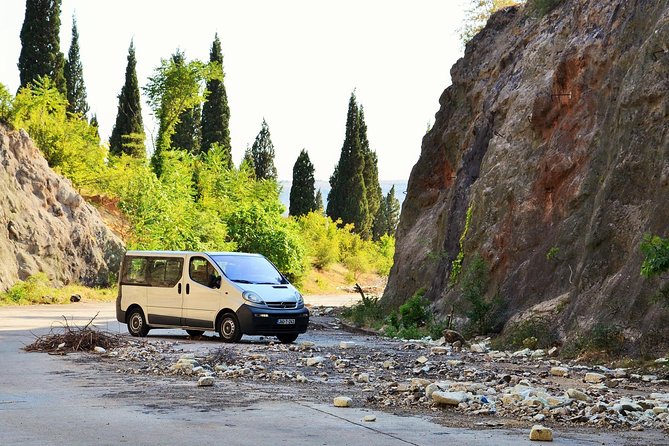
The best guides on this tour do more than recite facts. Marko has been praised for strong communication and an easy sense of humor. Miran is known for explaining Bosnia and Herzegovina’s history clearly. Dario has a lively way of handling a complicated subject, while Marin has been noted for passion and relatable storytelling. Sebi has also been praised for combining history with practical advice about the country.
The music presentation is a smart touch. Songs can show the difference between official socialist ideals, everyday popular culture, and the changing mood of the 1980s. Music also gives you a feeling for a period that statistics alone cannot provide.
Personal memories need a little care. One guide’s family experience is not the whole history of Yugoslavia, and you should listen for the broader explanation as well as the individual story. Still, these accounts help you understand why people remember the same country in very different ways.
The strongest feature is the guide’s ability to make the sequence understandable. You move from the Second World War to Tito, from Cold War fear to popular culture, and then from economic decline to war and present-day politics. That clear progression is worth more than a long list of disconnected facts.
Is $47.17 a fair price?
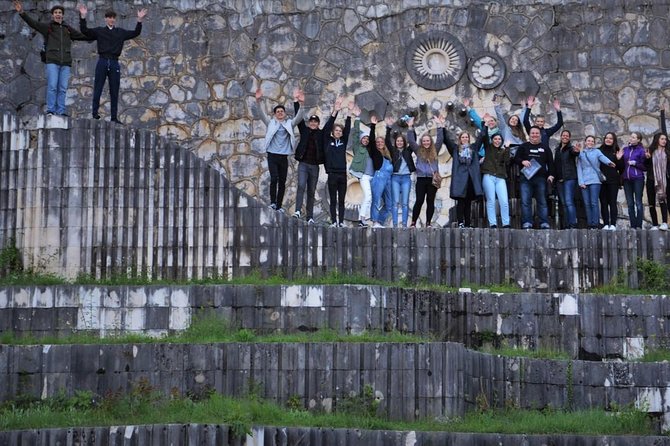
At about $47.17 per person, this is not the cheapest activity in Mostar. The price includes the driver-guide, local taxes, other fees, and transport between the meeting point and the four locations. Food and drinks are not included.
I think the value depends on how you measure a tour. If you are paying for grand monuments, restored interiors, or scenic viewpoints, you may be disappointed. The sites are described as abandoned and decaying, and one person felt the locations did not justify the cost.
If you are paying for access, transport, organization, and a strong two-and-a-half-hour explanation of Yugoslav history, the price is easier to defend. You would not easily find these places on your own, and the sites are spread beyond the center. The guide also turns them into a connected story rather than a set of random ruins.
Solo visitors should check the final price carefully. The experience requires at least two people to operate, and a single supplement may apply if you book alone. That extra charge was explained to one solo participant before departure, so ask about it in advance if you are traveling by yourself.
Group discounts are available, which can improve the price for families or small parties. The tour is also usually booked about 19 days ahead, so it is sensible to reserve before arriving if the subject is important to you.
Who should take this tour?
I would choose this tour if you want to understand Mostar beyond its Ottoman architecture and wartime damage. It suits people who enjoy political history, oral storytelling, and places that show the remains of a failed or changing system.
It is especially useful before visiting other parts of Bosnia and Herzegovina. The discussion gives you context for the country’s divisions, memories, and current political problems. It can also help you listen more carefully when local people talk about Yugoslavia, Tito, or the 1990s.
Families with older children may find it worthwhile, but children must be accompanied by an adult. The subject includes war, destruction, and death, so decide if the tone fits your family.
I would skip it if your ideal afternoon means scenic stops, comfortable attractions, or formal museum displays. The tour is built around explanation. The locations may look rough, and the emotional payoff depends heavily on the guide.
Free cancellation is available up to 24 hours before the 5:00 pm start time. Changes or cancellations inside that window are not accepted for a refund.
Should you book the Death of Yugoslavia Tour?
Book it if you want the story behind modern Mostar, not just photographs of it. The small group, included transport, secret sites, music, and strong guide-led narrative make this a useful choice for history-minded visitors.
Just know what you are buying. You are not buying four polished attractions. You are buying access to overlooked places and a carefully ordered explanation of how Yugoslavia was formed, lived in, and lost.
For most visitors with even a passing interest in the Balkans, I would put this high on the Mostar list. If you are unsure, ask yourself one question: would you rather spend two and a half hours seeing another pretty place, or understanding why this city and country became what they are today? That answer should make the decision clear.
FAQ
Where does the Death of Yugoslavia Tour start?
The tour starts at iHouse Travel, Onešćukova 25, Mostar 88000, Bosnia and Herzegovina.
What time does the tour begin?
The scheduled start time is 5:00 pm.
Where does the tour finish?
The activity ends back at the meeting point at iHouse Travel.
How long does the tour last?
The advertised duration is approximately two hours and 30 minutes. Some departures may run slightly longer.
How many sites are visited?
The tour visits four sites connected with Yugoslavia and the Cold War, including stops in Gornje Gnojnice, Rodoč, Španski trg, and the Partisan Cemetery.
Is hotel pickup included?
Hotel pickup and drop-off are not included unless you select that option when booking.
Is the tour offered in English?
Yes. The tour is offered in English.
Can I cancel for a full refund?
Yes, if you cancel at least 24 hours before the experience start time. Cancellations made less than 24 hours before departure are not refunded.
Just added around Mostar
- Pocitelj City Tour★ 4.5 · 3 reviews
- Walking Tour in Old Town Mostar★ 5.0 · 5 reviews
- Mostar War Heritage Walking Tour★ 5.0 · 6 reviews
- Mystical Sutjeska National Park★ 5.0 · 3 reviews
- Mostar Shelters tour in Mostar★ 5.0 · 9 reviews
- Mostar gastro and historical treasures★ 5.0 · 6 reviews
- Mostar Guided Tour & Sweet Delights★ 5.0 · 3 reviews
- Private group city tour of Mostar and the Old Bridge★ 5.0 · 6 reviews
Mostar Tours, compared.
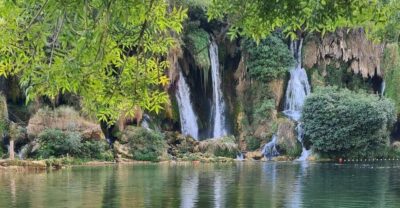
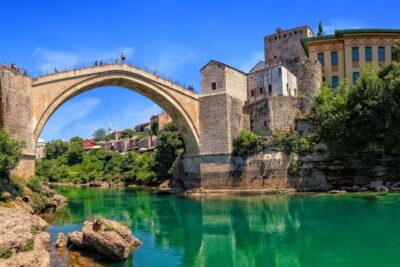
Kravica Waterfalls, Mostar and Pocitelj Day Trip
Read our review →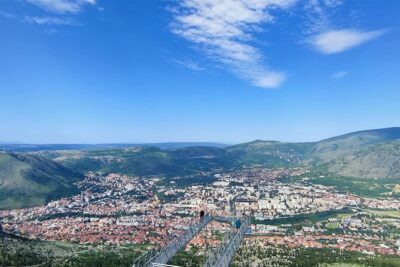
Discover Herzegovina Day Tour from Mostar: Kravice Waterfalls, Blagaj, Počitelj
Read our review →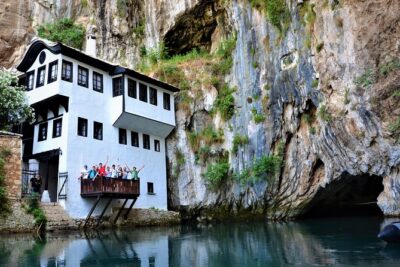
Herzegovina Day Tour from Mostar: Blagaj, Pocitej, Kravice falls (Join Us! :D)
Read our review →
Mostar and Kravice Waterfalls Full-Day Tour from Split
Read our review →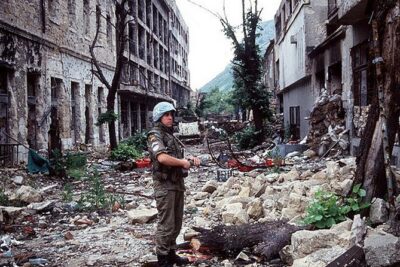
Break-up of Yugoslavia & The War in Mostar: Life Under Siege
Read our review →
Mostar & Kravice Waterfalls: Guided Day Trip from Dubrovnik
Read our review →
Browse the lists this tour appears in