
Reviewed · WAR & SIEGE TOURS
Break-up of Yugoslavia & The War in Mostar: Life Under Siege
Mostar’s famous bridge is only part of the story. This tour takes you from a secret Yugoslav aircraft hangar to the former front line, showing how the 1992 to 1995 war still shapes the city. Esmer, Harun, and Vedad are among the guides who lead it, and the strongest part is the local perspective.
I like the small maximum of eight people, which gives you room to ask hard questions. I also like the mix of places: a military site outside town, a war museum, and damaged buildings in the city center. The main consideration is that this is an information-heavy, emotional tour, not a light sightseeing outing.
Five things to know before you book
- The abandoned aircraft hangar reveals a secret Yugoslav military project built into the mountains south of Mostar.
- Personal war stories help connect political events to ordinary family life during the siege.
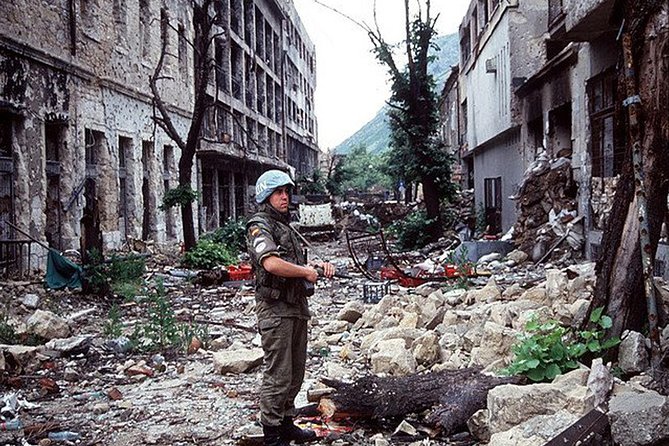
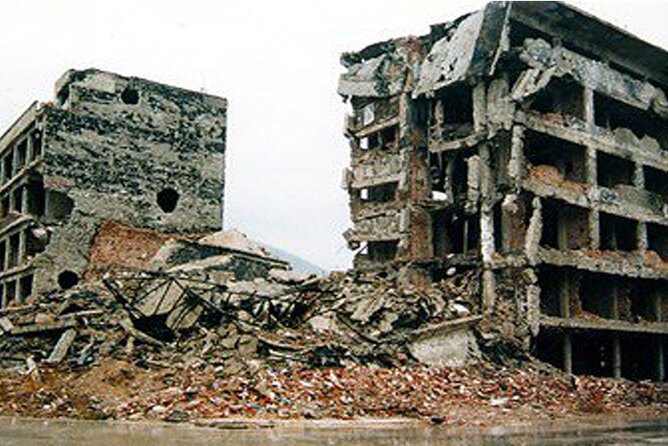
- The front line runs through the modern city, with bunkers, damaged buildings, and former combat positions still visible.
- A whiteboard map and timeline make the breakup of Yugoslavia easier to follow.
- Hotel pickup and drop-off are offered in Mostar, with an air-conditioned vehicle for the driving portions.
- The tone is serious and respectful, with time for questions about the war and Mostar’s divided present.
Why this Mostar war tour matters
Mostar is easy to visit as a postcard city. You can cross Stari Most, watch high divers prepare for the jump, eat ćevapi, and wander the stone lanes of the Old Town. All of that is worthwhile, but it can leave you with a very incomplete picture.
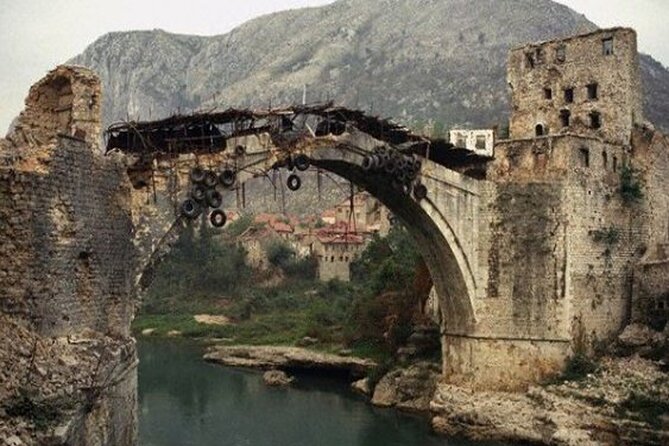
The war in Mostar was not an old medieval conflict. It happened within living memory, and the scars remain in the streets, buildings, politics, and family stories. This tour gives you a way to see the city as more than a pretty stop between Split and Dubrovnik.
I value the way the experience links the breakup of Yugoslavia to events on the ground. Instead of presenting a list of battles, the guide explains how political decisions, ethnic tension, military movements, and local loyalties collided in Mostar.
The guides also try to keep the story balanced. Esmer, in particular, is described as open about his family’s wartime experiences while acknowledging that wrongdoing took place on all sides. That does not make the subject less painful. It gives you a clearer way to think about it.
More tours about the siege and the war:
- Mostar War Heritage Walking Tour
★ 5.0 · 6 reviews - Fall of Yugoslavia, Sarajevo War Tour with Tunnel of Hope Museum and Frontlines
★ 5.0 · 1,314 reviews - ROSES OF SARAJEVO (Official WAR + CITY tour)- Story of a Survivor
★ 5.0 · 770 reviews
Stop one: the aircraft hangar south of Mostar
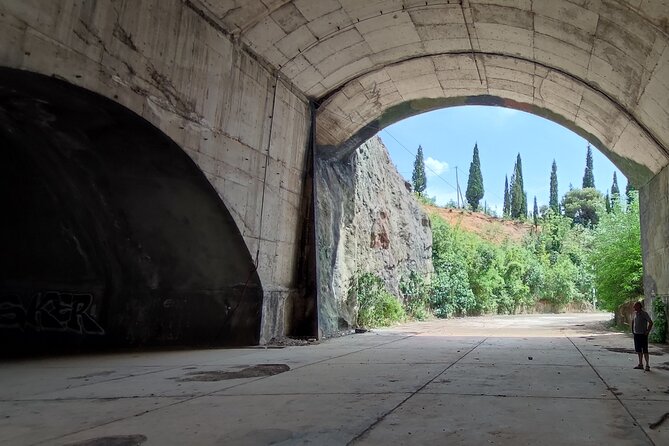
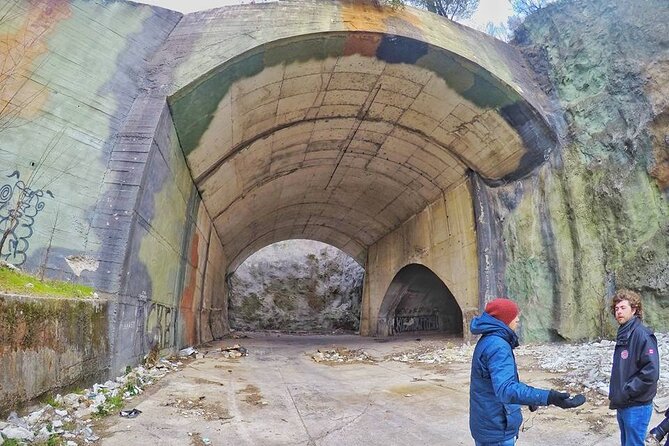
The first stop is an abandoned aircraft hangar about five minutes south of Mostar. It was built into the mountain as a protected base for fighter jets under Yugoslav leader Josip Broz Tito.
The hangar was designed to keep aircraft safe from attack and out of public view. The mountain itself formed a natural shield, while the underground setting made the site difficult for ordinary citizens and foreign observers to see.
You spend about 50 minutes here. Admission is included, and the air-conditioned vehicle handles the short transfer from Mostar. This is not a polished museum with displays at every turn. Its appeal comes from the setting, the military purpose, and the chance to see a large abandoned structure tied to Yugoslavia’s security system.
I would set your expectations correctly. The hangar is fascinating for anyone interested in Cold War military sites, but it may not be the most visually dramatic stop. Parts of the tour are about understanding what the place was built to do, not collecting perfect photographs.
The mountain setting also helps explain why Yugoslav authorities chose the location. You can begin to see how geography shaped military planning in this part of Bosnia and Herzegovina.
Stop two: the Mostar War Museum
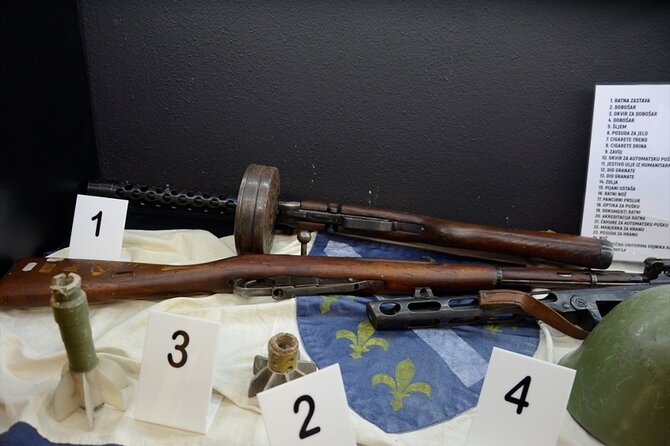
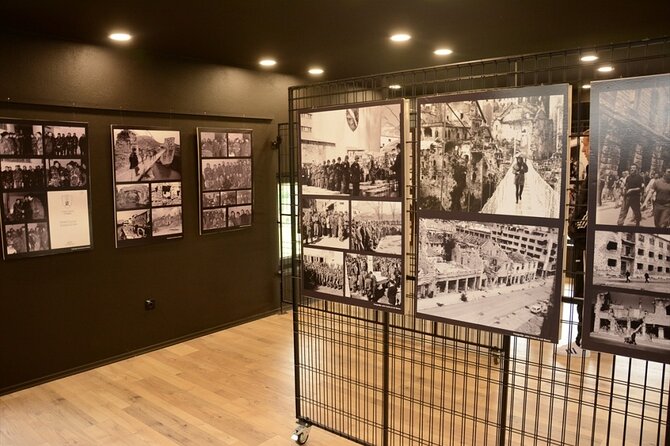
The Mostar War Museum is the heart of the tour. You spend another 50 minutes here, listening to the guide explain what happened in Mostar and what daily life was like during the siege.
The guide uses a board to draw a map of the former Yugoslavia and explain the sequence of events. That simple method matters. The breakup of Yugoslavia involved changing borders, several political and military forces, and shifting alliances. Without a map, it is easy to lose track of who controlled what and why.
This is also where the personal side of the tour becomes strongest. Esmer has shared stories about his family and his experience of the war. Other guides, including Harun, are praised for explaining the causes and events in a clear chronological order.
You should expect difficult material. The tour deals with civilians under attack, divided communities, damaged homes, and the lasting effects of violence. Several people who took this experience found the stories moving enough to bring them to tears. That is not a warning against booking. It is a reminder to come prepared for a serious account.
The museum is connected to local wartime memory and gives the guide a place to explain events in detail. You can ask about the breakup of Yugoslavia, the fighting in Mostar, the experience of civilians, and the political situation today.
One of the best features is the freedom to ask questions. Guides are not simply reciting a short script and moving you along. The small group format gives the conversation room to develop, especially when only two people or a family are on the tour.
Stop three: the former front line in central Mostar
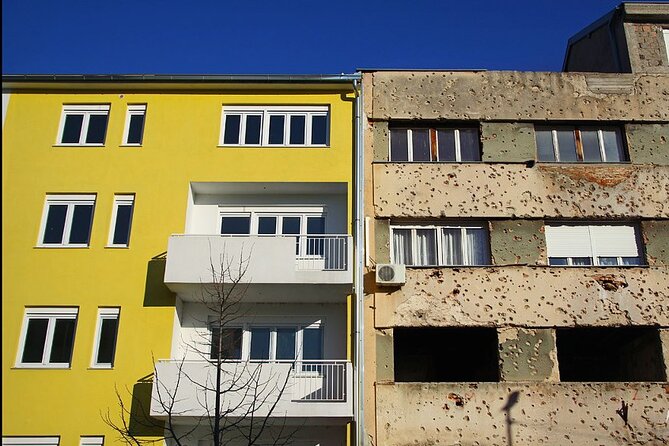
The final section takes you through streets near the former front line, including Šantića Street, Spanish Square, and Boulevard Street. The fighting between Bosnian and Croatian forces came close to the city center, and some bunkers remain among damaged or abandoned buildings.
This part makes the history physical. You are no longer looking at a map or hearing about a distant battle. You are walking through streets that now serve ordinary city life but once marked a line of combat.
The guide uses wartime photographs to compare places such as Spanish Square and Boulevard Street with their present appearance. That before-and-after view helps you notice what has been repaired, what remains damaged, and how quickly a city can look normal while carrying a painful past.
The former front line is also tied to Mostar’s continuing division. The line is not always marked with a sign, but it remains meaningful in the way the city is organized and understood. The tour gives you context for why Mostar can feel both united and divided at the same time.
This is a walking section, so comfortable shoes are sensible. The total activity lasts about three hours, although the length can stretch when the guide is answering questions or telling a personal story. One account describes the tour lasting closer to four hours because Esmer was so willing to continue the discussion.
A few more Mostar days to weigh up
- From Dubrovnik: Mostar and Kravica Waterfall Day Trip
★ 4.7 · 4,709 reviews - Dubrovnik: Kravica Waterfalls, Mostar and Pocitelj Day Trip
★ 4.5 · 3,045 reviews - Discover Herzegovina Day Tour from Mostar: Kravice Waterfalls, Blagaj, Počitelj
★ 5.0 · 742 reviews - Herzegovina Day Tour from Mostar: Blagaj, Pocitej, Kravice falls (Join Us! :D)
★ 5.0 · 372 reviews
Guides who make the subject understandable
A good guide matters greatly here. The history is too complex for a quick audio recording or a few plaques. You need someone who can explain the order of events, define the groups involved, and separate political aims from the experience of civilians.
Esmer receives the strongest praise in the available feedback. He is described as warm, passionate, objective, and able to explain a complicated chain of events in plain language. His family’s experience of the siege gives his presentation a human scale, while his willingness to discuss current problems keeps the tour from ending in 1995.
Harun, also written as Huran in one account, is praised for his clear timeline and calm teaching style. Vedad is noted for explaining the conflict and recovery while also offering a useful view of Mostar from a nearby mountain.
Guide assignments can vary, so you should not assume a particular person will lead your departure. The important point is that the experience is built around a local guide who can answer questions and add personal context.
The guides also add small cultural touches. Esmer has introduced visitors to the ritual of Bosnian coffee, suggested places for ćevapi, and pointed out local cafés away from the busiest Old Town routes. Those extras are not the main purpose of the tour, but they help connect wartime history with the city people live in today.
What the three-hour format means for you
Three hours is a useful length for this subject. You get enough time to cover the political background, visit three distinct locations, and ask questions without giving up an entire day.
The format also keeps the experience focused. You are not spending the morning on unrelated monuments or general sightseeing. The abandoned hangar, war museum, and front-line streets all support the same theme.
The trade-off is pace. This is not a slow, leisurely city walk. Part of the tour takes place in the vehicle, and the museum session can feel like a history class. If you want only photographs and a quick overview, you may find it intense.
For me, the small group limit of eight is especially valuable. A large coach would make personal discussion difficult. With fewer people, you can ask about family memories, current divisions, reconstruction, or the international response without holding up a crowd.
Hotel pickup and drop-off in Mostar make the timing easy, especially if you are visiting without a car. If your accommodation is not listed, you need to provide its address. An air-conditioned vehicle is included for the driving portions.
Is $42.33 a fair price?
At $42.33 per person, I consider this a good value for a three-hour experience, particularly if you are staying in Mostar and want more than a standard Old Town walk.
The price covers a professional guide, transport in an air-conditioned vehicle, hotel pickup and drop-off when selected, and entrance to the Mostar War Museum. You are also paying for interpretation, which is the most important part of the experience.
You could visit some war-damaged areas independently, but you would miss much of the meaning. A bunker in a ruined building tells you very little without knowing who used the area, why the position mattered, and how the front line affected residents.
The value is highest for visitors who are already moving through the Balkans and want to understand the connections between Bosnia and Herzegovina, Croatia, Montenegro, and the former Yugoslavia. It can also change the way you see Stari Most. The bridge becomes more than a beautiful Ottoman-era landmark. It becomes part of a city that endured destruction and rebuilding.
Who should book this experience?
I would recommend it to adults, older teenagers, history students, and anyone who wants to understand modern Mostar. It suits people who ask questions and do not mind spending part of a holiday thinking about difficult events.
It is also useful early in your Mostar stay. Once you understand the city’s recent past, later walks through the Old Town and across the bridge have more meaning. You notice the invisible divisions, the repaired façades, and the distance between the tourist center and everyday life.
Families with younger children should use their judgment. Children must be accompanied by an adult, and the material includes war, civilian suffering, and personal loss. The tour is not described as unsuitable for children, but the subject is heavy.
You may want to skip it if you are looking for a cheerful morning or a photo-focused outing. The sites are important rather than conventionally beautiful, and the guide spends a lot of time explaining events. That is precisely why I would choose it, but it will not suit every mood.
Practical advice before you go
Book ahead if your schedule is fixed. The experience is often reserved well in advance, with an average booking time of about 67 days. Confirmation is provided within 48 hours, subject to availability.
Wear shoes suitable for walking through streets and uneven historic or damaged areas. Bring water, especially in warm weather, although the vehicle is air-conditioned.
Think about the questions you want answered before you arrive. You can ask about the breakup of Yugoslavia, the siege, life in divided Mostar, the role of civilians, reconstruction, or the country’s current political situation.
The tour is offered in English and has free cancellation up to 24 hours before the start time. Changes or cancellations inside that window are not accepted for a refund.
Should you book the Mostar war tour?
I would book it if you want the Mostar that exists behind the bridge photographs. The combination of a secret military hangar, a local war museum, and former front-line streets gives you a clear three-part route through Yugoslavia’s collapse and Mostar’s painful recent past.
The strongest reason to go is the guide. Esmer, Harun, and Vedad are praised for making difficult material understandable, personal, and open to questions. The main drawback is also clear: this is an emotional history lesson, and some stops are more important than photogenic.
For a relatively modest price, you get transport, museum admission, a small group, and local interpretation that would be hard to reproduce alone. If you have only a few hours in Mostar and want to understand why the city feels the way it does today, this is one of the most useful choices you can make.
FAQ
How long does the Mostar war tour last?
The tour lasts approximately three hours. It may run longer if the guide spends extra time answering questions or discussing personal experiences.
What places are included?
The route includes an abandoned Yugoslav military aircraft hangar south of Mostar, the Mostar War Museum, and former front-line areas near Šantića Street, Spanish Square, and Boulevard Street.
Is hotel pickup available?
Yes. Hotel pickup and drop-off in Mostar are offered when that option is selected. If your accommodation is not listed, you should provide its address.
What language is the tour offered in?
The tour is offered in English.
How many people can join?
The maximum group size is eight travelers.
Is transportation included?
Yes. An air-conditioned vehicle is included for the driving portions of the experience.
Is the Mostar War Museum entrance included?
Yes. The Mostar War Museum entrance fee is included.
Can children join the tour?
Children can participate but must be accompanied by an adult.
Can I cancel for a full refund?
You can cancel up to 24 hours before the experience start time for a full refund. Cancellations or changes made less than 24 hours before the start time are not accepted for a refund.
Just added around Mostar
- Pocitelj City Tour★ 4.5 · 3 reviews
- Walking Tour in Old Town Mostar★ 5.0 · 5 reviews
- Mostar War Heritage Walking Tour★ 5.0 · 6 reviews
- Mystical Sutjeska National Park★ 5.0 · 3 reviews
- Mostar gastro and historical treasures★ 5.0 · 6 reviews
- Mostar Shelters tour in Mostar★ 5.0 · 9 reviews
- Mostar & Herzegovina Tour★ 3.5 · 6 reviews
- Mostar Guided Tour & Sweet Delights★ 5.0 · 3 reviews
War & Siege Tours, compared.
Fall of Yugoslavia, Sarajevo War Tour with Tunnel of Hope Museum and Frontlines
Read our review →
ROSES OF SARAJEVO (Official WAR + CITY tour)- Story of a Survivor
Read our review →
Tunnel Museum: Bosnian & Yugoslav Wars Tour with War Veteran
Read our review →
Sarajevo War Tour: A Veteran’s Story of the Siege (fees included)
Read our review →
Sarajevo to Srebrenica: Genocide Study Tour with War Veteran
Read our review →
Sarajevo Grand Tour: Old Town, War Tunnel, Olympic Sites & More
Read our review →
War Times Experience in Sarajevo – Half Day Tour
Read our review →Browse the lists this tour appears in