
Reviewed · WALKING TOURS IN SARAJEVO
Delicious Sarajevo: Eat, Walk & Discover City Tour
Sarajevo makes a fine first impression through its food. This three-hour walk begins with market cheeses and cured meats, moves on to freshly prepared pita and cooked dishes, and finishes with homemade brandy or coffee in Baščaršija. I like the way food and city history share equal billing, and I like that you eat in places used by local Sarajevans rather than only stopping for staged tastings.
The guides are another strong point. Lana, Enes, Merjem, and Emma are all named in especially warm feedback, with Lana praised for combining food stops and Sarajevo stories particularly well. The main caution is practical: the meeting instructions need close attention, since one booking ended badly when the visitor could not find the starting point or reach the operator.
Key Points to Know Before You Book
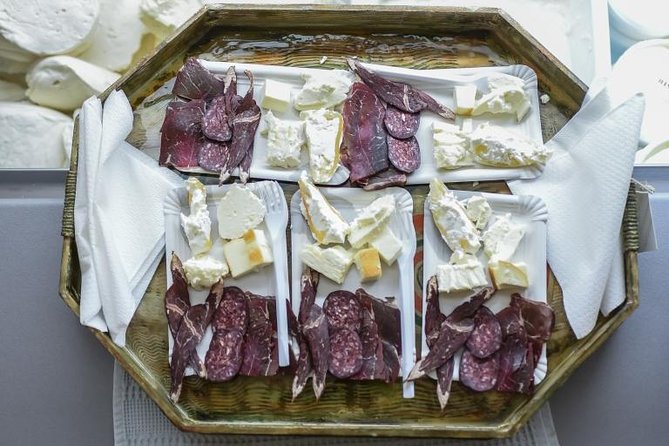
- Start with Sarajevo’s indoor Tržnica market: Taste cheeses, smoked and cured meats, and other foods tied to Bosnian home cooking.
- Eat pita where locals eat it: A stop at a traditional buregdžinica shows you how Bosnian pie is made before you sample it.
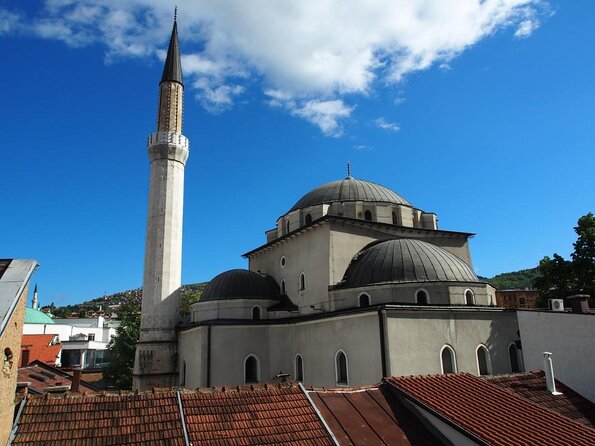
- Walk through the city’s layered past: The route includes the Orthodox church, cathedral, Jewish Quarter, mosque, museums, memorials, and major squares.
- Follow the Miljacka River: Parts of the walk use Obala Kulina Bana Street and Tito’s Street, with time to hear stories about important buildings.
- Finish in Baščaršija: Homemade brandy, juice, or coffee brings the group to a relaxed close in a typical Bosnian cafe.
- Plan for a three-hour food walk: The tour begins at 11:00 am, includes moderate walking, and has a maximum group size of 20.
Why Sarajevo Works So Well as a Food Walk
Sarajevo is a city where food carries family, faith, empire, and everyday life in one small serving. A market cheese, a folded piece of pita, or a glass of homemade brandy can open the door to a story about how people live, celebrate, and remember.
That is the real appeal here. You are not simply ticking off a list of dishes. You are moving through the center of Sarajevo while a local guide explains what you are seeing and eating. The route links food with churches, mosques, memorials, squares, and old streets, so the city begins to make sense as a connected place rather than a string of separate sights.
I especially like the timing. Starting at 11:00 am gives you enough morning to get out the door, but the first food stops also make this an early lunch. You should arrive with an appetite. The tastings are substantial enough to shape your meal plans for the afternoon, though the tour does not replace a full restaurant dinner.
The cost is $68.77 per person. That is not a bargain-priced walking tour, but it includes a local guide, food tastings, snacks, bottled water, and alcoholic drinks. You are paying for several small meals, not just a guided stroll with one token sample. The value is strongest if you want a ready-made introduction to Sarajevo and would otherwise spend time searching for good places to eat.
More Walking Tours in Sarajevo
- Sarajevo: 2 Hours Old Town Walking Tour With Local Guide
★ 5.0 · 505 reviews - Private Walking Tour, Food Tasting and Bosnian Coffee in Sarajevo
★ 5.0 · 255 reviews - Sarajevo Grand Walking Tour
★ 5.0 · 232 reviews
Starting at Tržnica and Sarajevo’s Food Market
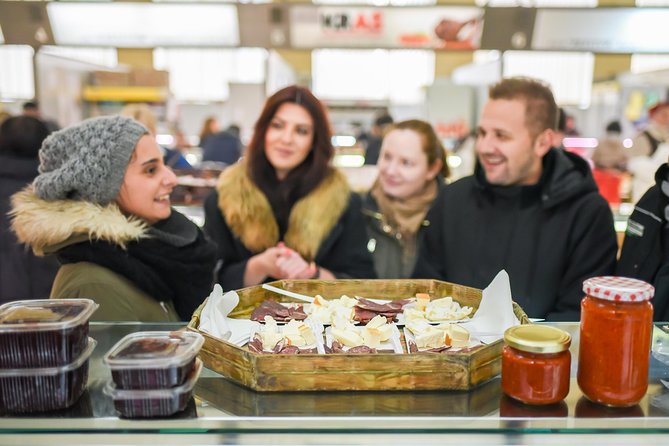
The experience is described as beginning at the entrance of Tržnica, Sarajevo’s indoor city market. The formal meeting information also gives Balkantina, Pehlivanuša 5, as the starting address, so check the exact map pin and instructions before setting out.
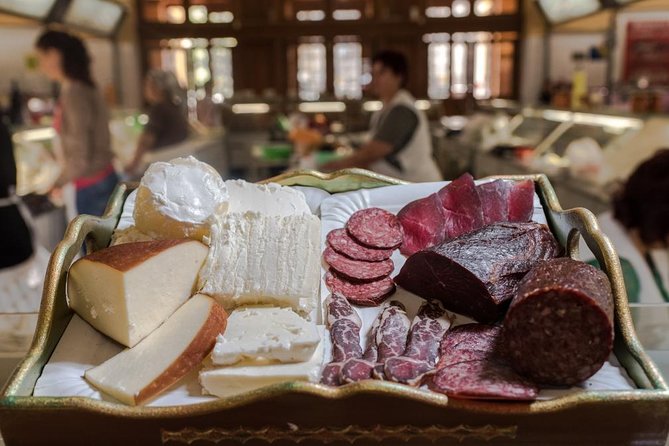
Once you meet the guide, the market provides an immediate introduction to Bosnian food. This is where you sample cheeses, cured meats, smoked meat, and other products prepared according to long-used recipes. The food comes from a countryside associated with clean air, spring water, and traditional production, but the useful point for you is simpler: you get to see what people buy for ordinary meals and festive tables.
Market tastings are often the best part of a food tour because they give you a way to ask questions. You can learn what to look for later in the trip, which products travel well, and which foods are worth bringing home if you have room in your luggage.
Do not expect a museum-style market lecture. The point is to taste and connect the food to local life. If you are sensitive to strong flavors or unfamiliar cured products, tell the guide early. The operator asks for food allergies and other dietary conditions in advance, which is important because the menu includes meat, dairy, cooked food, and alcohol.
Walking Through the City Center
After Tržnica, the route turns into a guided walk through Sarajevo’s central streets. The listed stops include Liberation Square, the Orthodox church, medieval tombs, the National Theatre, Tito’s Street, the Eternal Flame, Markale, the Cathedral, the Jewish Quarter, Gazi Husrev Bey’s Mosque, and Baščaršija.
That is a lot of ground for three hours, so think of this as a tasting walk with historical commentary rather than a full museum tour. You will see important places from the outside or in passing, while your guide explains how they fit into Sarajevo’s cultural and social life.
The mix of religious buildings is especially useful. An Orthodox church, Catholic cathedral, Jewish Quarter, and Gazi Husrev Bey’s Mosque all appear along the route. Sarajevo’s identity is often discussed through its meeting of different traditions, and seeing these places close together gives that idea a physical shape.
The Eternal Flame and Markale also add modern historical weight. You are not getting a single, polished version of the city. The route touches places connected with public memory, conflict, recovery, and daily life. Your guide’s storytelling matters here, and the strongest guide feedback names Lana, Enes, Merjem, and Emma as people who explain Sarajevo with warmth and personal attention.
Moderate walking is involved. Comfortable shoes are a must, especially if you want to focus on the guide rather than your feet. The route is not presented as physically demanding, but you should be ready to walk between food stops for much of the three hours.
Along the Miljacka River and Tito’s Street
The walk includes Tito’s Street and Obala Kulina Bana Street, where you can hear the Miljacka River and look at important Sarajevo buildings and monuments. This section gives the tour some breathing room between tastings.
The river is more than scenery. It helps orient you within the city, and the sound of the water offers a change from the market and central streets. Your guide uses this part of the walk to explain the backstories of buildings and public places, adding context that you would probably miss while walking alone.
I like this balance. A food tour can become a fast sequence of bites, with little time to notice the city around you. Here, the river walk lets the food settle while the focus shifts back to Sarajevo itself.
Still, keep your expectations realistic. The tour includes many landmarks, but it does not promise extended interior visits or long stops at every site. If you want detailed time inside the cathedral, mosque, museums, or other buildings, plan separate visits.
More food tours in Sarajevo:
- Sarajevo: 4-Hour Food And Craft Tour
★ 5.0 · 70 reviews - Eat, Pray, Love Tour
★ 4.5 · 32 reviews - Sarajevo Uncovered: Old Town Tour with Coffee and Food Tasting
★ 5.0 · 12 reviews - LUKOMIR VILLAGE HIKE & TREK TOUR (nature, hike, food & panorama)
★ 5.0 · 11 reviews
Learning How Bosnian Pita Is Made
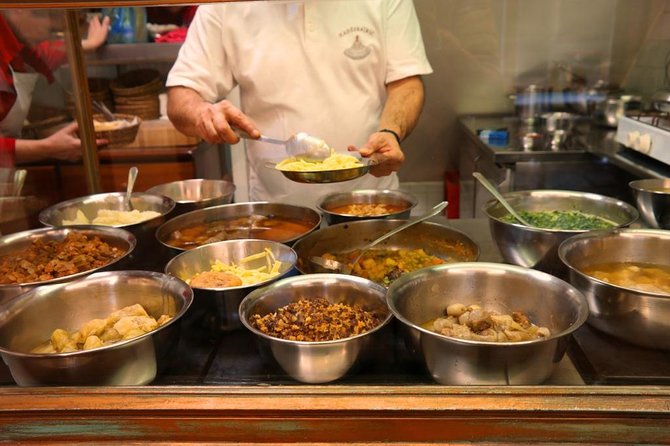
One of the most appealing stops is a buregdžinica, a traditional restaurant specializing in Bosnian pie. You learn how pita is made and then try it where Sarajevans eat it.
Bosnian pita is not one single filling or shape. The important experience here is seeing the preparation and eating it fresh, rather than treating it as a generic pastry. This stop turns a familiar-sounding dish into a specific part of Sarajevo’s food culture.
For many people, this may be the tour’s most useful food lesson. Pita is filling, easy to find around Bosnia and Herzegovina, and the sort of food you may want to order again after the tour. Pay attention to the preparation, then use the guide’s advice when you eat on your own.
Vegetarian food is available if you request it at booking. The tour also asks you to report allergies or other food conditions ahead of time. That advice matters here and at the later restaurant because the standard tasting includes meat and dairy.
Traditional Cooked Food and a Slower Restaurant Stop
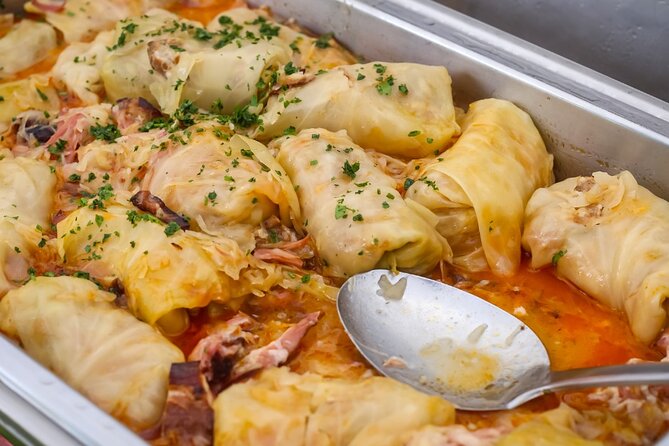
The route also includes traditional cooked dishes, with time to watch them being prepared in a traditional restaurant. This adds an important layer to the food program. Market samples show ingredients, and pita shows a specific local specialty. Cooked dishes show how those ingredients become a meal.
The restaurant stop should suit you if you want more than quick bites. It gives the guide a chance to explain preparation and gives you a better sense of everyday Bosnian dining. The exact dishes are not specified, so the menu may vary.
This is also where the $68.77 price begins to make more sense. You are receiving several food experiences across a three-hour route, plus drinks and guiding. If you mainly want a cheap walking tour, the price may feel high. If you want orientation, lunch-sized tasting, and help choosing food for the rest of your stay, it is easier to justify.
The group can include up to 20 people. That is small enough for a planned group experience, but it is not a private tour. If you want constant one-on-one conversation with the guide, a group of that size may feel less personal. On the other hand, the named guides are repeatedly described as personable and attentive, which helps offset the group format.
Finishing in Baščaršija with Brandy or Coffee
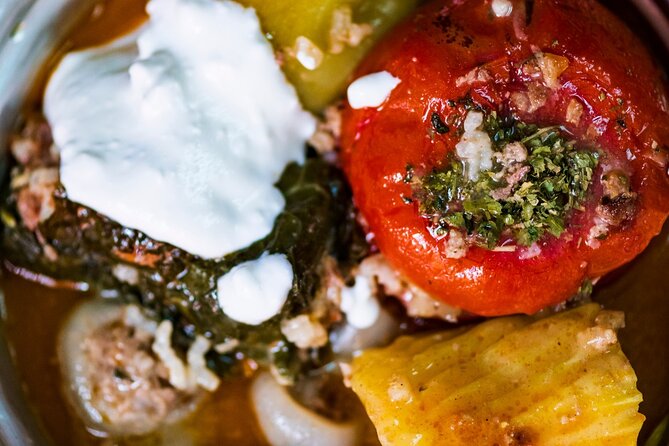
The tour ends at Baščaršija, Sarajevo’s best-known old-town area, at the listed address of Baščaršija 18A. The final stop is a typical Bosnian cafe, where you have homemade brandy, juice, or coffee and spend time enjoying the setting.
This ending is well judged. You finish in the city’s historic heart, not back at the starting point, so you can continue exploring immediately. Baščaršija is also a practical place to remain after the tour, and the information provided says you are welcome to stay in the cafe after the guide leaves.
The homemade brandy is included among the alcoholic drinks, but you do not have to drink alcohol. Juice and coffee are available, making the final stop workable for people who do not drink. If you do sample the brandy, take it slowly. The tour begins with food and walking, but the drink is still part of the experience rather than a reason to overdo it.
Ending here also makes the tour useful as a first-day activity. You can ask your guide what to see next in Baščaršija, where to return for food, and how to use the rest of your time in central Sarajevo. The tour does not include hotel transport, so you arrange your own way to the starting point and from the finish.
Guides, Group Size, and the Meeting Point
The experience is run by Balkantina, with guides including Lana, Enes, Merjem, and Emma named in the available feedback. Their strengths appear to be personal storytelling, good food choices, and an ability to connect the dishes to Sarajevo’s people and culture.
That makes the guide more important than usual. The route includes many landmarks, but the tour’s real character comes from the person leading it. A strong guide can explain why a market item matters, connect a building to the city’s past, and make the stops feel like part of one story.
The maximum group size is 20. Most people can take part, service animals are allowed, and the tour is near public transportation. Hotel pickup and drop-off are not included.
Pay careful attention to the meeting directions. The tour description points to the entrance of Tržnica, while the formal start address is Balkantina, Pehlivanuša 5. One poor experience resulted from confusion over the meeting location and difficulty reaching the operator. I would save the address, open the map before leaving, and arrive early enough to sort out any uncertainty.
The tour operates in all weather. Sarajevo can be pleasant for walking, but you should dress for the forecast and bring comfortable shoes. A light rain layer is sensible because the experience continues outdoors between food stops.
Who Will Get the Most From This Tour?
I would choose this tour for a first visit to Sarajevo, especially if you like to understand a city through what people cook and eat. It is also a good fit if you want a guide to connect the market, religious buildings, riverfront, memorials, and old town in one morning.
It suits curious eaters who enjoy trying cured meat, cheese, pita, cooked dishes, and a local drink. Vegetarians can request an alternative, but anyone with allergies or strict dietary needs should contact the operator before the tour and confirm what can be provided.
You may want something else if you prefer a private experience, dislike group walking, or want long visits inside every landmark. This is a moving introduction, not a full historical sightseeing tour or a dedicated restaurant meal.
The 92 percent recommendation rate and 4.7 rating indicate a very strong overall reception, but the practical complaint about meeting instructions should not be ignored. Good food cannot rescue a missed departure, so logistics are part of getting value from the booking.
Should You Book Delicious Sarajevo?
I would book it if you have three hours, enjoy trying local food, and want a useful first look at Sarajevo without planning every stop yourself. The combination of Tržnica, pita, cooked dishes, the Miljacka River, landmark stories, and Baščaršija gives you a solid introduction for $68.77.
Book with confidence if you value a personable guide and several included tastings. Choose another option if you need a private guide, extensive indoor sightseeing, or a very low-cost walk.
Before you go, confirm the exact meeting point, mention vegetarian needs or allergies, wear comfortable shoes, and arrive hungry. If you do those four things, this is a practical way to get your bearings, eat well, and leave with a better sense of how Sarajevo fits together.
FAQ
How long does the Delicious Sarajevo tour last?
The tour lasts approximately three hours.
What time does the tour begin?
The scheduled start time is 11:00 am.
Where does the tour start?
You are instructed to meet at the entrance of Tržnica, Sarajevo’s indoor city market. The formal start details also list Balkantina, Pehlivanuša 5, Sarajevo 71000, so confirm the exact meeting location and map pin before departure.
Where does the tour finish?
The tour ends in Baščaršija at Baščaršija 18A, Sarajevo 71000.
Is a vegetarian option available?
Yes. You should advise the operator at the time of booking if you need vegetarian food. You should also report any food allergies or other dietary conditions.
What is included in the price?
The price includes a local guide, food tastings, snacks, bottled water, beverages, and alcoholic beverages. Hotel pickup and drop-off are not included.
Just added around Sarajevo
- Private Full Day Safari Tour★ 5.0 · 8 reviews
- Walking Tour in Sarajevo★ 5.0 · 3 reviews
- Sarajevo Under Siege: A War History Tour★ 5.0 · 10 reviews
- Mysterious Visoko Pyramids Driving and Walking Tour★ 5.0 · 7 reviews
- Secret Tito’s Bunker/Konjic Tour★ 5.0 · 4 reviews
- Travnik, Jajce, Pliva Lakes & Mills –Medieval & Ottoman Bosnia Full Day Tour★ 5.0 · 3 reviews
- Sarajevo to/from Zagreb Transfer Day Tour (North-central Bosnia)★ 5.0 · 4 reviews
- Tour of Herzegovina – From Sarajevo★ 5.0 · 3 reviews
Walking Tours in Sarajevo, compared.
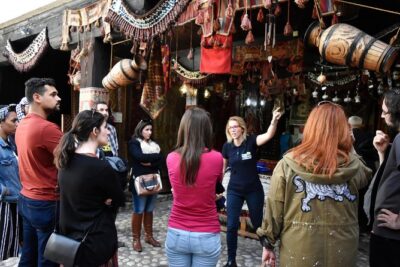
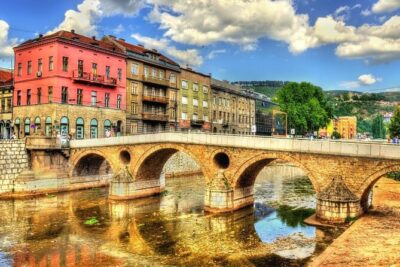
Private Walking Tour, Food Tasting and Bosnian Coffee in Sarajevo
Read our review →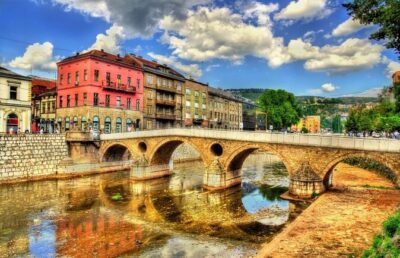
PROFESSIONAL SARAJEVO WALKING TOUR – With guide who guided STING!
Read our review →
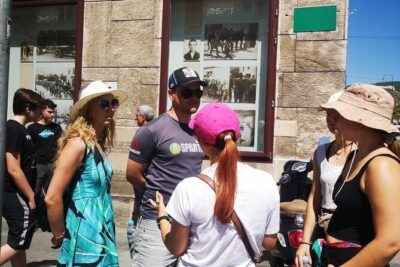
Sarajevo genuine walking tour: Steps through history
Read our review →
InstaSarajevo – Photography Walking Tour of Sarajevo
Read our review →
Browse the lists this tour appears in