
Reviewed · WALKING TOURS IN SARAJEVO
Sarajevo Grand Walking Tour
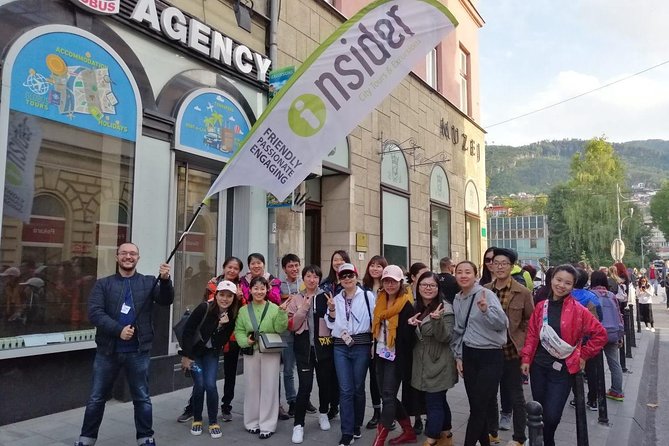
Sarajevo’s story is packed into a walkable city center, and this tour moves through its biggest turning points in about three hours. You’ll visit the Latin Bridge, where Franz Ferdinand’s assassination helped ignite World War I, then cross through Ottoman streets, Austro-Hungarian landmarks, religious buildings, markets, and memorials tied to the 1992 to 1995 war.
I like the wide historical sweep, from Ottoman Sarajevo to modern Bosnia, and the chance to hear personal stories from guides who understand the city beyond dates and monuments. I also like the practical orientation: you finish knowing where Baščaršija, the markets, cafés, mosques, churches, and main squares fit together.
The main consideration is pace. The route covers many stops, but several are brief, so this is best for getting context and finding your bearings rather than touring every building in detail. A group can reach 30 people, too, although some departures may be much smaller.
Key points to know before booking
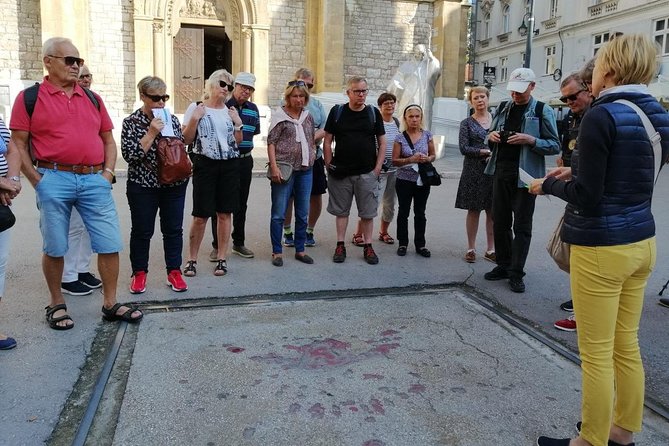
- World history begins at the Latin Bridge, the site linked with the assassination of Archduke Franz Ferdinand.
- The route connects several faiths, including Muslim, Catholic, Orthodox, and Jewish landmarks.
- You cover Sarajevo’s major eras, from the Ottoman period through Austria-Hungary, Yugoslavia, and the recent war.
- Baščaršija gets a useful introduction, including the Sebilj Fountain, craft streets, Morica Han, and Gazi Husrev Bey’s Mosque.
- The walk is described as easy and mostly flat, but three hours on city streets still calls for sensible shoes.
- The price is $20.57 per person, with a guide and city map included, but lunch, drinks, taxes, and other fees are not.
Why this walk is a smart first look at Sarajevo
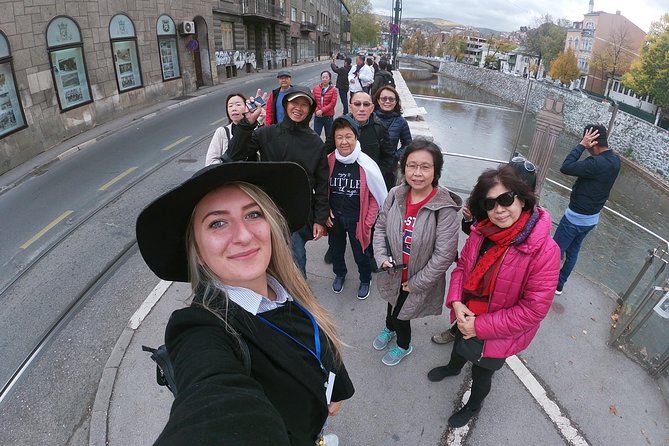
Sarajevo can seem compact at first, but its center changes character every few streets. An Ottoman mosque may sit near an Austro-Hungarian cathedral, while a market or brewery points to another chapter in the city’s development. This tour gives you a framework before you explore on your own.
The value is not simply the number of sights. It is the explanation between them. A guide can show you how Sarajevo became a meeting place for Islamic, Catholic, Orthodox, and Jewish communities, then explain how that tradition was tested by war and political change.
I would book this near the start of your stay. Several people who took the tour used the guide’s suggestions for food, coffee, and later sightseeing. That makes the walk more useful than a one-time checklist of monuments.
The guides named in the feedback include Suad, Hana, Haris, Emina, Alem, Fariz, Denis, Kenan, Ilma, Masha, Merjim, and Alex. Individual styles will vary, but the strongest pattern is clear: the tour depends heavily on the person leading it. The best guides turn dates into stories, answer questions, and add personal views about Sarajevo today.
More Walking Tours in Sarajevo
- Sarajevo: 2 Hours Old Town Walking Tour With Local Guide
★ 5.0 · 505 reviews - Private Walking Tour, Food Tasting and Bosnian Coffee in Sarajevo
★ 5.0 · 255 reviews - Sarajevo Essential Full Walking Tour
★ 5.0 · 198 reviews
Latin Bridge and the first turn of world history
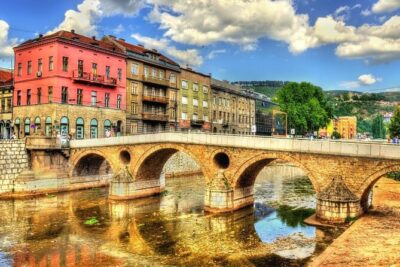
The tour begins at the Latin Bridge, with about 12 minutes focused on the Franz Ferdinand assassination site. On June 28, 1914, Archduke Franz Ferdinand of Austria and his wife Sophie were killed in Sarajevo. That event helped trigger World War I, making this a remarkable place to begin a city walk.
The stop is free, and you do not need a long visit to understand why it matters. The value comes from the guide’s explanation of the political tensions surrounding the assassination and Sarajevo’s place within the Austro-Hungarian Empire.
From here, the group moves to At Mejdan Park beside the Miljacka River. The stop is short, only about three minutes, but it offers a pause from the streets and adds a quieter setting to the route. You may find this more useful as a visual break than as a major sightseeing stop.
A city built by several faiths
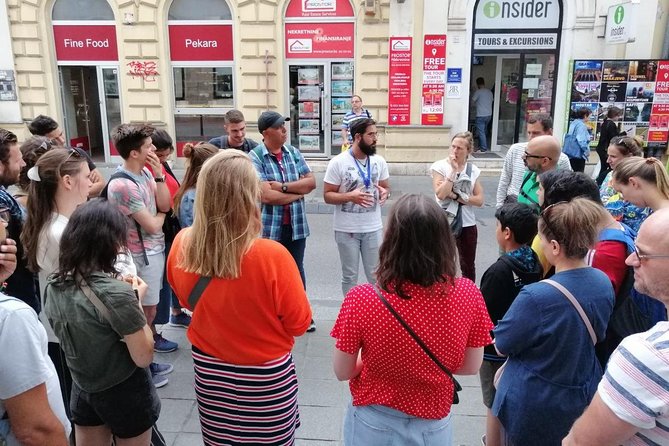
The Emperor’s Mosque follows, with a brief look at Sarajevo’s oldest mosque and its place in the city’s Islamic tradition. The stop is only about two minutes, so expect an introduction rather than an extended visit.
The route then reaches the Franciscan Church of Saint Anthony, a neo-Gothic Catholic landmark. Its inclusion matters because Sarajevo’s identity cannot be understood through Ottoman or Muslim history alone. The city’s religious buildings sit close together, and that physical closeness helps explain its unusual character.
The Sarajevo Brewery comes next. It is described as Bosnia’s oldest industrial complex and is linked with traditional beer production. This adds an economic and everyday side to the tour. You are not only looking at rulers, soldiers, and religious leaders, but also at the industries that helped shape city life.
Another architectural stop is the Bosnian House, associated with Bicakcic and Hadzisabanovic. It is described as a modernist building with a place in Sarajevo’s story. This is the sort of stop you might pass without noticing on your own, which is one reason a guided walk can be useful.
The Spite House and Sarajevo City Hall
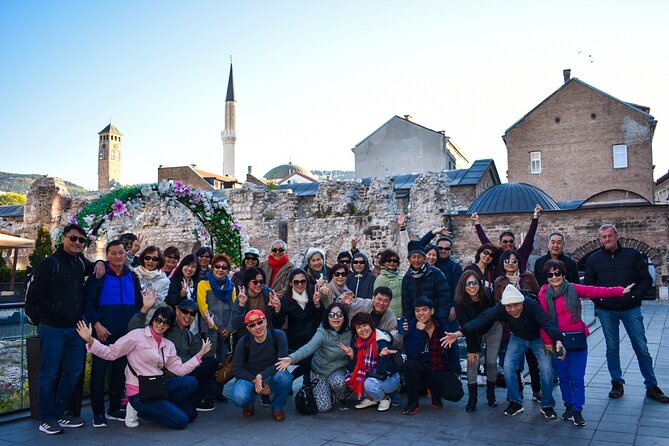
The House of Spite is one of the tour’s most memorable stories. The building is tied to a local act of defiance and was rebuilt brick by brick. Its name alone gives you a clue: this is not just an architectural stop, but a story about pride, resistance, and the relationship between residents and authority.
The route then reaches Sarajevo City Hall, one of the city’s most recognizable buildings. Its neo-Moorish design blends European construction with decorative forms associated with the Islamic past of the region. Allow about 10 minutes here, enough to appreciate the exterior and hear why the building matters.
City Hall also connects Sarajevo’s Ottoman past with the Austro-Hungarian period that followed. The design reflects an effort to create something modern and imperial while still drawing on local visual traditions. It is a good example of how Sarajevo’s identity often comes from overlap rather than neat separation.
A completely different kind of day out of Sarajevo:
- Sarajevo: Mostar, Konjic, Blagaj Tekke, Pocitelj & Waterfall
★ 4.9 · 1,335 reviews - Fall of Yugoslavia, Sarajevo War Tour with Tunnel of Hope Museum and Frontlines
★ 5.0 · 1,314 reviews - Sarajevo: Mostar, Konjic, Sufi House, Pocitelj & Kravice Falls
★ 5.0 · 1,179 reviews - ROSES OF SARAJEVO (Official WAR + CITY tour)- Story of a Survivor
★ 5.0 · 770 reviews
Kovači Cemetery and the memory of the 1990s war
At Kovači Cemetery, the tour shifts to the 1992 to 1995 war. This national memorial honors Bosnia’s defenders, and the stop calls for a quieter tone. The listed visit lasts about three minutes, but its meaning is much larger than the time suggests.
You will also walk along Kovači Street, an old route with Ottoman-era character and local shops. That pairing is effective: the cemetery connects you with recent loss, while the street shows ordinary city life continuing nearby.
The guides who received the strongest praise often explained the war alongside Sarajevo’s earlier history rather than treating 1992 to 1995 as the city’s only story. That balance is important. Sarajevo’s past includes Ottoman rule, Austria-Hungary, Yugoslavia, religious coexistence, political conflict, and modern recovery.
Some guides also share personal experiences or family connections to the war. That can make the history more immediate, though the tone and amount of personal detail will depend on your guide.
Baščaršija, where old Sarajevo feels most alive
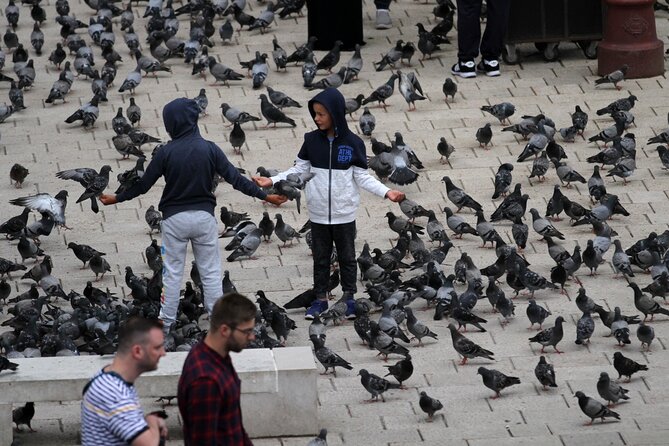
Baščaršija is the heart of the Old Town and receives about 15 minutes on the route. This is where Sarajevo’s Ottoman influence is easiest to see in the street plan, small shops, cafés, and craft traditions.
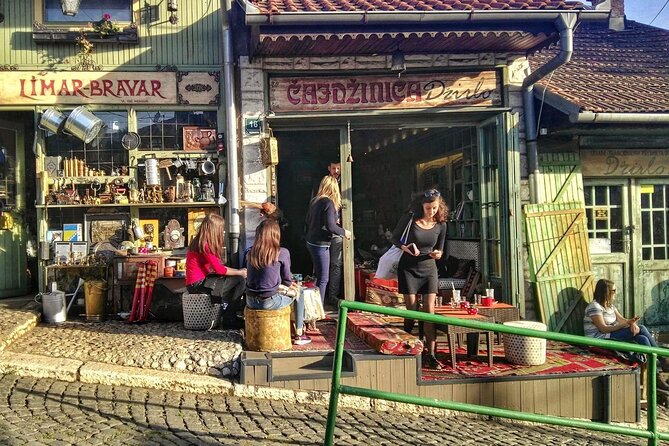
You will then reach Bravadžiluk and Kazandžiluk Streets. Bravadžiluk is associated with food, while Kazandžiluk is known for traditional metalwork. The combination gives you a quick look at both eating and making, two parts of daily life that help a historic district feel real rather than preserved only for display.
The Sebilj Fountain gets about five minutes. It is one of Sarajevo’s best-known meeting points, and local legend says that drinking from it brings you back to the city. You can treat that as folklore, but it is a useful landmark for finding your way around Baščaršija later.
Morica Han, the last surviving Ottoman inn in Sarajevo, provides another glimpse of the old trading city. Inns like this once offered lodging and gathering space for merchants. The stop is short, so you will likely hear the story and see the setting rather than receive a long interior tour.
Gazi Husrev Bey’s Mosque and the Ottoman center
Gazi Husrev Bey’s Mosque receives about 10 minutes and is one of the more substantial stops in the Old Town. Built in the 16th century, it is a central part of Sarajevo’s Islamic heritage and urban design.
The guide can help you understand how the mosque relates to the surrounding market, streets, fountain, and former inn. Sarajevo’s Ottoman center was not only a collection of religious buildings. It was a working neighborhood where worship, trade, education, food, and travel were closely connected.
Dress and entry arrangements can matter at religious sites, but the supplied details do not specify interior access rules for this tour. Follow the guide’s instructions and treat each place of worship with care. The short scheduled times suggest that the tour’s main aim is explanation and orientation, not an extended religious visit.
The Meeting of Cultures and Sarajevo’s Jewish story
The Sarajevo Meeting of Cultures is marked at a symbolic point where the character of the city shifts from Ottoman to Austro-Hungarian. You can see this change in the architecture and street pattern within only a few steps.
The tour then visits the Museum of the Jews of Bosnia and Herzegovina, also linked with the Old Jewish Temple. The stop introduces Sarajevo’s Sephardic Jewish heritage and the Sarajevo Haggadah, a famous illuminated manuscript with a long and difficult history.
This part of the walk is especially useful because it prevents a simplified version of Sarajevo. The city was not shaped by only two cultures. Muslim, Catholic, Orthodox, and Jewish communities all form part of its story, and the route puts several of their landmarks within one afternoon.
The Cathedral of the Sacred Heart follows. Sometimes called Sarajevo’s Notre Dame, this grand Catholic cathedral adds another clear change in architectural style. The Serbian Orthodox Cathedral comes after it, with murals and domes that bring Orthodox tradition into the same compact city center.
You may not spend enough time at each building for a full artistic study. But seeing them close together, with a guide explaining their place in city life, gives you a useful understanding that a map alone cannot provide.
Markale Market and the Eternal Flame
Markale City Market is the next stop, with about five minutes to look at a working market filled with local food and daily activity. It is a reminder that Sarajevo is not an open-air museum. People still shop, meet, and run errands in the same central districts that carry so much history.
The market also links to the war years. Markale became associated with deadly attacks during the siege of Sarajevo, so the guide may place the ordinary market within a painful modern context. The supplied route does not specify how much time is devoted to that subject, so expect the detail to vary by guide.
The final stop is the Eternal Flame, a World War II memorial honoring the dead and symbolizing endurance. It is a fitting end because the tour has moved through several conflicts without reducing Sarajevo to war alone. The city’s survival, faith communities, food, architecture, and ordinary street life remain part of the picture.
How much walking and how much history?
The tour lasts about three hours and is described as an easy walk on flat streets. That makes it suitable for most people, and the activity notes say most participants can take part. Still, you should expect to be on your feet for much of the afternoon.
The route has many stops, but not all are equal in length. City Hall, Baščaršija, Gazi Husrev Bey’s Mosque, and the Latin Bridge receive more time. Several religious buildings, street corners, and memorials receive only two to five minutes.
That is not necessarily a weakness. A city orientation works best when it keeps moving. But if you want to enter every church, mosque, museum, or historic building, you will need to return later on your own.
The group size can reach 30 people. That is large enough for some crowding around a guide, especially in busy parts of Baščaršija. On the other hand, departures may be much smaller. One reported solo departure became a private-feeling walk, though the guide in that case was described as rather mechanical and not very personal. The lesson is simple: guide quality and group chemistry can affect the experience.
Is $20.57 good value?
At $20.57 per person, this is a strong price for three hours with a guide and a city map. You are paying for a structured introduction, not admission to a series of attractions. The tour includes the guide and map, while lunch, coffee or tea, taxes, and other fees are not included.
The best value comes if you use the walk as a starting point. Ask about local food, coffee, and places to visit afterward. Guides such as Kenan, Alem, and Haris were specifically praised for useful restaurant suggestions, including advice on where to eat ćevapi.
You can also upgrade to a private tour if you want a more tailored pace or focus. A private option may make more sense if your group has a special interest in architecture, religion, the war years, or food. The standard tour is better suited to an affordable first look.
Practical details before you go
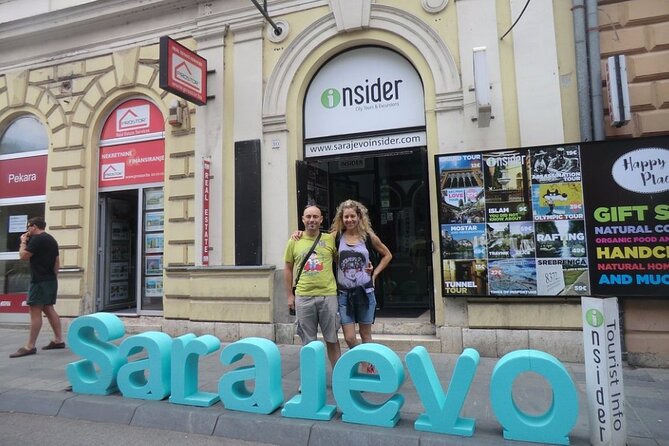
The meeting point is Sarajevo Insider, at Zelenih beretki 30 in central Sarajevo. The activity returns to the same meeting point, so you do not need to arrange transport back to your hotel afterward.
The tour is offered in English and provides a mobile ticket. Service animals are allowed, and the meeting point is near public transportation. Confirmation is provided at booking.
Wear comfortable shoes and bring an extra layer. One guide specifically advised warm clothing, and Sarajevo weather can change during a three-hour outdoor walk. Rain is another consideration because the activity requires good weather.
You can cancel for a full refund up to 24 hours before the start time. Changes or cancellations within 24 hours are not accepted for a refund. If poor weather or an insufficient number of participants forces cancellation, you are offered another date, another experience, or a full refund.
Should you book the Sarajevo Grand Walking Tour?
I would book it if you want a strong first orientation to Sarajevo and prefer history explained in person rather than read from plaques. It is especially useful for first-time visitors, people interested in the city’s religious mix, and anyone who wants to understand the Ottoman, Austro-Hungarian, Yugoslav, and postwar chapters together.
I would not choose it if your main goal is long interior visits or a slow photography walk. The route covers a lot, and some stops are quick. For most people, though, $20.57 buys a useful map of Sarajevo in both the geographic and historical sense. Take the tour early, keep notes on food and coffee suggestions, then return to the places that catch your attention.
FAQ
How long does the Sarajevo Grand Walking Tour last?
The tour lasts approximately three hours.
How much does the tour cost?
The listed price is $20.57 per person.
What language is the tour offered in?
The tour is offered in English.
Where does the tour start?
It starts at Sarajevo Insider, Zelenih beretki 30, Sarajevo 71000, Bosnia and Herzegovina.
Where does the tour finish?
The activity ends back at the meeting point.
What is included in the price?
A guide and city map are included.
Is lunch included?
No. Lunch is not included. Coffee and tea are also not included.
What are some of the main sights on the route?
The route includes the Latin Bridge, Emperor’s Mosque, Sarajevo City Hall, Baščaršija, Sebilj Fountain, Morica Han, Gazi Husrev Bey’s Mosque, the Old Jewish Temple, the Cathedral of the Sacred Heart, the Serbian Orthodox Cathedral, Markale Market, and the Eternal Flame.
How large can the group be?
The maximum group size is 30 people.
Can I cancel for a refund?
Yes. You can cancel at least 24 hours before the start time for a full refund. Cancellations or changes made less than 24 hours before the tour are not refunded or accepted.
Just added around Sarajevo
- Private Full Day Safari Tour★ 5.0 · 8 reviews
- Walking Tour in Sarajevo★ 5.0 · 3 reviews
- Sarajevo Under Siege: A War History Tour★ 5.0 · 10 reviews
- Mysterious Visoko Pyramids Driving and Walking Tour★ 5.0 · 7 reviews
- Secret Tito’s Bunker/Konjic Tour★ 5.0 · 4 reviews
- Travnik, Jajce, Pliva Lakes & Mills –Medieval & Ottoman Bosnia Full Day Tour★ 5.0 · 3 reviews
- The last day of Franz Ferdinand Walking Tour★ 5.0 · 10 reviews
- Sarajevo to/from Zagreb Transfer Day Tour (North-central Bosnia)★ 5.0 · 4 reviews
Walking Tours in Sarajevo, compared.
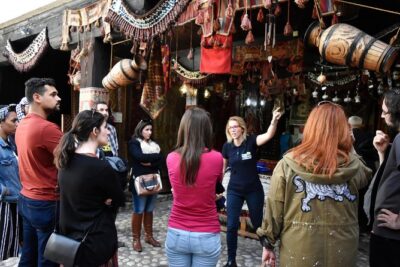
Private Walking Tour, Food Tasting and Bosnian Coffee in Sarajevo
Read our review →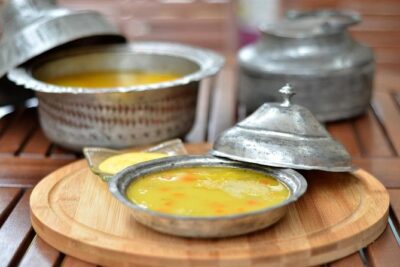
Delicious Sarajevo: Eat, Walk & Discover City Tour
Read our review →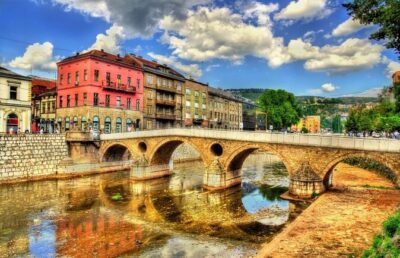
PROFESSIONAL SARAJEVO WALKING TOUR – With guide who guided STING!
Read our review →
Sarajevo genuine walking tour: Steps through history
Read our review →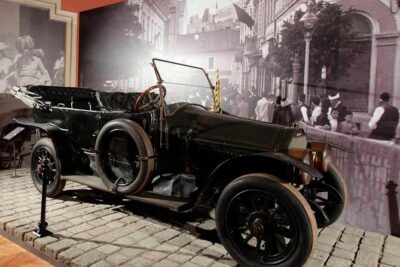
InstaSarajevo – Photography Walking Tour of Sarajevo
Read our review →Browse the lists this tour appears in