
Reviewed · SARAJEVO TOURS
Sarajevo for beginners
Sarajevo’s story is packed into a remarkably small area. On this two-hour walk, you move from a Catholic cathedral to an Orthodox church, Ottoman market lanes, Jewish heritage, imperial architecture, and the spot where the assassination of Archduke Franz Ferdinand helped set the First World War in motion. It is a fast, useful introduction to a city shaped by several faiths and empires.
I like the clear historical sweep and the fact that the walk links famous landmarks with smaller places such as Kazandžiluk and Morića Han. I also like the local touch: guides such as Samra are praised for explaining Bosnian coffee, sharing personal insight, and offering ideas for what to do next.
The main consideration is pace. Seventeen listed stops in roughly two hours means most visits are brief, and admission to the interiors is not included. You get a strong orientation, not a long museum visit or a leisurely architectural study.
Key points at a glance
- Four traditions in one walk: Catholic, Orthodox, Muslim, and Jewish heritage appear within the same compact city center.
- The assassination site and Latin Bridge: You see the place tied to the event that changed world history, then learn why the bridge has three names.
- Ottoman Sarajevo up close: Baščaršija, Gazi Husrev-beg’s Bezistan, Kazandžiluk, Sebilj, and the mosque form the heart of the old town section.
- A guide-led introduction: Samra is one of the guides associated with Cooltour Sarajevo, praised for humor, strong English, personal perspective, and practical advice.
- Coffee or tea included: A small but welcome pause during a history-heavy morning.
- Small maximum group: The tour accepts up to 18 people, which should make questions and street-side explanations manageable.
Why this walk works for a first morning in Sarajevo
I see this as a getting-oriented walk rather than a full sightseeing day. You begin at Trg fra Grge Martića, outside the Cathedral of the Sacred Heart, at 9:00 a.m., then cover the central sights on foot before returning to the same meeting point.
That arrangement matters. Sarajevo’s central districts are close together, but the city’s story can feel scattered if you do not know how the pieces connect. This route gives you a framework: Austro-Hungarian architecture near Ottoman streets, religious buildings from different communities, old trade quarters, and the river crossings that tie the center together.
The strongest part is the variety. You are not simply looking at one type of monument for two hours. The walk asks you to compare a Catholic cathedral, a Serbian Orthodox church, an Ottoman mosque, a Jewish museum, and the commercial streets between them.
The guide is important here. Samra is specifically associated with several highly praised Cooltour Sarajevo experiences, and her approach appears to combine historical facts with personal stories and humor. The supplied comments also describe her English as excellent and note that she gives useful advice for the rest of a Sarajevo visit. The specific guide can vary, so I would not book solely on the assumption that Samra will lead your departure, but Cooltour’s local-guide format is a major part of the appeal.
A few more Sarajevo days to weigh up
- Sarajevo: Mostar, Konjic, Blagaj Tekke, Pocitelj & Waterfall
★ 4.9 · 1,335 reviews - Fall of Yugoslavia, Sarajevo War Tour with Tunnel of Hope Museum and Frontlines
★ 5.0 · 1,314 reviews - Sarajevo: Mostar, Konjic, Sufi House, Pocitelj & Kravice Falls
★ 5.0 · 1,179 reviews
From Sarajevo Cathedral to the Orthodox church
The opening stop is Katedrala Srca Isusova, or the Cathedral of the Sacred Heart of Jesus. You have about 10 minutes here, enough to understand its place in central Sarajevo and take in the exterior. It is described as simple but beautiful, which is a fair expectation for a brief introductory stop.
From there, the route reaches the Orthodox Church of the Nativity of the Theotokos. The contrast is useful. Instead of treating Sarajevo as an Ottoman-only city, the walk quickly shows you the Serbian Orthodox presence as part of the city’s shared religious setting.
These first two stops work best when the guide explains the city as a meeting point of communities, not just a collection of buildings. You will not have time for a long interior visit, and admission is not included, so this section is about orientation and comparison.
Hotel Europe, Tašlihan, and the old commercial center
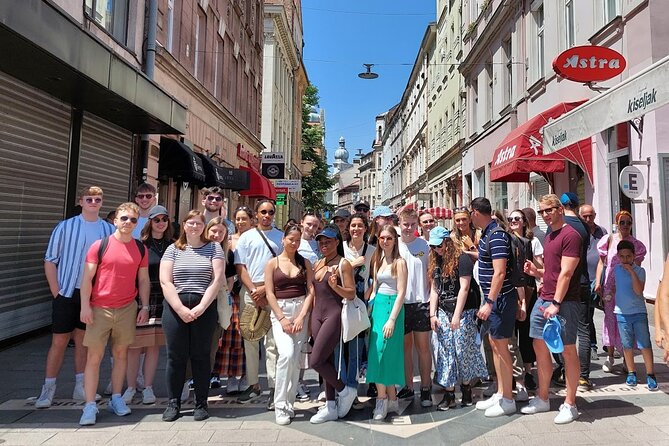
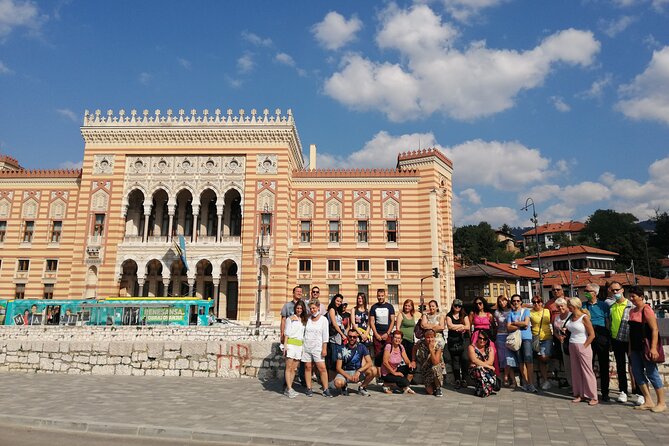
Hotel Europe receives only about five minutes, but it represents Sarajevo’s Austro-Hungarian period and is identified as the city’s first hotel, as well as the oldest in Southeast Europe. Even a short explanation can help you read the surrounding streets differently.
Next comes Tašlihan, where only remains survive. That absence is part of the lesson. Sarajevo’s old center has changed repeatedly, and ruins, rebuilt facades, and later additions sit close together.
Gazi-Husrev-beg’s Bezistan is presented as the original shopping mall of Sarajevo. The comparison is simple and useful: this was a covered commercial space connected with the city’s Ottoman trading life. You get only about five minutes, so think of it as a short explanation of how commerce worked rather than time for browsing every corner.
I like this portion because it gives the old town a practical purpose. You are not merely seeing pretty lanes. You are learning where people traded, lodged, crossed the city, and gathered.
The assassination site and Latin Bridge
The tour then reaches the location of the Sarajevo assassination, with around 15 minutes devoted to the site. This is likely the most historically familiar stop for many people, but it deserves careful explanation.
The event was the assassination of Archduke Franz Ferdinand and his wife Sophie in 1914. The killing helped trigger the First World War, though the wider causes were far more complicated. A good guide should help you separate the immediate event from the larger political tensions of the period.
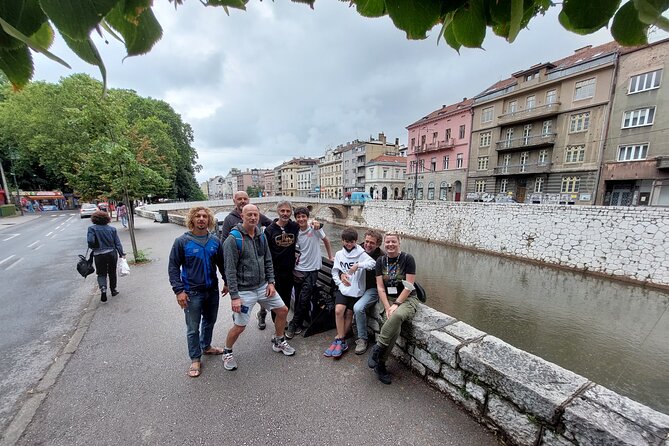
The nearby Latin Bridge gets about 10 minutes. The route describes it as a bridge with three names, a detail that gives the stop more texture than a simple photo opportunity. Bridges in Sarajevo are not only pieces of infrastructure. They mark routes between neighborhoods and help explain the relationship between the river and the old city.
This is one place where the short format can be both useful and limiting. You get the essential story without spending half a day on one event, but anyone with a strong interest in the First World War will probably want to return later and explore related museums or exhibits independently. No admission is included in the walk.
A completely different kind of day out of Sarajevo:
- ROSES OF SARAJEVO (Official WAR + CITY tour)- Story of a Survivor
★ 5.0 · 770 reviews - Sarajevo: Mostar, Konjic, Počitelj, Sufi House, & Waterfalls
★ 4.9 · 572 reviews - Tunnel Museum: Bosnian & Yugoslav Wars Tour with War Veteran
★ 5.0 · 551 reviews - Sarajevo: 2 Hours Old Town Walking Tour With Local Guide
★ 5.0 · 505 reviews
Imperial Mosque, Inat kuća, and the river bridges
After the assassination site, the route shifts back toward Ottoman Sarajevo. The Emperor’s Mosque is described as the oldest mosque in Sarajevo, while Gazi Husrev-beg Mosque later appears as the central mosque of the city. The two stops help you see that Ottoman religious architecture was not a single building or isolated monument. It was part of a wider civic and commercial system.
Inat kuća, or the House of Spite, is one of the more memorable names on the route. The guide explains what inat means and why the house matters. The name itself signals a story about stubbornness, pride, and resistance. This is exactly the sort of smaller local tale that can make a walking tour stick in your mind after the dates and dynasties begin to blur.
You then reach Šeher-Ćehaja’s Bridge, described as Sarajevo’s oldest bridge and the second one built there. The stop lasts about five minutes. Again, the point is not a long architectural inspection. It is a quick look at how the river crossings fit into the city’s older layout.
Sarajevo City Hall receives about 15 minutes, making it one of the longer stops. Built during Austro-Hungarian rule, it sits in the old part of town and was designed to fit alongside Ottoman architecture. That juxtaposition is central to Sarajevo’s visual character. The building represents imperial administration, while the streets around it retain an older urban pattern.
Bravadžiluk, Kazandžiluk, and the sound of the old market
The route includes a story about the development of Bravadžiluk street before reaching Kazandžiluk, one of the most authentic streets in Sarajevo. These names are not decorative extras. They point to streets shaped by particular trades and crafts.
Kazandžiluk is associated with coppersmiths, and it gives you a more grounded sense of the old market quarter than a broad city-square description can provide. You may find the street more interesting than a grand monument because it shows how Sarajevo’s commercial identity lives in small lanes and working traditions.
The timing is about 10 minutes, so the tour will not function as an extended shopping visit. If you want to buy copperware, food, or other local goods, make a note of places you like and return after the walk. The guide’s route helps you know where to look, but the schedule keeps moving.
Sebilj and Baščaršija, Sarajevo’s social center
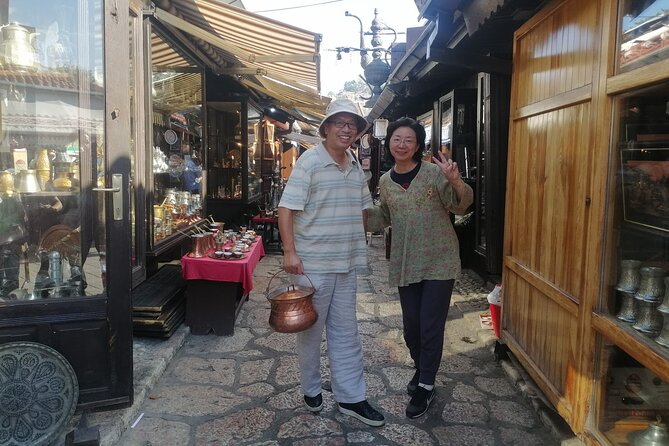
Sebilj is a short five-minute stop described as a meeting place for many people. It is one of the recognizable focal points of Baščaršija, Sarajevo’s main square and old market center.
Baščaršija gets about 10 minutes. That is enough for a guide to explain its role and point out the surrounding streets, but not enough to experience the quarter slowly. I would treat this as an introduction, then come back later for food, coffee, shopping, and unhurried people-watching.
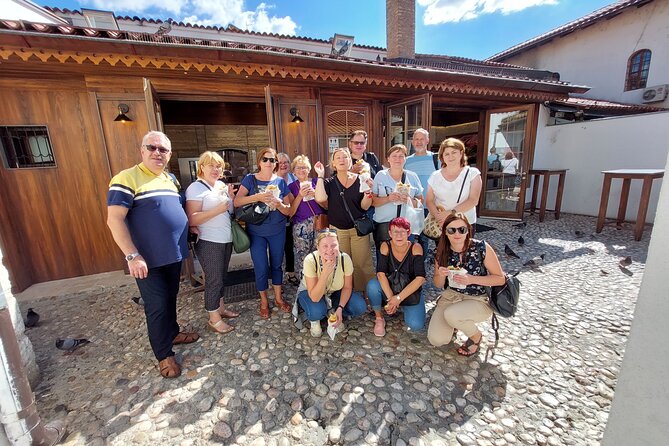
This is also where the included coffee or tea fits nicely into the experience. Bosnian coffee is not simply a caffeine stop. It is part of local social life, and one of the guide comments specifically praises Samra for explaining how to drink it. The details of the serving are not given in the tour information, so you should think of the inclusion as a modest refreshment, not a promised full coffee ceremony.
Morića Han, Gazi Husrev-beg Mosque, and changing stories
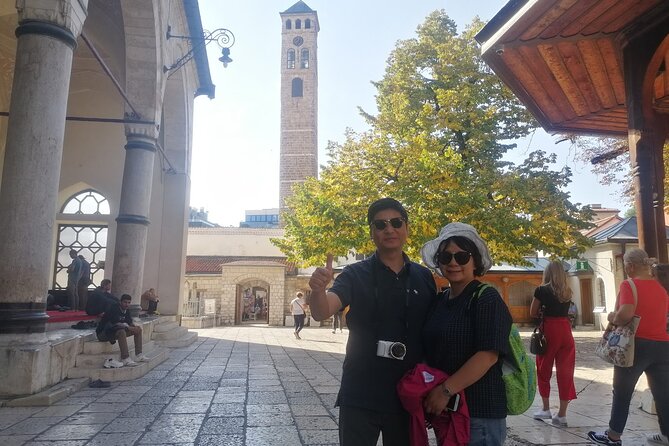
Fotokopirnica Morića Han is labeled as probably the coolest place in Sarajevo, with about 10 minutes here. The name combines a copy shop with Morića Han, an old inn, which hints at the layered and slightly playful character of the neighborhood.
A han was a roadside inn and commercial lodging place in the Ottoman world. At this stop, the value comes from seeing how older buildings have been reused and how modern daily life can sit inside historic surroundings. The information does not promise a full interior tour, so expect an explanation and a look around rather than a long visit.
Gazi Husrev-beg Mosque follows with another 10-minute stop. It is described as the central mosque in Sarajevo, and its place in the surrounding market quarter shows how religious, commercial, and social life were closely connected.
The route then includes a transition described as a different time and a different story. That phrase fits the whole walk. Sarajevo does not present its past in neat separate chapters. Ottoman, Austro-Hungarian, Yugoslav, wartime, and modern stories overlap in the same few streets.
The Jewish Museum and Sarajevo’s shared city story
The final listed stop is the Jewish Museum of Bosnia and Herzegovina, with about 15 minutes to see the square and hear about Jews in Bosnia and Herzegovina. This is an important correction to any narrow view of Sarajevo as only Ottoman Muslim or Austro-Hungarian.
The stop adds another community to the city’s story and reinforces the theme of coexistence, tension, exchange, and change. Since admission is not included, you should confirm on the day whether the visit is an exterior explanation or whether you want to pay separately for entry. The stated tour information does not promise an included museum admission.
By ending with Jewish heritage, the walk leaves you with a broader picture of Sarajevo. The route is strongest when it treats the city as a meeting place shaped by many communities, not as a series of disconnected monuments.
Is $34.92 a fair price?
At $34.92 per person, this is a reasonable price if you want a local introduction and do not want to spend your first morning working out the city’s layout alone. You get roughly two hours, a guide in English, coffee or tea, and a route covering a large number of important central sights.
The value comes from interpretation, not admission tickets. Since entrance fees are not included, you should budget separately if you want to go inside paid sites. The itinerary also leaves little time for extended visits, so do not compare this directly with a museum tour or a half-day private guide.
The maximum group size is 18. That is not the same as a private walk, but it is small enough to feel more manageable than a large coach group, especially on narrow market streets. If you want a slower pace, extensive photography time, or detailed religious architecture, a private tour may suit you better.
Who should book this Sarajevo walk?
I would recommend it most strongly to a first-time visitor staying in Sarajevo for at least a day or two. It gives you names, landmarks, historical links, and a practical sense of where to return later.
It also suits people who enjoy social and cultural history more than a checklist of monuments. The mix of churches, mosques, Jewish heritage, bridges, markets, inns, and imperial buildings is the real attraction.
You may want something else if you have already spent several days exploring the old center, dislike group walking tours, or want interior access at every stop. The pace is brisk, and many stops last only five or 10 minutes.
The guide can make a large difference. Cooltour Sarajevo guides, especially Samra in the supplied comments, are described as warm, funny, passionate, and able to offer personal insight alongside historical explanation. Ask about the guide when booking if having Samra specifically is important to you, since the available details do not guarantee who will lead every departure.
Should you book Sarajevo for beginners?
Book it if you want a compact first look at Sarajevo’s many identities. The route is unusually broad for two hours, and it gives you a useful map of the center before you explore on your own.
I would book it early in your stay, ideally on the first morning, so you can use the guide’s advice for later meals, museums, and neighborhoods. At $34.92, the cost is fair for a guided orientation, coffee or tea, and access to local context, but remember that paid admissions are extra.
Skip it only if you want a slow, specialist tour or have little interest in walking between many short stops. For most first visits, it is a practical and lively way to understand why Sarajevo feels like several cities occupying the same streets.
FAQ
Where does the tour start?
It starts at Trg fra Grge Martića, in front of the Cathedral of the Sacred Heart area, at 9:00 a.m.
Where does the tour finish?
The activity ends back at the meeting point.
How long does the tour last?
The tour lasts approximately two hours.
Is the tour offered in English?
Yes. English is the stated tour language.
Are admission tickets included?
No. Admission tickets are not included for the listed stops.
Is coffee or tea included?
Yes. Coffee and/or tea is included.
How many people can join the tour?
The maximum group size is 18 people.
Just added around Sarajevo
- Private Full Day Safari Tour★ 5.0 · 8 reviews
- Walking Tour in Sarajevo★ 5.0 · 3 reviews
- Sarajevo Under Siege: A War History Tour★ 5.0 · 10 reviews
- Travnik, Jajce, Pliva Lakes & Mills –Medieval & Ottoman Bosnia Full Day Tour★ 5.0 · 3 reviews
- Mysterious Visoko Pyramids Driving and Walking Tour★ 5.0 · 7 reviews
- Secret Tito’s Bunker/Konjic Tour★ 5.0 · 4 reviews
- The last day of Franz Ferdinand Walking Tour★ 5.0 · 10 reviews
- Sarajevo to/from Zagreb Transfer Day Tour (North-central Bosnia)★ 5.0 · 4 reviews
Sarajevo Tours, compared.
Mostar, Konjic, Blagaj Tekke, Pocitelj & Waterfall
Read our review →
Fall of Yugoslavia, Sarajevo War Tour with Tunnel of Hope Museum and Frontlines
Read our review →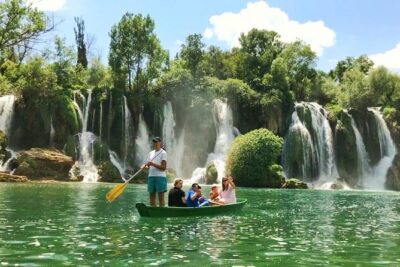
Mostar, Konjic, Sufi House, Pocitelj & Kravice Falls
Read our review →
ROSES OF SARAJEVO (Official WAR + CITY tour)- Story of a Survivor
Read our review →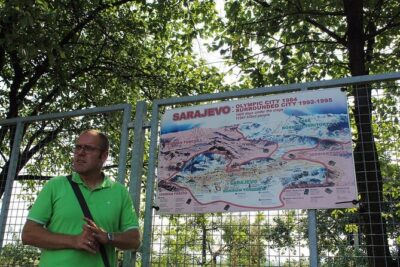
Tunnel Museum: Bosnian & Yugoslav Wars Tour with War Veteran
Read our review →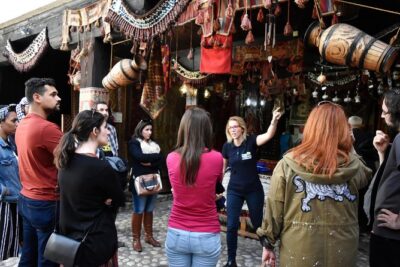
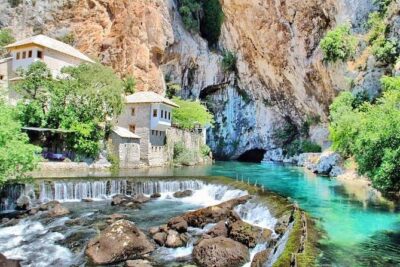
Mostar, Konjic, Dervish House, Pocitelj & Kravica Falls
Read our review →
Browse the lists this tour appears in