
Reviewed · TUNNEL OF HOPE TOURS
Fall of Yugoslavia, Sarajevo War Tour with Tunnel of Hope Museum and Frontlines
Sarajevo’s story becomes painfully clear when you leave the old town and see the hills, cemeteries, damaged buildings, and the narrow tunnel that kept the city alive. This four-hour tour connects the Siege of Sarajevo with the fall of Yugoslavia, then adds the 1984 Olympic sites for a fuller picture of the city.
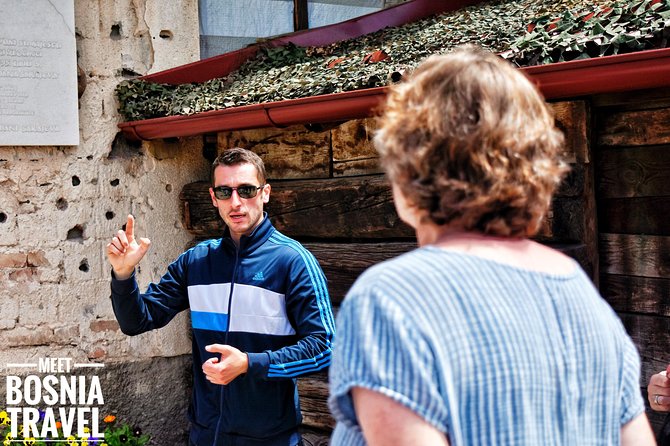
I like two things right away: the comfortable vehicle lets you cover scattered sites without wrestling with steep roads, and the guides explain the war in plain English rather than treating it as a list of dates. Guides including Ayoub, Almir, Tarik, Ago, Emin, Kristian, and Zahmet are praised for clear explanations and, at times, personal memories of the conflict.
The main drawback is emotional. This is not a light sightseeing trip, and some stops involve cemeteries, destroyed buildings, and stories of civilian suffering. The Tunnel Museum admission also costs extra, and hotel drop-off is not included.
Key points to know before booking
- The War Tunnel is the tour’s central stop: You see the 800-meter passage that served as Sarajevo’s only connection with the outside world during the siege.
- Sniper Alley is viewed from the vehicle: You pass the four-kilometer street and see buildings that still show wartime damage.
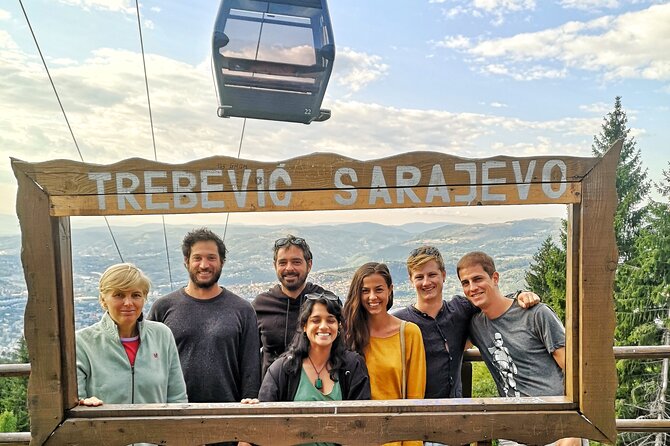
- Trebević adds breathing room: Mountain viewpoints and the Olympic bobsleigh track balance the heavier sections of the day.
- The guides shape the experience: Ayoub, Almir, Tarik, Ago, Emin, Kristian, and Zahmet are among the guides associated with strong explanations and personal accounts.
- The tour covers a lot of ground: Hotel pickup, an air-conditioned vehicle, fuel, and bottled water are included, but the tour finishes at the meeting point rather than your hotel.
- The price is fair for the coverage: At $36.28 per person, you get transport and a professional guide across several parts of Sarajevo, with only the Tunnel Museum fee added separately.
Why this tour helps you understand Sarajevo
Sarajevo’s wartime sites are spread across the valley and surrounding hills. You could reach some independently, but the connections between them are not always obvious. This tour gives you a framework: the city below, the hills above, the military pressure around Sarajevo, and the desperate supply route beneath the airport.
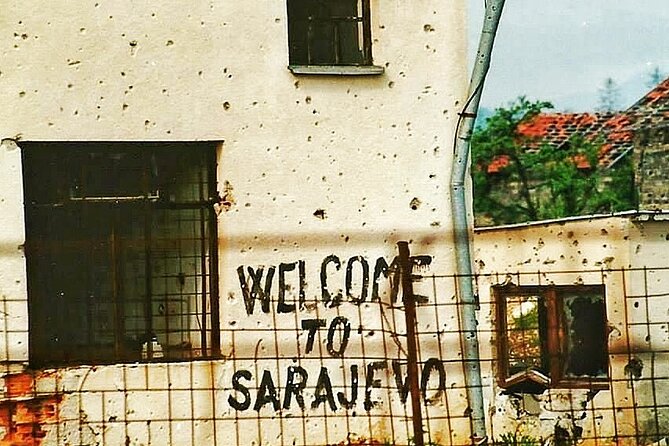
That context matters. A cemetery is more than a field of white gravestones when you understand why it was built where it was. The view from Trebević feels different after you have seen the streets exposed to fire from the surrounding slopes. The Olympic bobsleigh track also takes on a strange second meaning, since a place built for international celebration later sat in a war zone.
The tour is offered in English and lasts about four hours. I would book it early in your Sarajevo stay if you can. One useful benefit is that the drive gives you a broad sense of the city and helps you decide where to return later on foot.
More visits to the Tunnel of Hope:
- Tunnel Museum: Bosnian & Yugoslav Wars Tour with War Veteran
★ 5.0 · 551 reviews - Tunnel of Hope Tour – Survival and Resilience
★ 5.0 · 118 reviews - Sarajevo Grand Tour: Old Town, War Tunnel, Olympic Sites & More
★ 5.0 · 73 reviews
Yellow Fortress and Sarajevo from above
The tour begins at the Yellow Fortress, where you get one of Sarajevo’s best broad views. The guide uses the panorama to introduce the siege, point out important cemeteries, and explain the shape of the city.
This is a smart opening. Before entering museums or passing damaged buildings, you see Sarajevo as a valley surrounded by hills. That geography explains much of the siege. The elevated positions around the city were not distant backdrops. They were part of the military reality facing people below.
You have about 25 minutes here, with admission included. Bring a jacket in cooler weather, since exposed viewpoints can feel brisk even when the city center is mild. The stop is short, but it gives the rest of the tour a clear visual reference.
Olympic sites, a destroyed hospital, and Sarajevo’s Romeo and Juliet
The vehicle then moves around the Olympic complex. Sarajevo hosted the Winter Olympic Games in 1984, a moment of international attention and civic pride that feels strikingly close to the later war.
The route includes a view of the destroyed children’s hospital and the grave associated with Sarajevo’s Romeo and Juliet. These are difficult places to see. The combination of a medical facility and a personal story puts the conflict on a human scale, far beyond politics and military maps.
This part is mainly viewed from the vehicle, so do not expect a long walk at every location. That is useful for covering ground, though anyone wanting a slower visit to each site may find the schedule brisk.
Stadium Cemetery and the human cost of the siege
The Stadium Cemetery is another reminder of how the war reshaped ordinary city spaces. The name is stark, and the location helps show how quickly Sarajevo’s familiar public places became connected with death and mourning.
Your guide supplies the explanation, and this is where a strong guide makes a real difference. The best approach is calm and direct, giving you time to take in the setting without turning suffering into spectacle. Guides such as Almir and Tarik have been singled out for sharing personal memories or family connections, while others, including Emin and Ago, are praised for clear, engaging explanations.
Expect the subject matter to be heavy. This is not a stop to rush through with a camera. Take a moment, listen, and allow the place to speak for itself.
More tours about the siege and the war:
- ROSES OF SARAJEVO (Official WAR + CITY tour)- Story of a Survivor
★ 5.0 · 770 reviews - Sarajevo War Tour: A Veteran’s Story of the Siege (fees included)
★ 5.0 · 326 reviews - Sarajevo 1425 days under the siege – War Tour
★ 5.0 · 170 reviews - Sarajevo to Srebrenica: Genocide Study Tour with War Veteran
★ 5.0 · 131 reviews
Inside the War Tunnel Museum

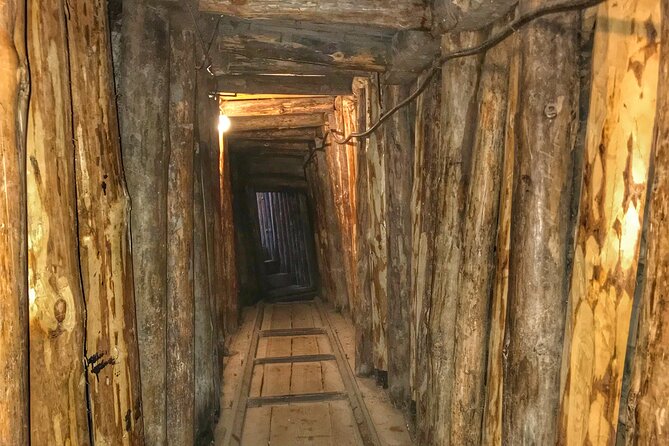
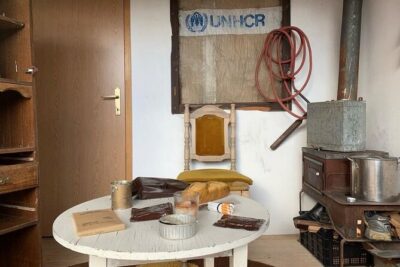
The War Tunnel is the tour’s key historical site. During the four-year siege, the 800-meter tunnel provided the only connection between surrounded Sarajevo and the outside world. Today, part of it operates as a museum.
The tunnel explains survival in practical terms. An isolated city needed a route for supplies and contact, and this passage became that lifeline. It is one thing to hear about encirclement. It is another to stand in the place built to keep people and goods moving under extraordinary conditions.
You have about an hour at the War Tunnel stop, although the admission ticket is not included. The listed cost is 15 BAM for adults and 5 BAM for students with identification. Budget for this separately, and bring your student ID if it applies.
The museum can be physically narrow and subdued. Anyone uncomfortable with confined spaces should keep that in mind. The tour data does not specify how much of the full tunnel can be entered, so you should expect a museum visit centered on the surviving section and the story around it, rather than an extended underground walk.
Sniper Alley and the former Holiday Inn
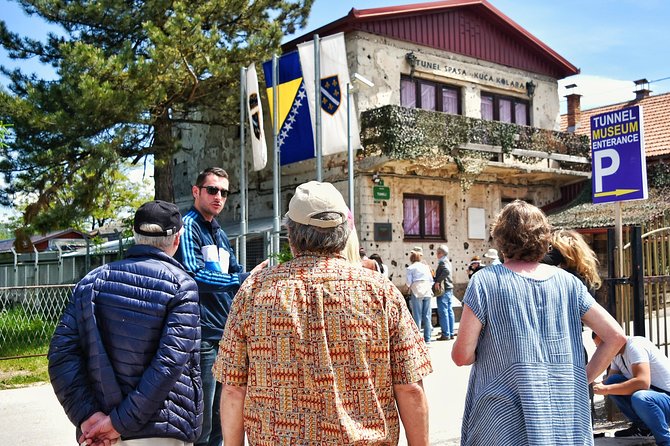
The vehicle passes along Sniper Alley, the name given to a roughly four-kilometer street where people faced sniper fire during the siege. You also pass buildings from the Yugoslav period that still carry signs of wartime damage.
The former Holiday Inn is part of this section. During the siege, it served as a base for journalists and visiting United Nations peacekeepers. That detail helps explain why the street became so well known internationally, while also reminding you that it was a dangerous route for the people who lived there.
This is a drive-by experience, not a walking tour of the entire street. You will want to sit where you can see out of the windows, but do not expect every building or detail to be visible from the moving vehicle. The guide’s commentary is important here because the physical damage alone cannot explain what the street meant during the war.
Gavrilo Princip and the longer road to conflict
The tour passes the chapel connected with Gavrilo Princip, who assassinated Archduke Franz Ferdinand. That event helped trigger the First World War, so this brief stop reaches far beyond the 1990s conflict.
It also shows why Sarajevo’s story cannot be reduced to a single war. The city has repeatedly found itself at the meeting point of larger political struggles. The stop is short, but it adds useful context to the more recent events discussed throughout the tour.
Since you pass by rather than take a long visit, listen closely when the guide introduces the site. The value comes from the explanation and its connection to Sarajevo’s wider past.
Trebević Viewpoint and the defenders’ cemetery
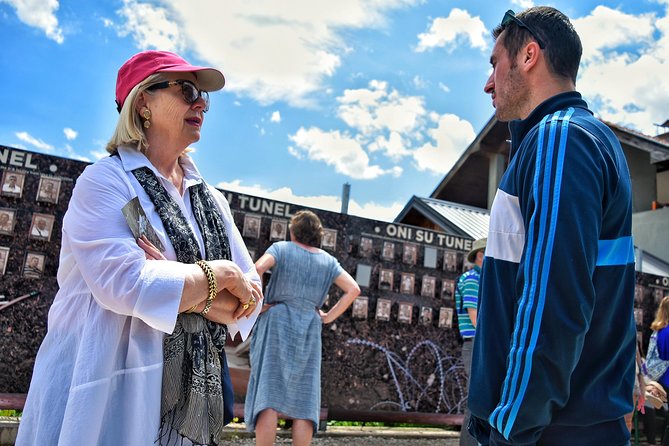
The tour climbs toward Trebević, where a viewpoint offers another panorama of Sarajevo. This view differs from the Yellow Fortress because you are looking back toward the city from a higher mountain position.
The guide also points out the defenders’ cemetery. After seeing the city from below and passing streets shaped by the siege, the viewpoint helps you understand how exposed Sarajevo was. The surrounding hills are not abstract scenery. They frame the city on every side.
You get about 15 minutes at the viewpoint, with no admission charge. That is enough for photographs and a short explanation, but not for a long mountain visit. Wear shoes suitable for brief walking on uneven ground, especially if the weather is wet.
The 1984 Olympic bobsleigh and luge track
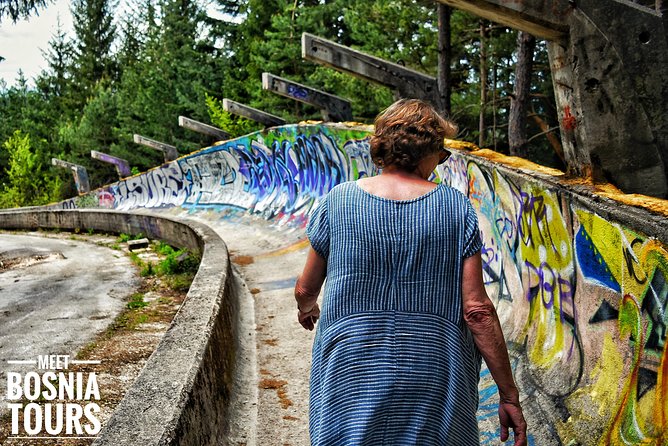
The final major stop is the Sarajevo Olympic bobsleigh and luge track on Trebević. Built for the 1984 Winter Olympics, it is one of the mountain’s best-known attractions.
The track gives the tour a welcome change of tone. You have spent much of the afternoon with war cemeteries, damaged buildings, and siege routes. Here, you see a large public project linked to a period when Sarajevo welcomed athletes and spectators from around the world.
You have about 20 minutes at the track, and admission is free. The stop is not presented as a full sports activity, so do not expect to ride the track. It is a chance to walk beside it, see the structure, and consider the sharp contrast between Olympic celebration and the later conflict.
One detailed account also mentions finishing with a walk near the bobsleigh track and taking a cable car down to the old town. That cable-car ride is not included in the stated tour package, so treat it as a possible separate plan rather than part of the booked experience.
Guides, group size, and the tone of the tour
The guide matters greatly on a tour about recent war. You need someone who can explain the political background without making the subject confusing, and who can discuss personal suffering without turning the experience into theater.
The guides named in the supplied material include Ayoub, Almir, Tarik, Ago, Emin, Kristian, Zahmet, Ejub, and others. Specific praise centers on clear English, patient answers, good pacing, and personal connections. One driver is described as having fought in the war as a teenager, while Tarik has shared memories connected to his father, who was a wartime commander. Those personal details can make the subject feel immediate, but the exact guide and driver are not guaranteed when you book.
The maximum group size is 50 people. Some departures may feel more intimate, but you should not assume a private or tiny group. The vehicle is air-conditioned, and transport is included, which is a real advantage because the route includes the city, the airport area, and Trebević Mountain.
What the $36.28 price really buys
At $36.28 per person, this is good value if you want several distant sites in one half-day. The price includes a professional local guide, hotel pickup, car transport, fuel surcharge, air conditioning, and bottled water.
The Tunnel Museum fee is extra: 15 BAM for adults or 5 BAM for students with identification. Food and drinks are also excluded, although water is provided. Hotel drop-off is not included, and the activity ends back at the central meeting point on Gazi Husrev begova Street.
The strongest value is time. Hiring separate transport or arranging independent visits to the tunnel and Trebević would take more planning. The trade-off is flexibility. You will follow the group schedule, and the drive-by stops do not allow long independent exploration.
Who should book this Sarajevo war tour
I recommend it most strongly to first-time visitors who want a clear introduction to the siege and the city’s recent past. It also suits anyone interested in the fall of Yugoslavia, military history, twentieth-century Europe, or the way ordinary people survived conflict.
The tour works well for solo visitors and groups because the vehicle handles the difficult connections between sites. It is also a useful choice if you want history explained in English rather than pieced together from museum labels.
You should think twice if you want a cheerful sightseeing afternoon, a slow photography outing, or a walking tour focused mainly on architecture. The material is serious, and the schedule gives you an overview rather than long quiet periods at each location.
Free cancellation is available if you cancel at least 24 hours before the start time. Changes or cancellations made later are not accepted for a refund.
Should you book it?
Book this tour if you want Sarajevo’s war history explained through places: the tunnel, sniper routes, cemeteries, damaged buildings, and the hills that surround the city. The Olympic bobsleigh track and mountain views keep the afternoon from becoming one unbroken sequence of grim sites.
At $36.28, with transport and the guide included, it is a sensible choice for most first visits. Add the Tunnel Museum fee to your budget, expect an emotional experience, and remember that the group may be as large as 50 people. If those limits suit you, this tour gives you a strong and respectful starting point for understanding Sarajevo.
FAQ
How long does the tour last?
The tour lasts approximately four hours.
What language is the tour offered in?
The tour is offered in English.
Is hotel pickup included?
Yes. Hotel pickup is included, but hotel drop-off is not.
Where does the tour start and finish?
It starts at Meet Bosnia Tours, Gazi Husrev begova 75, at the crossroads of Mula Mustafe Bašeskije and Gazi Husrev begova Street in Sarajevo. The activity ends back at the meeting point.
Is admission to the War Tunnel Museum included?
No. Admission costs 15 BAM for adults and 5 BAM for students who show identification.
What is included in the tour price?
The price includes a professional local guide, hotel pickup, car transport, fuel surcharge, bottled water, and an air-conditioned vehicle.
Can I cancel for a full refund?
Yes, if you cancel at least 24 hours before the experience start time. Cancellations or changes made less than 24 hours before the start time are not accepted for a refund.
More Museums and Memorial Sites in Sarajevo
- Tunnel of Hope Museum Tour
★ 5.0 · 38 reviews - Cable Car Olympic Tour With Museum
★ 5.0 · 17 reviews - SARAJEVO CONCEPTUAL ART TOUR (galleries, art and arhitecture)
★ 5.0 · 7 reviews - Sarajevo: A City Under Siege – War Tour With Tunnel Museum
★ 5.0 · 4 reviews
Just added around Sarajevo
- Private Full Day Safari Tour★ 5.0 · 8 reviews
- Walking Tour in Sarajevo★ 5.0 · 3 reviews
- Sarajevo Under Siege: A War History Tour★ 5.0 · 10 reviews
- Mysterious Visoko Pyramids Driving and Walking Tour★ 5.0 · 7 reviews
- Secret Tito’s Bunker/Konjic Tour★ 5.0 · 4 reviews
- Travnik, Jajce, Pliva Lakes & Mills –Medieval & Ottoman Bosnia Full Day Tour★ 5.0 · 3 reviews
- Sarajevo to/from Zagreb Transfer Day Tour (North-central Bosnia)★ 5.0 · 4 reviews
- Tour of Herzegovina – From Sarajevo★ 5.0 · 3 reviews
Tunnel of Hope Tours, compared.
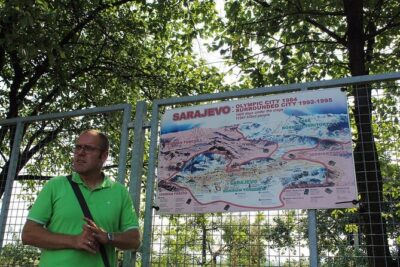
Tunnel Museum: Bosnian & Yugoslav Wars Tour with War Veteran
Read our review →
Sarajevo Grand Tour: Old Town, War Tunnel, Olympic Sites & More
Read our review →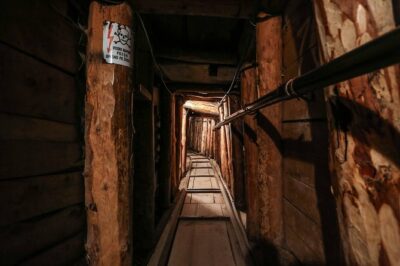
Times of Misfortune – Life Under Siege and the Tunnel of Hope
Read our review →
WAR TUNNEL – Sarajevo’s only way of a communication during the WAR – Top secret
Read our review →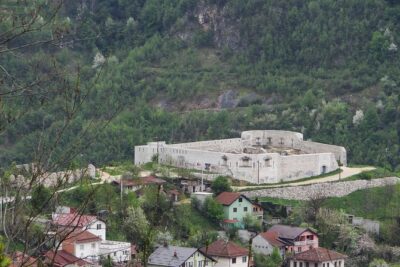
SARAJEVO SIEGE TIMES ’92-’95 / Sarajevo Roses & Tunnel of Hope /
Read our review →
Browse the lists this tour appears in