
Reviewed · WAR & SIEGE TOURS
ROSES OF SARAJEVO (Official WAR + CITY tour)- Story of a Survivor
Sarajevo’s recent past is not tucked away in a museum. It is marked into apartment walls, bridges, hillsides, and streets where daily life continued under fire. This tour brings that story together through the Tunnel of Hope, Sniper Alley, Trebević, and the childhood memories of a survivor such as Mak.
I like two things in particular: the route covers far more ground than a walking tour, and the guide connects military events to ordinary life. You also get Sarajevo’s Ottoman, Austro-Hungarian, Yugoslav, Jewish, Olympic, and modern political stories in one outing.
The main consideration is emotional weight. Four hours of siege history, minefields, sniper positions, deadliest streets, and personal wartime memories can be sobering. The Tunnel of Hope admission fee is also extra, at €10 per person.
Key points to know before booking
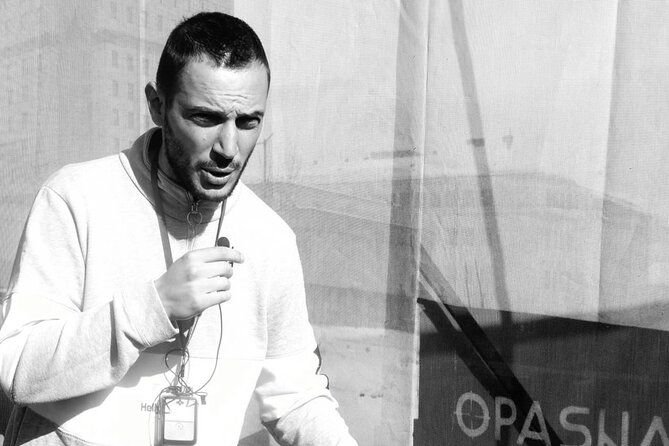
- A survivor’s personal story: Guides such as Mak explain the siege through childhood memories and family experience, not only dates and battle lines.
- The Tunnel of Hope is the core visit: You watch a 17-minute, 44-second film, see the war house and museum, then walk through the tunnel itself.
- A wide Sarajevo route: The minivan reaches Dobrinja, East Sarajevo, Trebević, the Olympic bobsleigh track, the Jewish Cemetery, the Latin Bridge, and Yellow Fortress.
- Small-group format: One guide has a maximum of eight people, while the activity has a maximum of 15 participants.
- Strong city views: Trebević, Urijan Dedina, and Yellow Fortress offer different angles over Sarajevo and the former siege positions.
- A useful first-day tour: The mixture of history, politics, geography, and personal memory can help you understand later visits around Bosnia and Herzegovina.
Why the Tunnel of Hope matters
The first major stop is the Tunnel of Hope Museum, reached after a drive past more than 20 monuments from Sarajevo’s Ottoman, Austro-Hungarian, and Yugoslav periods. That opening ride gives you a quick sense of how many historical layers occupy this one city.
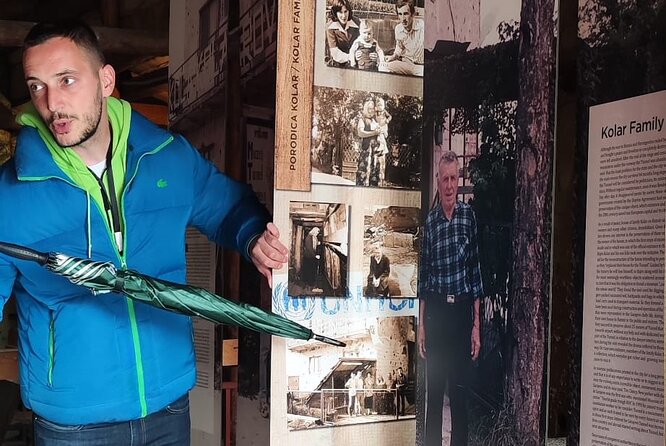
Before entering the tunnel area, you see the Kolar family war house. The house is part of the story because the tunnel entrance was connected with a private home during the siege. You also pass minefields, an important reminder that the dangers around Sarajevo did not end at the city limits.
Inside, you watch a 17-minute, 44-second film about the war. The nearby museum covers the 1992 to 1995 siege, with a war room and a place connected to war journals. The guide then takes you through the surviving section of the Tunnel of Hope.
This is not a long underground walk, so keep your expectations practical. The value is not in the tunnel’s length. It is in understanding what this narrow route represented for a city cut off by surrounding forces. You get 10 to 15 minutes of free time at the stop, and the full tunnel visit takes about two hours within the wider tour schedule.
Admission is not included. Budget €10 per person for the Tunnel of Hope Museum. That extra cost is easy to miss when comparing prices, so include it in your total.
More tours about the siege and the war:
- Fall of Yugoslavia, Sarajevo War Tour with Tunnel of Hope Museum and Frontlines
★ 5.0 · 1,314 reviews - Tunnel Museum: Bosnian & Yugoslav Wars Tour with War Veteran
★ 5.0 · 551 reviews - Sarajevo War Tour: A Veteran’s Story of the Siege (fees included)
★ 5.0 · 326 reviews
From Sarajevo’s cathedral to Little Yugoslavia
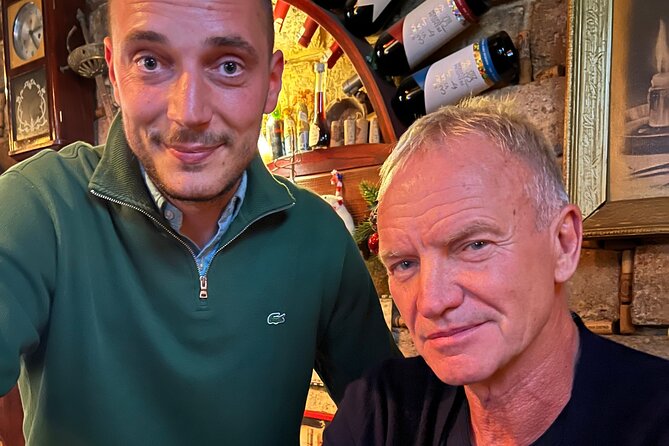
The tour begins at Đulagina 2, near the Sacred Heart of Jesus Cathedral. You receive a short explanation of the cathedral, then hear why Sarajevo has been called Little Yugoslavia. The phrase points to the city’s mix of religious communities and its place within the former Yugoslav state.
The route does not treat Sarajevo as only a war destination. You hear about the introduction of Yugoslavia and see the monument to the liberation of Sarajevo in World War II. This gives the later siege story a wider frame. The city’s 1990s crisis did not happen in isolation. It followed decades of shared institutions, shifting political ideas, and competing national aims.
That wider approach is one of the tour’s strongest features. If you know little about Bosnia and Herzegovina, the guide helps place the siege in context. If you already know the basic chronology, the city views and personal memories add another layer.
The Presidency and Sarajevo’s difficult political present
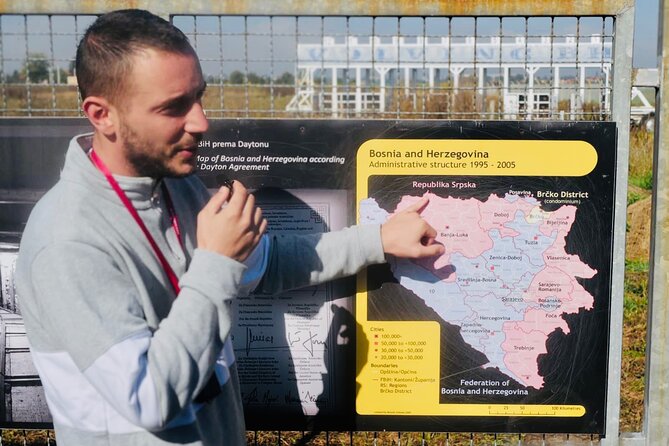
The minivan passes the Presidency of Bosnia and Herzegovina, often described as one of Europe’s most complicated political institutions. The guide gives a brief explanation of the country’s current political system and the division between its two entities.
Later, the route reaches East Sarajevo, located in the Republika Srpska entity. Here you are introduced to the differences between the two entities and to Bosnia and Herzegovina’s ethnic diversity. The tour also includes current war murals in East Sarajevo.
This part is brief, but it matters. You are not shown only destroyed buildings and old military positions. You are also given a basic way to read the country as it functions now. Do not expect a university lecture on constitutional law. Expect a clear, compact explanation tied to the streets outside the van window.
Sniper Alley, Holiday Inn, and the city under fire
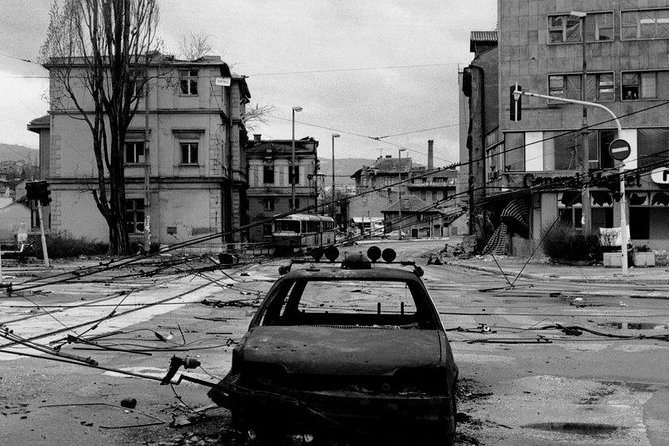
The route passes along Sarajevo’s main and deadliest Sniper Alley. The guide points out the Holiday Inn, a wartime hotel associated with journalists and with the exchange of soldiers during the siege.
You also see the National Museum on the Austro-Hungarian side of the city and hear about the Sarajevo Haggadah, a famous Jewish manuscript connected with Sarajevo’s Jewish past. The Historical Museum of Bosnia and Herzegovina appears at one of the key Sniper Alley locations.
The guide then points out bullet holes in buildings around the middle part of Sarajevo, one of the areas heavily affected during the siege. You hear about the three Yellow Towers and the grenade remnants there, along with United Nations statistics on shells fired from Trebević during nearly four years of siege.
This is where geography becomes useful. From inside the van, you can connect the hills to the streets below. Instead of seeing a distant mountain and a city boulevard as separate sights, you begin to understand how the positions above Sarajevo shaped daily movement and danger.
A few more Sarajevo days to weigh up
- Sarajevo: Mostar, Konjic, Blagaj Tekke, Pocitelj & Waterfall
★ 4.9 · 1,335 reviews - Sarajevo: Mostar, Konjic, Sufi House, Pocitelj & Kravice Falls
★ 5.0 · 1,179 reviews - Sarajevo: Mostar, Konjic, Počitelj, Sufi House, & Waterfalls
★ 4.9 · 572 reviews - Sarajevo: 2 Hours Old Town Walking Tour With Local Guide
★ 5.0 · 505 reviews
Dobrinja and the survivor’s childhood
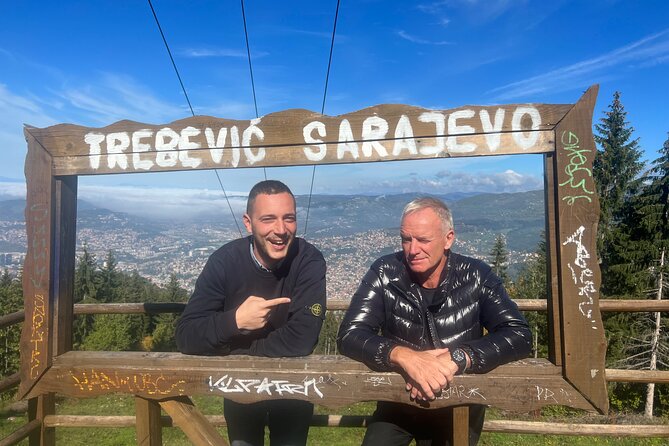
At Butmirska cesta, you visit the survival path and what is described as free Bosnian territory. This stop is free and lasts about 10 minutes.
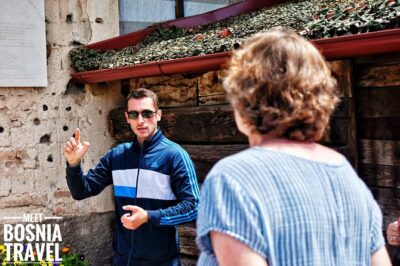
The route continues to Dobrinja, a major frontline during the siege. The survivor guide was born in this area and explains his childhood, life before the war, and the experience of growing up during and after the conflict.
This is the point where the tour becomes especially personal. Military maps can show lines and positions, but a childhood street explains what those lines meant. The guide’s account is not separate from the city. It takes place in the same neighborhoods you are seeing.
The personal element can also make the tour intense. You should come ready to listen without expecting a light sightseeing outing. Guides such as Mak have been praised for combining painful memories with warmth and occasional humor, but the subject remains serious.
Trebević, sniper zones, and the Olympic bobsleigh track
Trebević Mountain offers a broad panorama over Sarajevo. You visit the first and second sniper zones and hear how the Bosnian army’s core defensive area and strategy worked. On the way, the route passes SunnyLand, described as a former 1992 to 1995 sniper zone and now known as a local amusement facility.
At Trebević Vidikovac, you have about 20 minutes. The views are useful, not just scenic. They show the relationship between the city basin and the high ground around it.
The next major stop is the Sarajevo Olympic bobsleigh and luge track. Built for the 1984 Winter Olympics, the track later became associated with the war because of its position and use during the siege. You have about 30 minutes to walk along it and take photographs, including at the best photo spot on the track.
The route also passes through a hilly mahala, or neighborhood, where you get a look at Sarajevo’s local way of life. This helps balance the military material with the ordinary shape of the city: steep streets, homes, and communities built into the hills.
Urijan Dedina and the best Sniper Alley view
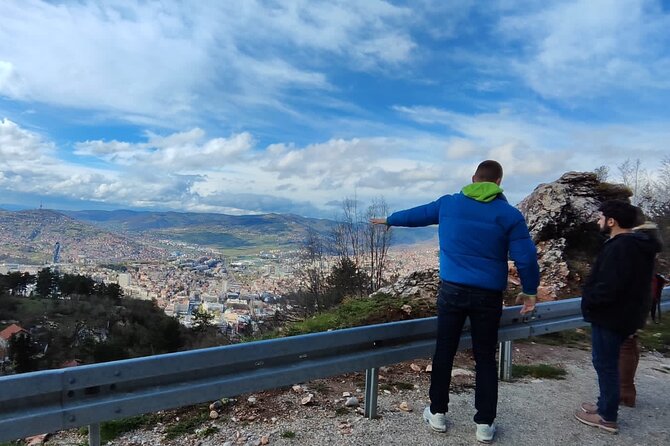
Urijan Dedina is another viewpoint, with about 10 minutes to look across Sarajevo’s Sniper Alley. The stop is short, so you will want to keep your camera ready and listen closely while the guide explains what you are seeing.
The view complements Trebević rather than replacing it. From one point, you see the mountain positions. From another, you get a clearer sense of the route through the city below. Together, the viewpoints make the siege geography easier to grasp than a museum display alone.
The Jewish Cemetery and European Jerusalem
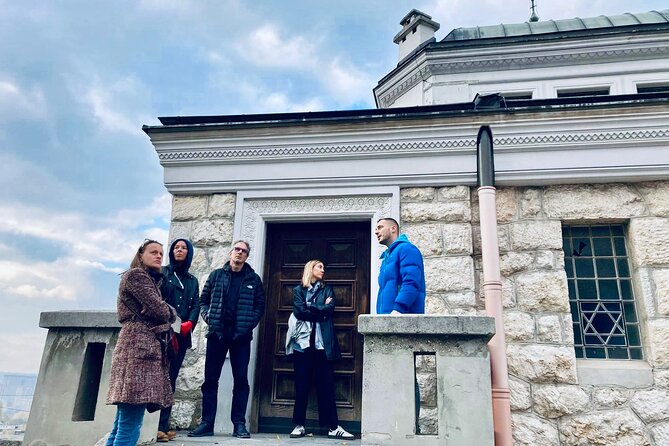
The Jewish Cemetery stop lasts about 25 minutes and includes 16th-century monuments, a presentation of Sarajevo as European Jerusalem, and a monument to Jewish victims of World War II. The guide also introduces the Jewish synagogue.
This section widens the city story again. Sarajevo’s identity is not only Ottoman, Yugoslav, or wartime. Its Jewish history is part of the city’s long religious and cultural mix. You also see the Ashkenazi Synagogue later in the route and learn about Ashkenazi Jewish life in Sarajevo.
The cemetery is a quiet counterpoint to the busy streets and exposed wartime positions. It gives you time to consider the city’s communities across several periods, rather than treating Sarajevo’s past as one single conflict.
Bridges, first victims, and a love story
At Suada and Olga Bridge, the guide explains both sides of the Vrbanja Bridge. One side is associated with the first victim of the Sarajevo siege. The other is remembered as the Sarajevo Romeo and Juliet bridge, tied to a love story from the war.
You also see the building connected with the first shot at the start of the Sarajevo War. The stop lasts only about five minutes, but it carries a lot of meaning. This is a good example of how the tour uses small city locations to explain large events.
The route continues past the 1984 Olympic hall at Skenderija and through the Austro-Hungarian section, where you see some of Sarajevo’s most attractive Neo-Gothic architecture. At At Mejdan Park, the guide shares another local story before leading you toward the Latin Bridge.
Latin Bridge, City Hall, and Sarajevo’s older chapters
At Latin Bridge, you hear about the assassination of Franz Ferdinand, the event linked to the outbreak of World War I. Nearby, the guide points out Hotel Saray.
The final central-city highlights include Sarajevo City Hall, also known as the National Library. Its history includes two fires, and the guide explains why the building is so symbolic to Sarajevo.
These stops work well late in the route because they show how Sarajevo’s global importance did not begin in 1992. The city has long sat at the meeting point of empires, religions, political systems, and trade routes. The tour moves quickly, so do not expect long interior visits at every building. The focus is on orientation and clear explanation from the vehicle or at brief stops.
Yellow Fortress and the closing panorama
Yellow Fortress is the final named stop, with about 20 minutes and admission included. It is one of the city’s best panorama and sunset locations, and the guide explains its Ottoman history.
After several hours of difficult material, the view gives the tour a more reflective ending. You can look over Sarajevo as a living city, not only as a place defined by siege photographs and shell damage.
Timing may affect the light, so do not assume every departure will end with a sunset. Still, the viewpoint is worthwhile even without dramatic evening color. It gathers the route’s main themes: Ottoman Sarajevo, the Austro-Hungarian city, Yugoslav architecture, the Olympic past, the war, and the present-day city below.
What the $53.21 price includes
The price is $53.21 per person. It includes the driver-guide and transport in an air-conditioned minivan. It does not include the €10 Tunnel of Hope Museum admission.
I consider the price reasonable if you want a broad first look at Sarajevo and do not plan to arrange separate transport to the tunnel, Dobrinja, Trebević, East Sarajevo, and the Olympic track. The route covers a large area in about four hours and includes several viewpoints that would be awkward to connect on foot.
The tradeoff is pace. You see many places, but several stops are short. If you prefer long museum visits, slow photography, or extended time at each monument, this may feel hurried. If you have only a day or two in Sarajevo, the coverage is a major advantage.
The tour is offered in English. Confirmation is provided at booking, and the activity returns to the starting point. It is often booked about 23 days ahead, so reserve early if your Sarajevo dates are fixed.
Who will get the most from this tour
I would choose this tour early in a Sarajevo stay. It gives you a working map of the city and explains why the hills, bridges, Olympic sites, museums, cemeteries, and government buildings matter.
It suits you best if you want:
- A first-hand survivor account alongside historical explanation
- The Tunnel of Hope without arranging separate transport
- A compact route through both central and outer Sarajevo
- Help understanding Bosnia and Herzegovina’s current political divisions
- Several viewpoints and photo stops
- A small-group experience rather than a large coach tour
It may not suit you if you want a carefree sightseeing outing. The content includes siege victims, minefields, sniper zones, shelling, destroyed buildings, and traumatic memories. Children must be accompanied by an adult, and most people can participate, but you should think about how younger children will handle the subject.
The guide assignment can vary. Mak is the name most closely associated with the personal survivor story in the supplied experiences, while Alen and Alnan are also named as guides. The important point is to understand that the human account is central to the tour, but the exact guide may depend on availability.
Should you book Roses of Sarajevo?
Book it if you want Sarajevo explained as both a beautiful city and a place shaped by very recent violence. The best parts are the survivor’s account, the Tunnel of Hope, the clear connection between hills and sniper positions, and the range of city history packed into one route.
Skip it if you want only architecture, food, and relaxed views. For everyone else, especially first-time visitors with limited time, this is a strong use of four hours. Allow for the extra tunnel fee, expect a serious subject, and book ahead if possible. Free cancellation is available up to 24 hours before the start time, subject to the stated minimum group requirement.
FAQ
How long does the tour last?
The tour lasts approximately 4 hours and 15 minutes.
What is the price?
The listed price is $53.21 per person.
Is the Tunnel of Hope entrance included?
No. The Tunnel of Hope Museum entrance fee is €10 per person and is paid separately.
What transportation is provided?
The tour includes transport in an air-conditioned minivan with a driver-guide.
Where does the tour start?
It starts at Đulagina 2, Sarajevo 71000, Bosnia and Herzegovina.
Where does the tour end?
The activity ends back at the meeting point.
Is the tour offered in English?
Yes. The tour is offered in English.
What is the group size?
One guide has a maximum of eight people, and the activity has a maximum of 15 participants.
Are children allowed?
Yes, but children must be accompanied by an adult.
What happens if I need to cancel?
You can cancel at least 24 hours before the start time for a full refund. Cancellations or changes made less than 24 hours before the start time are not accepted for a refund.
Just added around Sarajevo
- Private Full Day Safari Tour★ 5.0 · 8 reviews
- Sarajevo Under Siege: A War History Tour★ 5.0 · 10 reviews
- Walking Tour in Sarajevo★ 5.0 · 3 reviews
- Travnik, Jajce, Pliva Lakes & Mills –Medieval & Ottoman Bosnia Full Day Tour★ 5.0 · 3 reviews
- Mysterious Visoko Pyramids Driving and Walking Tour★ 5.0 · 7 reviews
- Secret Tito’s Bunker/Konjic Tour★ 5.0 · 4 reviews
- The last day of Franz Ferdinand Walking Tour★ 5.0 · 10 reviews
- Sarajevo to/from Zagreb Transfer Day Tour (North-central Bosnia)★ 5.0 · 4 reviews
War & Siege Tours, compared.
Fall of Yugoslavia, Sarajevo War Tour with Tunnel of Hope Museum and Frontlines
Read our review →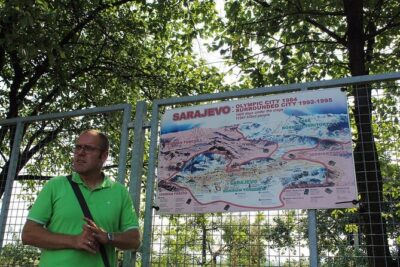
Tunnel Museum: Bosnian & Yugoslav Wars Tour with War Veteran
Read our review →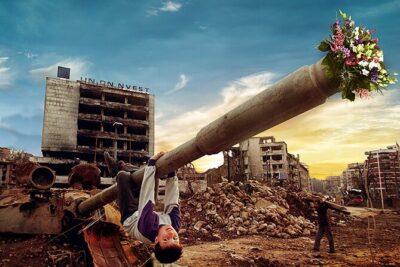
Sarajevo War Tour: A Veteran’s Story of the Siege (fees included)
Read our review →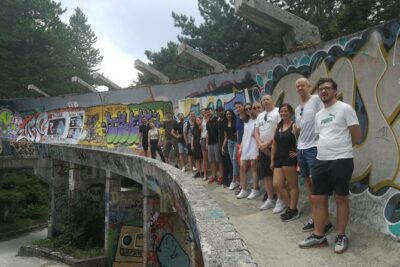
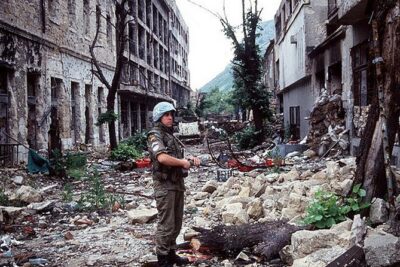
Break-up of Yugoslavia & The War in Mostar: Life Under Siege
Read our review →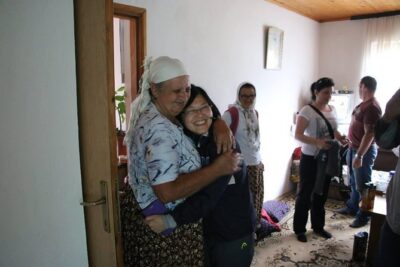
Sarajevo to Srebrenica: Genocide Study Tour with War Veteran
Read our review →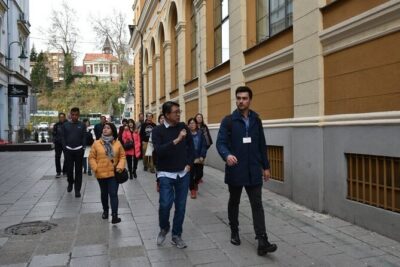
Sarajevo Grand Tour: Old Town, War Tunnel, Olympic Sites & More
Read our review →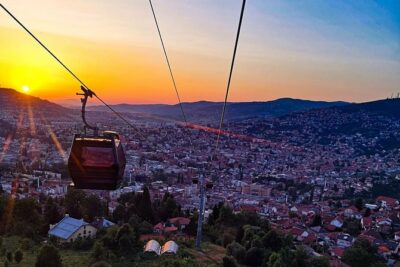
War Times Experience in Sarajevo – Half Day Tour
Read our review →Browse the lists this tour appears in