
Reviewed · TUNNEL OF HOPE TOURS
Sarajevo Grand Tour: Old Town, War Tunnel, Olympic Sites & More
Sarajevo’s story comes into focus on this half-day mix of walking and driving. You move from Ottoman courtyards and coffee houses to the War Tunnel, sniper positions, and the abandoned Olympic bobsleigh track. It is a lot of Sarajevo in one morning.
I like the private hotel pickup and the way the tour joins sights that are awkward to reach on foot. I also like the human touches: Bosnian coffee at Morica Han, a coppersmith’s demonstration, and guides such as Elvis, Enes, Edis, and Zulfo who explain the city through personal stories and humor. The main caution is timing. Some departures have lasted close to five hours, while one account describes a rushed three-hour visit with the coffee stop missed.
Key points to know before booking
- The Old Town walk covers Sarajevo’s Ottoman, Jewish, Catholic, and Orthodox landmarks in one compact route.
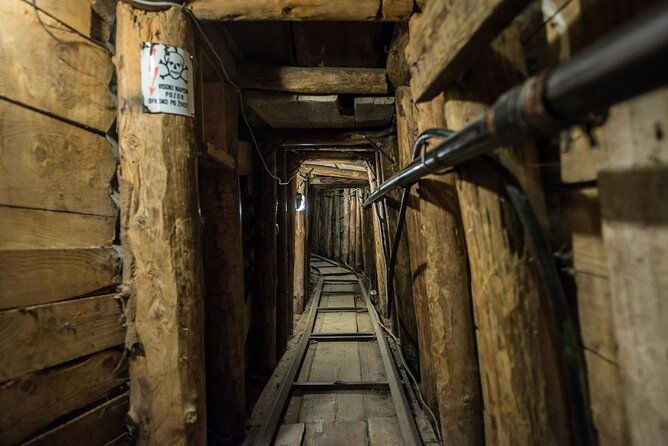
- The War Tunnel is the emotional center of the day, with a short film, a presentation, and a walk through part of the tunnel.
- Private vehicle transport saves your legs on the drive to Trebević, the Jewish Cemetery, and the Yellow Fortress.
- Bosnian coffee and local food stops add flavor, though the coffee experience should be confirmed with your guide.
- The €10.50 tunnel museum fee is not included, and the mosque is normally viewed from outside unless the group wants to pay for entry.
- The tour suits first-time visitors with limited time, but you should expect a brisk schedule and plenty of walking.
Starting with Sarajevo’s Ottoman and Austro-Hungarian divide
Pickup begins at 9:00 a.m. at your hotel lobby or another address in Sarajevo. The group can include up to 15 people, although some departures operate with only one or two participants. That can turn the outing into a private tour without changing the listed price.
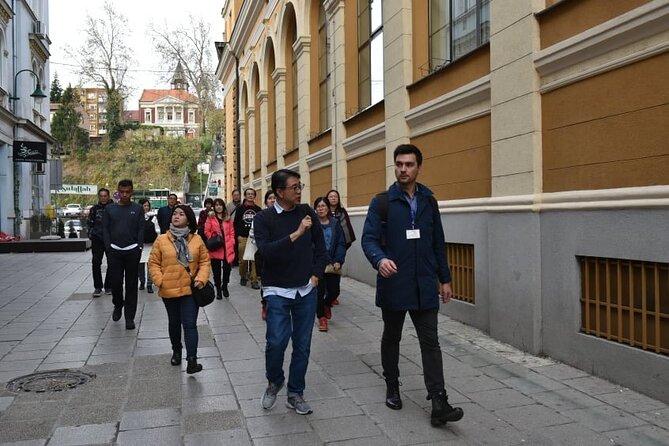
Your guide begins by placing Sarajevo on the map and explaining its population, geography, climate, and past. That opening matters here. Sarajevo is not a city you understand by looking at one monument. Its character comes from the close meeting of Ottoman, Austro-Hungarian, Jewish, Catholic, Orthodox, and modern Bosnian life.
The first stop is Sarajevo City Hall, known as Vijećnica. You see it from outside, then cross toward Inat Kuća, the Spite House. The story is a good early lesson in Sarajevo humor and stubbornness: when the city authorities wanted the house moved to make room for the grand City Hall, its owner agreed only if it was rebuilt brick by brick on the opposite side of the Miljacka River.
From there, you pass the Miljacka and the Šeher-Ćehaja Bridge. This section is short, but it gives you a useful view of the river and the way Sarajevo’s old center is packed into a narrow valley.
More visits to the Tunnel of Hope:
- Fall of Yugoslavia, Sarajevo War Tour with Tunnel of Hope Museum and Frontlines
★ 5.0 · 1,314 reviews - Tunnel Museum: Bosnian & Yugoslav Wars Tour with War Veteran
★ 5.0 · 551 reviews - Tunnel of Hope Tour – Survival and Resilience
★ 5.0 · 118 reviews
Baščaršija, coffee, and the sound of copper
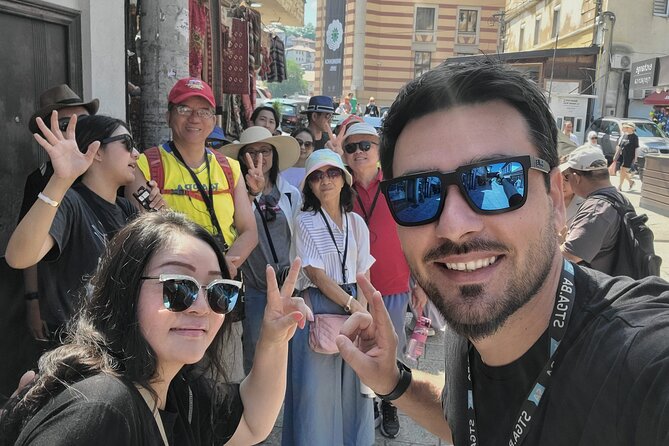
Cross the river and the mood changes quickly. The streets become pedestrian lanes lined with small shops, cafés, bakeries, and restaurants. Kazandžiluk, the Coppersmith Street, is one of the most atmospheric stretches in the Old Town. A short visit to a coppersmith’s shop shows how trays, coffee sets, and other objects are made by hand.
The food stops are practical as well as tasty. Locksmith Street is known for ćevapi, burek, other pita pastries, sweets, and coffee. The schedule does not promise a full meal, so you should treat this as a chance to buy a snack rather than a sit-down lunch. One guide has also made an unscheduled burek stop when the group needed food, so it is worth mentioning dietary needs early.
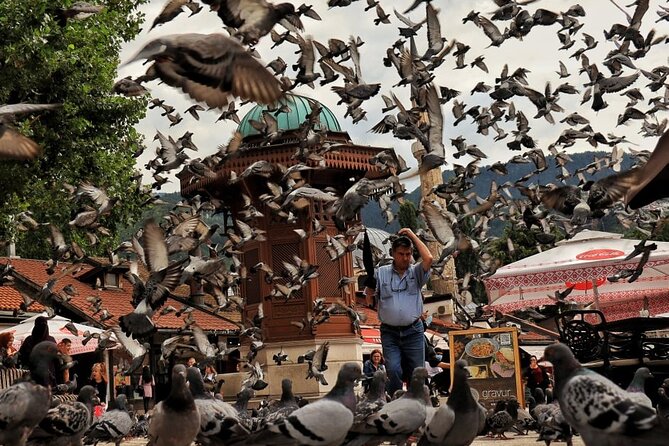
Baščaršija’s Sebilj fountain marks the center of the Old Town. The wooden fountain has provided water to people passing through for centuries and remains the natural meeting point of the district. You get only a few minutes here, but the guide uses the square to explain why Baščaršija still feels like the heart of Sarajevo.
At Morica Han, you enter a sixteenth-century Ottoman caravanserai. Merchants and their animals once stopped here, and today its quiet courtyard offers a welcome pause from the busy lanes. The planned Bosnian coffee experience takes place here, along with an explanation of coffee customs and local traditions.
This is one of the tour’s best details. Bosnian coffee is not simply a hot drink poured into a mug. The preparation, small cup, sugar, and serving style are part of the ritual. The experience is not guaranteed to be identical on every departure, however. One account specifically says the coffee stop did not happen, while several others describe it as a highlight. Confirm the plan with your guide at the start.
Gazi Husrev-beg and the city’s religious crossroads
The Gazi Husrev-beg Mosque complex gives you a close look at sixteenth-century Sarajevo. You see the mosque garden, minaret, fountain, Islamic school, and lunar clock tower. The guide explains Gazi Husrev-beg’s role and the place of the complex in the Old Town.
The standard tour describes the mosque from outside. Entry is not included. If everyone in the group wants to pay, the guide may be able to arrange a visit, but you should not assume that you will go inside. If seeing the interior is important to you, ask before booking or plan to return later.
Next comes the Latin Bridge and the site linked to the assassination of Archduke Franz Ferdinand in 1914. The event helped trigger the First World War, but the stop is not treated as an isolated European history lesson. Your guide connects it to Sarajevo’s position between empires and to the city’s changing identity.
The route also passes an old public toilet dating from the sixteenth century. It is still in use, an amusing and very local detail that keeps the history from becoming too solemn.
At Gazi Husrev-beg’s Bezistan, you see the ruins of Tašlihan, once one of the largest caravanserais, along with Hotel Europe and the covered market. The Sarajevo Meeting of Culture comes next, marked by the point where the city’s eastern Ottoman character meets its western Austro-Hungarian side.
Jewish, Catholic, and Orthodox Sarajevo in a few blocks
The Jewish Museum is viewed from outside. The building is a sixteenth-century synagogue, and the guide discusses the Sarajevo Haggadah and the history of Jewish life in Bosnia and Herzegovina. The stop is brief, but it helps you see that Sarajevo’s story is not only Muslim and Austro-Hungarian.
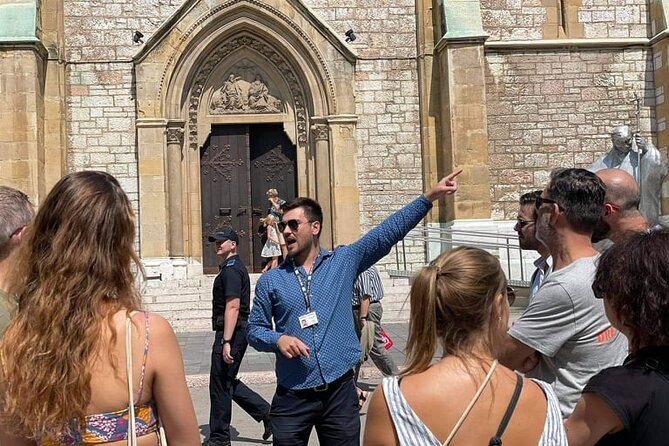
You then walk along Ferhadija toward the Sacred Heart Cathedral. The cathedral is also an outside visit. Nearby Sarajevo Roses mark places where mortar explosions killed people during the 1992 to 1995 war. The John Paul II statue adds another layer to this central street, where several religious traditions sit within easy walking distance.
At Markale Market, the guide explains its wartime importance and the massacre that took place there. You also pass a hamam before reaching the Serbian Orthodox Cathedral. Again, the church is seen from outside, but the sequence is valuable because it shows the physical closeness of Sarajevo’s religious communities.
This part of the tour can feel compressed. Each stop carries serious historical weight, yet most visits last five to fifteen minutes. You will get orientation and context, not a long museum visit or a detailed study of each building.
More of the 1984 Olympic sites:
- Sarajevo Full Day Tour: History, Culture, Nature, War & Olympics
★ 5.0 · 27 reviews - Sarajevo: Olympic Mountains and Spring of Bosna River Tour
★ 5.0 · 25 reviews - Cable Car Olympic Tour With Museum
★ 5.0 · 17 reviews - Trebevic Mountain Biking Tour from Sarajevo – Bobsleigh Track
★ 5.0 · 16 reviews
The War Tunnel and the siege of Sarajevo
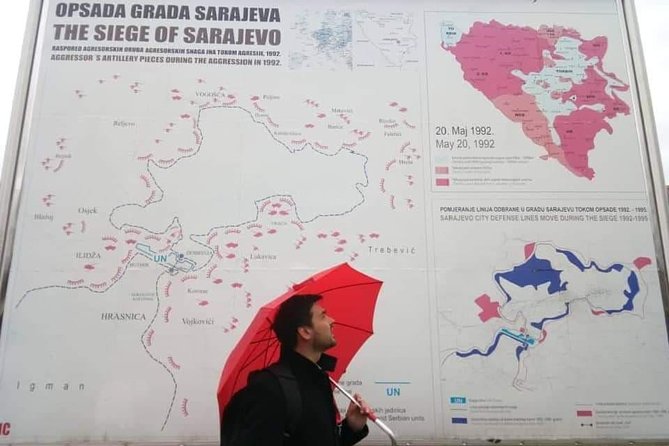
The private vehicle becomes essential when you leave the center. You pass Sniper Alley, Sarajevo Airport, and the boundary into the Republika Srpska entity before reaching the Sarajevo War Tunnel Museum.
The museum visit lasts about an hour. It includes a presentation, a short film about the siege, and a walk through part of the tunnel. The tunnel was a lifeline during the siege, linking the besieged city with the outside world beneath the airport zone. The narrow passage makes the story physical in a way that photographs cannot.
The €10.50 entrance fee is extra and is charged per booking according to the supplied tour details. Bring money for it, and ask your guide how payment will work. The museum is not a light sightseeing stop. You should be ready for difficult wartime material and a sober tone.
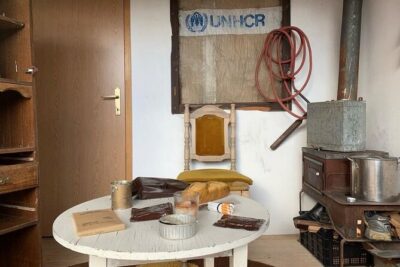
The guides often make this visit personal. Enes, for example, has been described as knowing the family connected with the tunnel site and arranging coffee and traditional snacks in a local setting. That kind of contact may depend on the guide and day, so treat it as a possible personal touch rather than a guaranteed part of the package.
Trebević, the Olympic bobsleigh track, and wartime scars
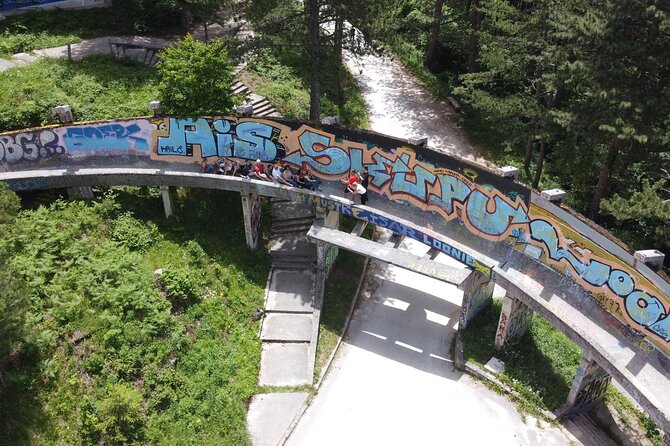
From the tunnel, the vehicle heads toward Trebević Mountain. The drive takes about 15 to 20 minutes. You see former front lines before taking a short walk to the Sarajevo Olympic bobsleigh and luge track.
The track is one of the day’s most striking photo stops. Built for the 1984 Winter Olympics, it now carries the marks of war and neglect. Concrete curves, graffiti, and forest make it visually different from the polished Old Town. You get about 30 minutes here, enough for photographs and an explanation of its Olympic and wartime roles.
The walk can be affected by weather and road conditions. One account suggests that rain changed the planned walk, with the vehicle going farther up the mountain. Wear shoes that can handle uneven ground, even though the walk is short.
The tour then drives down through Sarajevo’s hillside neighborhoods, or mahalas, toward the Jewish Cemetery. From here, you look down over the city center and Sniper Alley. The guide explains its use as a sniper position during the war and points out the War Hotel, another reminder of how Sarajevo’s buildings and hills were caught in the fighting.
This is where the day’s two main themes meet. The Olympic track represents Sarajevo before the war, when the city hosted the world. The cemetery and sniper views show what followed less than a decade later.
Yellow Fortress and the best city view
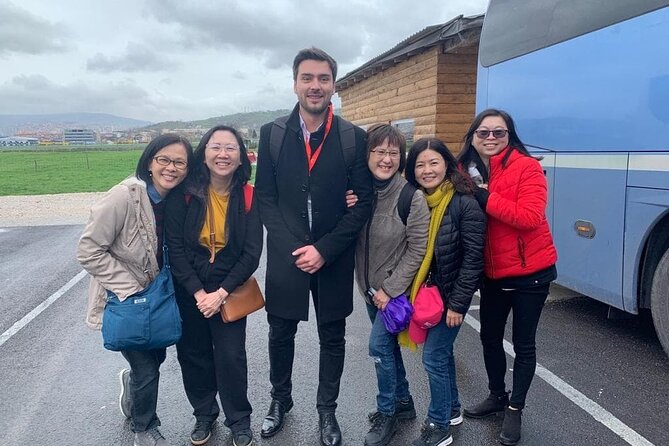
The final major stop is Yellow Fortress. The drive may pass Skenderija Olympic Hall and the Ashkenazi Synagogue before climbing to the viewpoint. From the fortress, Sarajevo spreads through the valley, with the minarets, church towers, river, and hills visible together.
The view is especially useful after the morning’s history. You can finally see why the city has been both a meeting point and a military target. The valley is compact, and the surrounding hills are close. Your guide may also help with photographs, something several people have appreciated at the bobsleigh track and viewpoints.
Drop-off is in the Old Town. The tour is scheduled for about five hours, but the real duration can vary. Some departures have taken around five and a half hours, while another lasted only three hours and felt rushed. Rain, group size, traffic, and the guide’s pacing may all affect the day.
What the $47.06 price really buys you
At $47.06 per person, this is a strong value if you want one organized introduction to Sarajevo. The price includes hotel pickup, bottled water, transport by private vehicle, an English-speaking local guide, and Bosnian coffee as described. It also links the Old Town with places you would not easily combine on foot, especially the War Tunnel, Trebević, Jewish Cemetery, and Yellow Fortress.
The value is less clear if you want long interior visits. The mosque, synagogue, cathedral, and Orthodox cathedral are outside stops. The War Tunnel fee is extra, and the tour leaves little time for independent browsing in Baščaršija.
I would book it early if your Sarajevo dates are fixed. It is booked an average of 36 days ahead, which suggests that leaving it until the last minute may not work during busy periods. Free cancellation is available up to 24 hours before the start time, subject to the stated minimum group requirement.
Who will enjoy this Sarajevo tour most
This outing is best for a first visit, a short stay, or a morning when you want a clear map of the city before exploring on your own. It works particularly well for anyone interested in the 1992 to 1995 siege, the Winter Olympics, Ottoman architecture, and Sarajevo’s mix of faiths.
You should be comfortable walking on cobbled streets, entering busy pedestrian lanes, and moving at a steady pace. The private vehicle reduces long uphill walks, but it does not turn the tour into a sit-down sightseeing ride.
Families can take part, and one guide has done a good job keeping a six-year-old engaged. Children must be accompanied by an adult. Older people can also manage the outing, though the amount of walking and the short stops are worth considering in advance.
The guide can make a major difference. Elvis is praised for clear explanations, humor, and passion for Sarajevo. Enes is noted for personal stories, visual aids on an iPad, and extra local touches. Edis has been described as friendly and attentive, while Zulfo has helped older members of a group with currency exchange and kept children interested. Guide assignment is not guaranteed, so book for the route and format rather than one specific person.
Should you book the Sarajevo Grand Tour?
I would book this tour if you want to cover Sarajevo’s main sights, war sites, and mountain viewpoints in one efficient outing. The strongest parts are the Old Town walk, the War Tunnel, the Olympic bobsleigh track, and the closing view from Yellow Fortress.
I would skip it if you want deep museum time, a slow meal, or guaranteed entry inside every religious building. Before setting out, confirm the expected end time, the Bosnian coffee stop, the tunnel fee, and whether your group wants to pay for mosque entry.
For most first-time visitors, this is a useful first day in Sarajevo. It gives you the city’s landmarks, scars, and sense of humor, then leaves you in the Old Town with enough orientation to explore at your own pace.
FAQ
What time does the Sarajevo Grand Tour start?
The tour starts at 9:00 a.m.
Where can I be picked up?
Pickup is offered at the lobby of your hotel or another location in Sarajevo.
How long does the tour last?
The advertised duration is approximately five hours. Actual departures may vary, with some lasting around five and a half hours and one reported departure lasting three hours.
Is transportation included?
Yes. Transport by private vehicle and hotel pickup are included.
Is the tour offered in English?
Yes. The tour is offered in English.
How large is the group?
The maximum group size is 15 people. Some departures may have only one or two participants.
Is the Sarajevo War Tunnel entrance included?
No. The tunnel museum entrance fee is listed as €10.50 per booking and is not included.
Is Bosnian coffee included?
Bosnian coffee is listed as included, with the planned tasting at Morica Han. You should confirm the stop with your guide because one departure did not include the coffee experience.
Can I cancel for a full refund?
Yes, if you cancel at least 24 hours before the experience start time. Cancellations or changes made less than 24 hours in advance are not accepted for a refund.
More Tours About the Siege and the War
- ROSES OF SARAJEVO (Official WAR + CITY tour)- Story of a Survivor
★ 5.0 · 770 reviews - Sarajevo War Tour: A Veteran’s Story of the Siege (fees included)
★ 5.0 · 326 reviews - Sarajevo 1425 days under the siege – War Tour
★ 5.0 · 170 reviews - Sarajevo to Srebrenica: Genocide Study Tour with War Veteran
★ 5.0 · 131 reviews
Just added around Sarajevo
- Private Full Day Safari Tour★ 5.0 · 8 reviews
- Walking Tour in Sarajevo★ 5.0 · 3 reviews
- Sarajevo Under Siege: A War History Tour★ 5.0 · 10 reviews
- Mysterious Visoko Pyramids Driving and Walking Tour★ 5.0 · 7 reviews
- Secret Tito’s Bunker/Konjic Tour★ 5.0 · 4 reviews
- Travnik, Jajce, Pliva Lakes & Mills –Medieval & Ottoman Bosnia Full Day Tour★ 5.0 · 3 reviews
- The last day of Franz Ferdinand Walking Tour★ 5.0 · 10 reviews
- Sarajevo to/from Zagreb Transfer Day Tour (North-central Bosnia)★ 5.0 · 4 reviews
Tunnel of Hope Tours, compared.
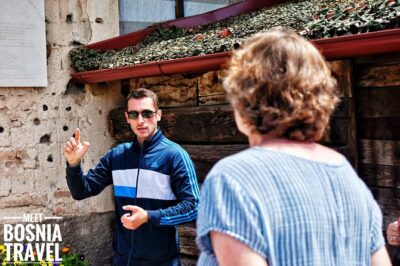
Fall of Yugoslavia, Sarajevo War Tour with Tunnel of Hope Museum and Frontlines
Read our review →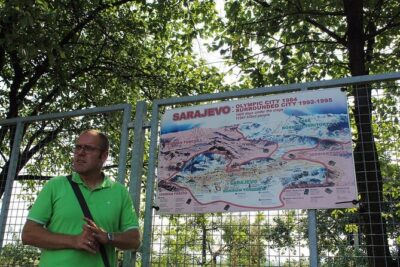
Tunnel Museum: Bosnian & Yugoslav Wars Tour with War Veteran
Read our review →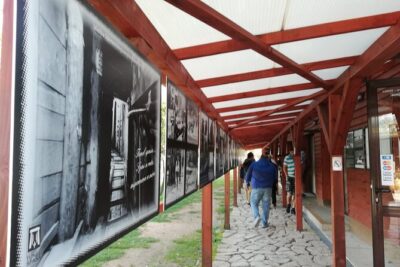
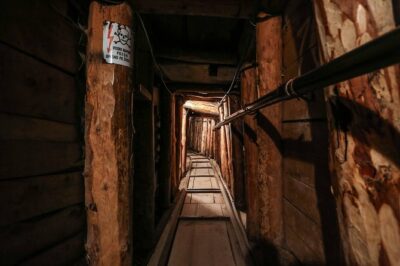
Times of Misfortune – Life Under Siege and the Tunnel of Hope
Read our review →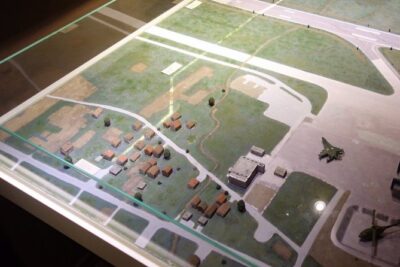
WAR TUNNEL – Sarajevo’s only way of a communication during the WAR – Top secret
Read our review →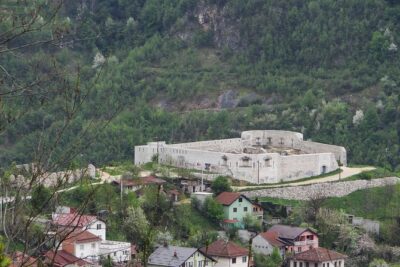
SARAJEVO SIEGE TIMES ’92-’95 / Sarajevo Roses & Tunnel of Hope /
Read our review →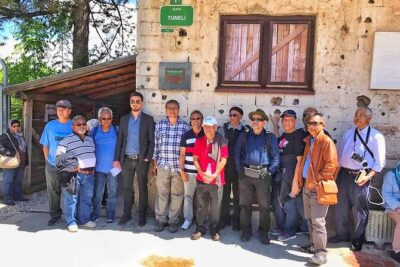
Browse the lists this tour appears in