
Reviewed · SREBRENICA GENOCIDE TOURS
Understanding Srebrenica Genocide – Day tour from Sarajevo
Srebrenica is not a light day out. It is a serious, carefully presented visit to the former UN battery factory, the Srebrenica Genocide Museum, and the Potocari Memorial Center, where victims are buried. The long drive from Sarajevo gives your guide time to explain the Yugoslav wars before you reach the memorial sites.
I like the small maximum of eight people, which gives you room to ask questions, and I like the museum’s use of films and personal testimony rather than relying only on dates. The main drawback is the length: roughly two and a half hours each way, with lunch not included, so you should expect a full and emotionally demanding day.
Key points to know before booking
- The former UN battery factory now holds the Srebrenica Genocide Museum and provides the tour’s main historical setting.
- A curator-led museum visit adds personal testimony and multimedia material to the guide’s explanation.
- Potocari Memorial Center includes a memorial room and cemetery for victims who were found and identified.
- The drive from Sarajevo takes about two and a half hours each way, making this an eight to ten-hour commitment.
- Groups are capped at eight people, with guides including Kenan and Ayyub praised for clear explanations and thoughtful care.
- Lunch is your responsibility, but bottled water and snacks are included.
Why Srebrenica requires a full day from Sarajevo
This tour covers ground that is both physical and historical. Srebrenica lies around two and a half hours from Sarajevo, so the morning begins with a long drive through Bosnia and Herzegovina. That travel time is not filler. It gives your guide a chance to arrange the complicated story of the Yugoslav wars in chronological order.
That preparation matters. Srebrenica is easier to understand when you know what led to the genocide, rather than arriving at a memorial with only a few disconnected facts. Guides such as Kenan and Ayyub are praised for explaining Bosnian culture and wartime history during the drive, and that conversation is one of the useful features of a private-feeling small group.
The day lasts about eight to ten hours, beginning at 8:00 a.m. You can meet at Kovači 25 in Sarajevo, or arrange pickup from a Sarajevo hotel. The service is especially useful if you are staying outside the Old Town, where hotel pickup can be provided if needed.
More Srebrenica memorial days:
- From Sarajevo: Srebrenica Genocide Memorial Study Tour
★ 5.0 · 359 reviews - Sarajevo to Srebrenica: Genocide Study Tour with War Veteran
★ 5.0 · 131 reviews - Understanding Srebrenica Genocide Tour + Lunch with Local Family Included
★ 5.0 · 123 reviews
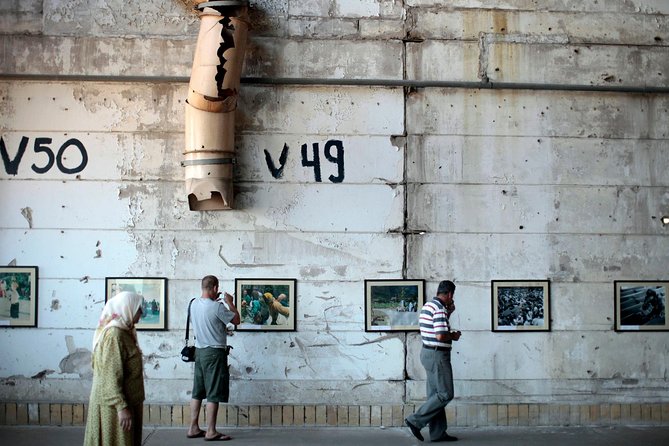
The former battery factory and the Srebrenica museum
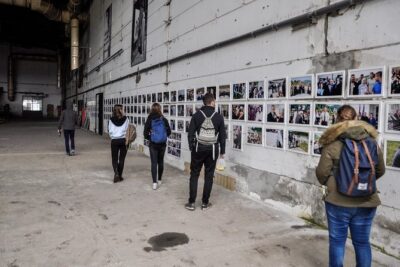
The first major stop is in front of a battery factory once used as a headquarters by UN forces during the war in Bosnia. The building now houses the Museum of Srebrenica Genocide, giving the visit a direct connection to the events being explained.
That setting is important. You are not simply entering a new museum in a neutral building. You are seeing a former wartime headquarters and then learning how the enclave and its people experienced the conflict. The location gives the guide’s explanation a physical anchor.
Inside, you meet the museum curator and hear a first-hand account of survival in Srebrenica. The museum also uses multimedia facilities and a selection of films to lay out the events that led to the genocide. For you, this means the visit is not just a lecture from the guide. You receive context from the guide, personal testimony from the museum, and visual material that helps connect the two.
I consider this the strongest educational part of the day. The chronology is handled before the emotional memorial visit, which is a sensible order. It allows you to understand what you are seeing instead of moving straight from Sarajevo into a place of grief without preparation.
Still, the museum portion may feel intense. The subject is painful, and the combination of testimony, film, and the original wartime setting is not casual sightseeing. Give yourself permission to listen quietly and take the visit at your own pace.
The memorial room at Potocari
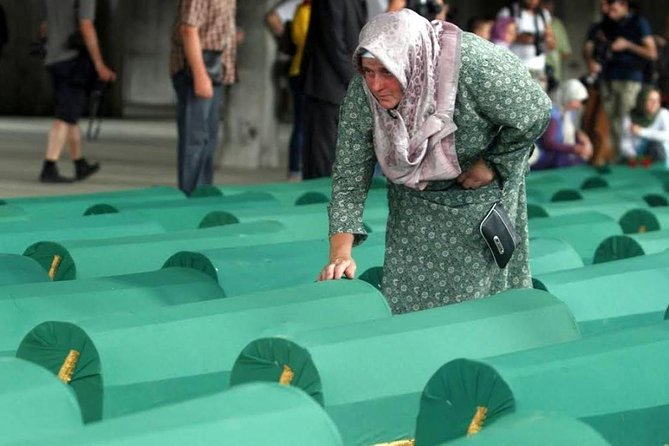
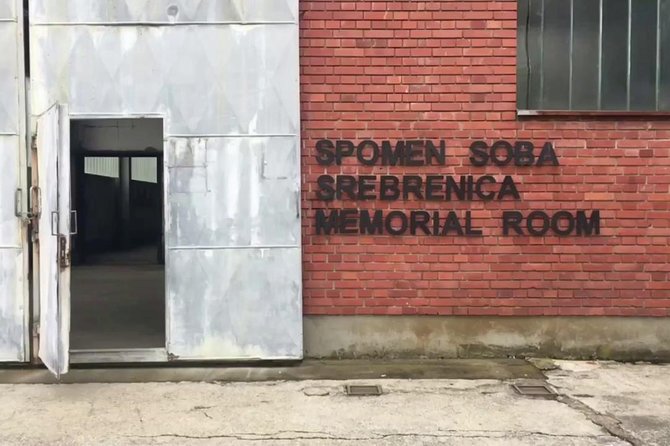
From the former battery factory, the tour continues to the Potocari Memorial Center. Here, you visit a memorial room with stories of victims prepared by a local journalist. Victims who were found and identified are buried in the memorial cemetery.
The memorial room changes the focus. The museum explains the chronology and survival of the enclave, while the memorial room brings attention to individual people. That shift can make the scale of the event feel more personal and immediate.
You should plan to behave as you would at any place of mourning: keep your voice low, avoid treating the cemetery as a casual photo stop, and allow time for reflection. The itinerary specifically sets aside time to pay respects, not simply to check the site off a list.
For many people, Potocari will be the most affecting stop. The former factory gives you historical context, but the memorial cemetery asks you to confront the human cost. I appreciate that the tour includes both. Visiting only a museum can leave the story abstract. Visiting only a cemetery can leave you without enough context.
Srebrenica beyond the memorial sites
After Potocari, you continue into the city of Srebrenica for lunch. The town was once an industrial leader in the area and is now described as a ghost city. That contrast adds another layer to the day.
You are not seeing Srebrenica only as the location of a genocide memorial. You are also seeing a place with an industrial past and a changed present. The city visit helps show that this was a functioning community, not merely a name associated with wartime events.
Lunch is not included in the tour price, and there are not many restaurants close to the Potocari Memorial Center. For that reason, eating in Srebrenica is a practical part of the route rather than an optional detour. Bring some flexibility about the meal, since the supplied details do not specify a particular restaurant or menu.
The city stop also gives you a quieter pause after the museum and memorial. That break can be welcome, although you should not expect a long restaurant-focused outing. The point of the stop is to eat and see Srebrenica itself before returning to Sarajevo.
A few more Sarajevo days to weigh up
- Sarajevo: Mostar, Konjic, Blagaj Tekke, Pocitelj & Waterfall
★ 4.9 · 1,335 reviews - Fall of Yugoslavia, Sarajevo War Tour with Tunnel of Hope Museum and Frontlines
★ 5.0 · 1,314 reviews - Sarajevo: Mostar, Konjic, Sufi House, Pocitelj & Kravice Falls
★ 5.0 · 1,179 reviews - ROSES OF SARAJEVO (Official WAR + CITY tour)- Story of a Survivor
★ 5.0 · 770 reviews
What the small group changes
The tour has a maximum of eight people. That is a useful size for this subject and this route. You are less likely to feel lost in a large crowd, and you have a better chance to ask about the chronology, the museum material, or the memorial sites.
A small group also affects the tone. This is not designed as a fast-moving sightseeing excursion with a guide speaking over a microphone. The available feedback highlights guides who make time for conversation, explain the subject clearly, and remain accommodating throughout the day.
Kenan is specifically praised for being friendly, professional, and helpful beyond the core tour. He even assisted one participant with transport arrangements for the next destination. That does not mean every booking includes onward travel help, but it suggests the guide may take a practical interest in solving problems when possible.
Ayyub is also praised for being highly informed and passionate about Srebrenica. That matters here. You want a guide who can explain difficult material with care, not someone who treats the subject as a string of memorized dates.
The quality of guiding is particularly important because the museum already includes its own curator. Your Sarajevo guide’s job is to set the context, connect the stops, answer questions, and help you understand what you are seeing. A good guide makes the long road feel purposeful.
Transport, timing, and what is included
The tour uses an air-conditioned vehicle and includes WiFi on board, bottled water, and snacks. Those details matter on a route that takes about five hours of driving in total. WiFi may be useful during the ride, while water and snacks reduce the need to search for supplies before the first stop.
Hotel pickup is available in Sarajevo, and the listed meeting point is Kovači 25. The tour begins at 8:00 a.m. and returns to the meeting point at the end. Because the final duration is given as eight to ten hours, you should avoid scheduling a tight evening connection or a fixed appointment immediately afterward.
The long drive is the main logistical cost of the experience. You do not get several major attractions in quick succession. Instead, you get one important destination supported by a long explanation and a carefully ordered visit.
The vehicle and small group make the route easier than arranging the trip alone, especially if you do not want to manage the drive, navigation, and timing. The price also covers the guide, transport, museum-related visit arrangements, hotel pickup where applicable, drop-off, WiFi, water, and snacks.
Is $82.68 a fair price?
At $82.68 per person, the tour offers reasonable value if you want a guided and structured visit from Sarajevo. The price is not just paying for transportation. You are also paying for a full day of guiding, historical context during the drive, a small group capped at eight, and coordination between the museum, memorial center, and city stop.
The value is strongest for people who want help making sense of a complicated and painful subject. Driving yourself might reduce the tour cost in some cases, but it would not automatically give you the same chronology, local explanation, or contact with a museum curator.
Lunch is not included, so allow extra money for your meal in Srebrenica. You may also want to carry a little food of your own, although snacks are supplied. The tour price is best judged as a transport and interpretation package, not as an all-inclusive day with meals.
Because the experience is offered in English, it suits English-speaking visitors who want detailed explanation without arranging separate museum visits. Confirmation is provided at booking, and free cancellation is available until 24 hours before the start time. Changes or cancellations inside that window are not accepted for a refund.
Who will get the most from this tour?
I would choose this tour if you have a serious interest in Bosnian history, genocide education, memorial sites, or the effects of war on ordinary communities. It is also a strong choice if you want to visit Srebrenica but prefer not to handle the long drive and complex planning alone.
The tour may suit solo visitors particularly well. The small group can provide company during the drive without the feel of a large coach excursion. It also gives you a built-in setting for questions and quiet discussion.
Families with older children or teenagers may find the educational structure useful, but the subject is difficult. You should decide in advance if everyone in your party is ready for museum films, survival stories, and a memorial cemetery.
I would not pick this as a casual day trip or a quick add-on between other Sarajevo activities. The subject demands attention, and the schedule leaves little room for a relaxed, spontaneous outing. You should also avoid it if you need to be back in Sarajevo at a precise hour.
A thoughtful way to spend the return drive
The return trip gives you time to process the day. The guide may continue the conversation, as the drive to Srebrenica is used to discuss Bosnian culture and history, but you can also use the quiet time to reflect.
That balance is valuable. After a visit to the memorial room and cemetery, you may not want constant commentary. A small group and a conversational guide make it easier for the mood to change naturally, from explanation to questions to silence.
The experience does not try to make Srebrenica comfortable. Instead, it gives you the tools to understand the place and asks you to treat it with respect. For me, that is the right approach to a memorial visit.
Should you book the Srebrenica day tour?
Book it if you want a structured, serious visit with a well-organized route, an English-speaking guide, and time at the former UN battery factory, museum, memorial room, cemetery, and city of Srebrenica. The small group, guide-led chronology, and museum curator add real value to the long journey.
Before booking, make sure you can commit to eight to ten hours, handle an emotionally heavy subject, and pay separately for lunch. If those conditions work for you, this is one of the most meaningful day trips you can make from Sarajevo. It is not easy sightseeing, but it is an important way to understand Bosnia and remember the people connected to this place.
FAQ
How long does the Srebrenica tour take?
The tour lasts approximately eight to ten hours. The drive from Sarajevo to Srebrenica takes around two and a half hours each way.
What time does the tour start?
The tour starts at 8:00 a.m.
Where does the tour begin and end?
The listed meeting point is Kovači 25 in Sarajevo. The activity ends back at the meeting point.
Is hotel pickup available?
Yes. Hotel pickup is available from hotels in Sarajevo. Pickup is specifically noted for guests staying outside Sarajevo’s Old Town when required.
Is lunch included?
No. Lunch is not included. The route continues to Srebrenica for lunch because there are few restaurants near the Potocari Memorial Center.
How many people can join the tour?
The tour has a maximum of eight participants.
What is included in the tour price?
The price includes a driver and tourist guide, an air-conditioned vehicle, WiFi on board, hotel pickup where applicable, hotel drop-off, bottled water, and snacks. Museum admission is listed as free, and lunch is not included.
Just added around Sarajevo
- Private Full Day Safari Tour★ 5.0 · 8 reviews
- Walking Tour in Sarajevo★ 5.0 · 3 reviews
- Sarajevo Under Siege: A War History Tour★ 5.0 · 10 reviews
- Mysterious Visoko Pyramids Driving and Walking Tour★ 5.0 · 7 reviews
- Secret Tito’s Bunker/Konjic Tour★ 5.0 · 4 reviews
- Travnik, Jajce, Pliva Lakes & Mills –Medieval & Ottoman Bosnia Full Day Tour★ 5.0 · 3 reviews
- The last day of Franz Ferdinand Walking Tour★ 5.0 · 10 reviews
- Sarajevo to/from Zagreb Transfer Day Tour (North-central Bosnia)★ 5.0 · 4 reviews
Srebrenica Genocide Tours, compared.

Sarajevo to Srebrenica: Genocide Study Tour with War Veteran
Read our review →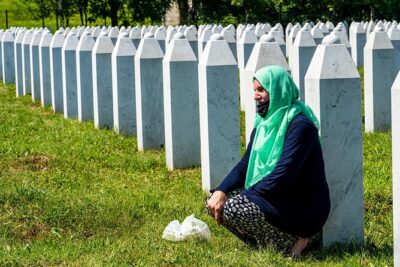
Understanding Srebrenica Genocide Tour + Lunch with Local Family Included
Read our review →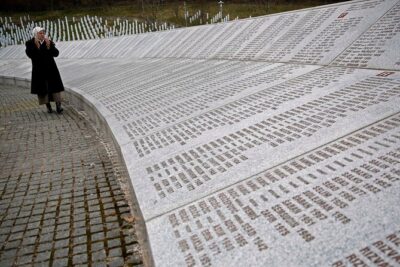
Browse the lists this tour appears in