
Reviewed · SREBRENICA GENOCIDE TOURS
Remembering Srebrenica Genocide
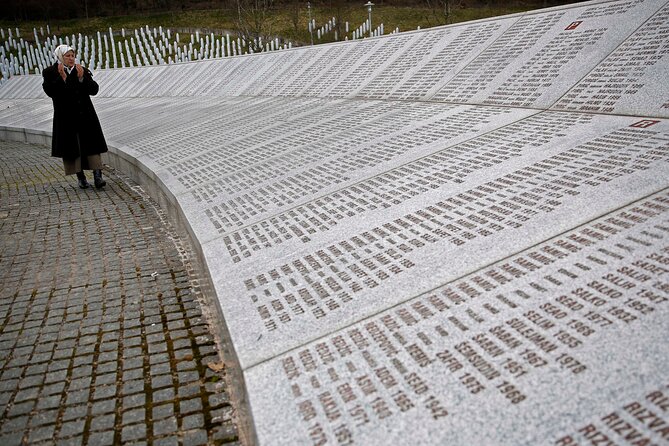
Srebrenica is not a sightseeing stop you breeze through. It is a place where the Potočari memorial and cemetery ask you to slow down, listen, and face one of Europe’s darkest crimes. The former UN base, now a genocide gallery, gives the visit a stark physical setting.
I like the small maximum group of 15, which leaves more room for questions and keeps the subject personal. I also like having a local guide such as Emina Koso Sarajcic or Safet explain the war in plain language, with the candor and care this subject needs.
The drawback is clear: this is an emotionally difficult, full-day outing, not a light cultural excursion. The price of $78.27 includes transport and a licensed guide, but not lunch or snacks, so you need to prepare for both the long day and the weight of what you will see.
Key points to know before you go
- Potočari is the emotional center: You spend about three hours at the memorial complex and former UN base.
- The guide matters greatly: Emina Koso Sarajcic and Safet have led visits praised for clear explanations, compassion, and strong local insight.
- Round-trip transport saves time: You leave from central Sarajevo at 8:00 a.m. and return to the same meeting point.
- The group stays small: No more than 15 people means a better chance to ask questions during a serious subject.
- Srebrenica today is part of the lesson: A 45-minute stop looks beyond the genocide toward reconciliation and daily life.
- Bring food and emotional patience: Lunch and snacks are not included, and the experience can be hard to process.
Why this day from Sarajevo matters
Many visitors come to Sarajevo wanting to understand the Bosnian War beyond museums and city streets. Srebrenica gives that history a specific place and human cost.
In July 1995, Srebrenica became the site of genocide during the Bosnian War. The memorial at Potočari remembers those killed, while the former United Nations base shows how international involvement and failure formed part of the story. You are not simply hearing dates and political names. You are standing in places tied to the events.
That setting changes how you receive the information. A guide can explain the causes and sequence of the war, but the memorial and former base give those facts a physical presence. The visit is especially useful if you know only the broad outline of the conflict and want to understand what happened before, during, and after the genocide.
I would not book this as a casual add-on between Sarajevo activities. The day asks for attention. You will get more from it if you arrive ready to listen, ask thoughtful questions, and accept that some parts may stay with you after you return to the city.
More Srebrenica memorial days:
- From Sarajevo: Srebrenica Genocide Memorial Study Tour
★ 5.0 · 359 reviews - Sarajevo to Srebrenica: Genocide Study Tour with War Veteran
★ 5.0 · 131 reviews - Understanding Srebrenica Genocide Tour + Lunch with Local Family Included
★ 5.0 · 123 reviews
The 8:00 a.m. departure from Sarajevo
The tour begins at Zelenih beretki 30 in Sarajevo at 8:00 a.m. You travel in an air-conditioned vehicle and return to the same meeting point at the end of the day.
Round-trip transport is one of the strongest practical reasons to book this experience. Reaching Srebrenica by public transport can be difficult because of limited availability and the time involved. Driving with a guide also lets you use the journey to build the background needed for the memorial visit.
The total duration is about eight and a half hours. That makes this a full-day commitment, but it also allows enough time for both the memorial complex and Srebrenica itself. A shorter trip might cover the cemetery and leave you with little room to consider what the town is like today.
The vehicle is air-conditioned, which matters on a long road day. The available information does not specify stops for meals, so do not count on a planned lunch break. Since food is not included, carry snacks and water unless you have confirmed another arrangement directly.
Potočari Memorial: three hours with the central story
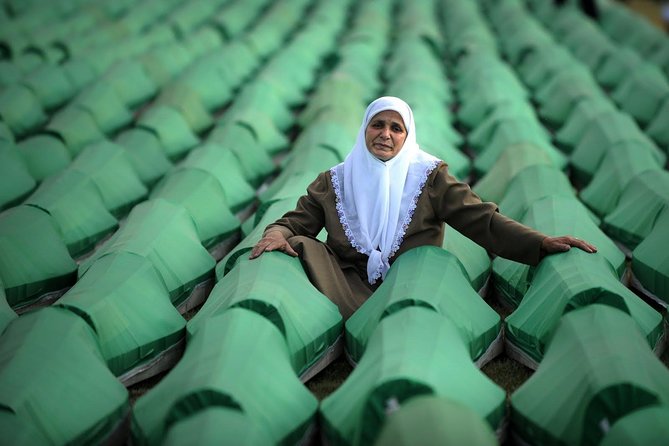
The main stop is the Srebrenica Genocide Memorial in Potočari. You have about three hours here, and that is the right amount of time for a place that should not be rushed.
The memorial complex includes the cemetery, where victims are commemorated, and the former UN base. That base is now a gallery about the genocide. Its presence adds an important layer to the visit because it connects the memorial to the international role in the events.
Your guide explains what led to the genocide and how the Bosnian War shaped the area. The best part of this format is the chance to ask questions as they arise. The subject contains difficult political, military, and human details, and a local guide can clarify them without turning the stop into a dry lecture.
Guides who have led this experience include Emina Koso Sarajcic and Safet, also written as Saffet in some accounts. Emina has been praised for explaining complicated events in simple terms, while Safet has been noted for his local insight, calm manner, and strong attention to the group.
Those qualities matter here. You need a guide who can explain facts directly without flattening the human suffering. You also need someone who understands when the group needs a pause. The information provided describes guides who handled questions carefully and helped people deal with the emotional side of the visit.
Admission to the memorial stop is included. You do not need to budget a separate entrance fee for the listed sites.
What the former UN base adds
The former UN base gives the day a different focus from a cemetery visit alone. It is now a gallery of genocide, allowing you to connect the personal loss represented by the graves with the wider events surrounding Srebrenica.
You can expect the guide to place the gallery within the story of the war and the genocide. The supplied details do not specify every exhibit, so I would not promise particular photographs, films, or artifacts. What is certain is that the base itself is part of the testimony and carries a direct connection to the period being discussed.
That physical connection is valuable. The site helps you consider not only what happened to Bosniak civilians, but also how the area was viewed and handled by the international community. It gives the day a serious historical focus that goes beyond general statements about conflict.
Allow yourself time to take in the material. This is not a place for rushing from display to display. You may want to ask your guide about points that are unclear, but you do not need to fill every quiet moment with conversation.
A few more Sarajevo days to weigh up
- Sarajevo: Mostar, Konjic, Blagaj Tekke, Pocitelj & Waterfall
★ 4.9 · 1,335 reviews - Fall of Yugoslavia, Sarajevo War Tour with Tunnel of Hope Museum and Frontlines
★ 5.0 · 1,314 reviews - Sarajevo: Mostar, Konjic, Sufi House, Pocitelj & Kravice Falls
★ 5.0 · 1,179 reviews - ROSES OF SARAJEVO (Official WAR + CITY tour)- Story of a Survivor
★ 5.0 · 770 reviews
Srebrenica today: 45 minutes beyond the memorial
The second stop lasts about 45 minutes in Srebrenica itself. This portion keeps the visit from ending with the past alone.
You see how Srebrenica looks today and learn about reconciliation efforts. That is important because the town is not only a memorial site. It is also a present-day community living with the effects of war, loss, division, and the hard work of moving forward.
Forty-five minutes is enough for an introduction, but not enough for a full study of modern Srebrenica. Think of this stop as a chance to place the memorial within the town’s current reality. You will not get an exhaustive account of every political or social issue, yet you will leave with a better sense that history here is ongoing.
The idea of reconciliation can sound abstract in a classroom. Seeing Srebrenica today gives it a more concrete meaning. Your guide can explain the challenges and hopes connected with rebuilding relationships, preserving memory, and creating a future after mass violence.
This is also where local knowledge becomes especially useful. A guide can point out the gap between public memory, private grief, and ordinary daily life. The experience is strongest when it allows both sorrow and the possibility of a better future.
A guide can shape the whole experience
On this tour, the guide is not simply handling directions and transport. The guide is the person who connects the road from Sarajevo, the memorial, the former UN base, and the present-day town.
Emina Koso Sarajcic has been identified with this experience and praised for her clear explanations, care, and ability to answer difficult questions. Safet has also led the tour, with a style described as relaxed, attentive, and full of local understanding. The exact guide for your date is not stated, so you should not assume you will receive one particular person.
What you should expect is a licensed guide who speaks English and provides the historical setting for the visit. The strongest accounts of the experience focus on honesty, clarity, and personal care, rather than theatrical storytelling. That is exactly the right approach for Srebrenica.
You may have questions that feel basic. Ask them. A good explanation can help you understand how the conflict developed and why the genocide happened. You may also have more advanced questions, especially if you study history or teach it. The small group gives you a better chance to raise them than a large coach tour would.
The group limit is 15 people. That is not a private tour, but it is small enough to keep the day from feeling anonymous. It also gives the guide a better chance to notice when someone needs help or clarification.
Is $78.27 a fair price?
At $78.27 per person, the cost is reasonable if you value the transport and the guide. You are paying for an eight-and-a-half-hour day, an air-conditioned vehicle, round-trip travel from Sarajevo, and a licensed English-speaking guide. The price also removes the difficulty of arranging a long public transport journey on your own.
It is not the cheapest possible way to reach Srebrenica, but the comparison is not just vehicle versus bus. You are also buying structure and explanation. Without a guide, you could reach the memorial and still miss much of the context that gives the place meaning.
The value is strongest for first-time visitors to Bosnia and Herzegovina, people studying the war, and anyone who wants a serious local explanation rather than a self-guided visit. It is also useful if your Sarajevo schedule is tight and you want the practical benefit of one organized day.
Remember that lunch and snacks are not included. That is a small extra cost, but it is an important planning detail for an early departure and long return journey. Bring provisions or be ready to arrange food yourself.
Who should book this experience?
I would recommend it if you want to understand the Bosnian War through a specific place and you are prepared for an emotionally demanding day. The tour suits visitors who prefer a guide to connect memorials, military history, personal suffering, and current reconciliation.
It is also a strong choice for history teachers, students, and serious readers of Balkan history. The format leaves space for questions, and the guides have been able to explain complex events in accessible language.
You may want to skip it if you are looking for a relaxed day trip, scenic entertainment, or a broad tour of Bosnia and Herzegovina. Srebrenica is not presented as a cheerful excursion. The subject is painful, and the memorial deserves respectful attention.
Families and younger visitors require personal judgment. The provided information says most people can participate, but it does not give a recommended minimum age or specific guidance for children. Consider the maturity of everyone in your group before booking.
Practical details that make the day easier
Confirmation is provided at booking, and the experience is offered in English with a mobile ticket. The maximum group size is 15 people, and the activity ends back at the starting point in Sarajevo.
Free cancellation is available when you cancel at least 24 hours before the 8:00 a.m. start time. Cancellations made less than 24 hours before departure are not refunded, and changes inside that period are not accepted. The cut-off follows local time.
Wear whatever keeps you comfortable for a long day, but remember that the main issue is not special equipment. The key preparations are food, water, patience, and the willingness to spend time with difficult material.
The best question to ask before booking is not only Can I fit this into my schedule? Ask yourself if you can give the day the attention it deserves. If the answer is yes, the organization and transport make the visit much easier than arranging it alone.
Should you book the Remembering Srebrenica Genocide tour?
Book it if you want a direct, serious introduction to Srebrenica and the Bosnian War, especially if you are staying in Sarajevo and do not want to manage the long journey yourself.
The strongest reasons are the three-hour visit to Potočari, access to the former UN base gallery, the 45-minute look at Srebrenica today, and the chance to learn from a local English-speaking guide. The small group and included transport add real value.
Just go prepared. This is an emotional day, and lunch is not included. If you approach it with respect, curiosity, and enough time to listen, the tour can give you a clearer understanding of both the genocide and the difficult work of remembering it.
FAQ
Where does the tour start?
It starts at Zelenih beretki 30, Sarajevo 71000, Bosnia and Herzegovina.
What time does the tour begin?
The tour starts at 8:00 a.m.
Where does the tour end?
The activity ends back at the meeting point in Sarajevo.
How long does the experience last?
The tour lasts approximately eight hours and 30 minutes.
What language is the tour offered in?
The experience is offered in English.
How large is the group?
The tour accepts a maximum of 15 people.
Is transportation included?
Yes. Round-trip transportation in an air-conditioned vehicle is included.
Is a guide included?
Yes. A licensed guide is included.
Are meals included?
No. Snacks and lunch are not included.
Can I cancel for a full refund?
Yes, if you cancel at least 24 hours before the experience start time. Cancellations made less than 24 hours before the start are not refunded.
Just added around Sarajevo
- Private Full Day Safari Tour★ 5.0 · 8 reviews
- Walking Tour in Sarajevo★ 5.0 · 3 reviews
- Sarajevo Under Siege: A War History Tour★ 5.0 · 10 reviews
- Mysterious Visoko Pyramids Driving and Walking Tour★ 5.0 · 7 reviews
- Secret Tito’s Bunker/Konjic Tour★ 5.0 · 4 reviews
- Travnik, Jajce, Pliva Lakes & Mills –Medieval & Ottoman Bosnia Full Day Tour★ 5.0 · 3 reviews
- The last day of Franz Ferdinand Walking Tour★ 5.0 · 10 reviews
- Sarajevo to/from Zagreb Transfer Day Tour (North-central Bosnia)★ 5.0 · 4 reviews
Srebrenica Genocide Tours, compared.
Sarajevo to Srebrenica: Genocide Study Tour with War Veteran
Read our review →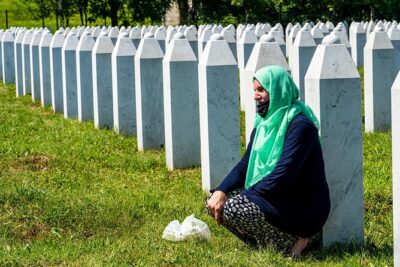
Understanding Srebrenica Genocide Tour + Lunch with Local Family Included
Read our review →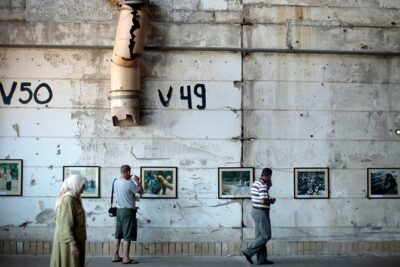
Understanding Srebrenica Genocide – Day tour from Sarajevo
Read our review →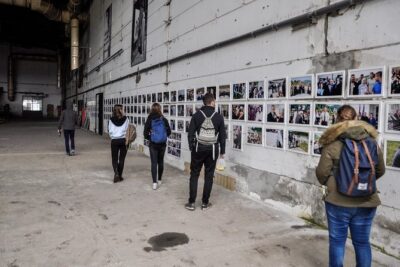
Browse the lists this tour appears in