
Reviewed · WAR & SIEGE TOURS
Sarajevo Under Siege: A City’s Struggle & Survival Tour
Sarajevo’s siege becomes easier to grasp when you see the city from Yellow Fortress, follow the route of Sniper Alley, and enter the narrow tunnel that once linked the cut-off city to the outside world. I like the small group limit of 10 and the way the tour joins military events to daily life. I also like that it explains the Dayton peace accords and Bosnia’s present-day political setup, not just the fighting.
The main drawback is the subject itself. This is a serious, sometimes painful tour, and the pace is fairly brisk at three and a half hours. You will see several places from the vehicle rather than spend long periods at each one, so it suits you best if you want a clear introduction rather than a slow, highly detailed museum visit.
Key points to know before you book
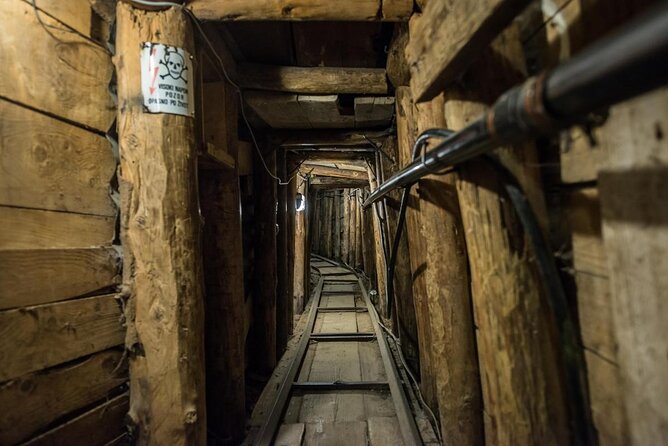
- The Sarajevo War Tunnel is the central stop: You get about 50 minutes at the museum, including the entrance fee.
- Yellow Fortress gives the opening view: It is used to explain how Sarajevo’s position shaped the siege.
- You visit sites with different wartime roles: Sniper Alley, the Olympic stadium, and the Jewish Cemetery each add a separate piece to the story.
- The group stays small: A maximum of 10 people should make questions and discussion easier.
- Guides bring a personal connection: Safet and Adnan are named in the provider’s past feedback, with both praised for their friendly manner and strong understanding of Sarajevo.
- The price covers the practical basics: At $45.38 per person, transport, guiding, and admission are included, while meals are not.
Why this Sarajevo war tour matters
The Siege of Sarajevo lasted from 1992 to 1995, and this experience is built to explain more than dates and battle lines. You will look at why Yugoslavia broke apart, why Bosnia and Herzegovina was often described as a small Yugoslavia, and why Bosnia paid such a high price during the struggle for independence.
That wider frame matters. Sarajevo was not simply a city caught in a war. Its population reflected the mixture found across Bosnia: Muslim Bosniaks, Orthodox Serbs, Catholic Croats, Jews, and people who identified in other ways. The tour uses that mix to help you understand why the country’s conflict became so difficult to resolve.
I like this approach because it connects public events with ordinary life. You hear about the shortage of supplies, the danger of moving through the city, and the ways people tried to keep living under extreme pressure. The guide also explains the Sarajevo Roses, the red markings placed where mortar explosions killed people. These are not decorative memorials. They turn a street or pavement into a reminder of a specific loss.
The experience also addresses why Bosnians did not find a solution during the chaotic 1990s. That question has no short answer, and a three-and-a-half-hour tour cannot cover every political detail. Still, it gives you a useful starting point before visiting more museums or reading further.
More tours about the siege and the war:
- Fall of Yugoslavia, Sarajevo War Tour with Tunnel of Hope Museum and Frontlines
★ 5.0 · 1,314 reviews - ROSES OF SARAJEVO (Official WAR + CITY tour)- Story of a Survivor
★ 5.0 · 770 reviews - Tunnel Museum: Bosnian & Yugoslav Wars Tour with War Veteran
★ 5.0 · 551 reviews
Starting at Muvekita 7 in central Sarajevo
You meet at the Toureedoo office on Muvekita 7 at 10:30 in the morning. The tour ends at the same meeting point, which is useful if you want to continue exploring central Sarajevo on foot afterward.
Transport is included, so you are not left trying to connect several outlying places by taxi or public bus. That saves time, especially because the route includes the War Tunnel, which is outside the historic center. The mobile ticket also keeps the arrival process simple. You should have your booking confirmation ready when you meet the guide.
The group can have up to 10 people. That is not the same as a private tour, but it is a sensible size for a subject that benefits from questions. You can expect a more personal exchange than on a large coach outing, though the exact guide will depend on the date.
Safet and Adnan are two guides associated with the provider. Past feedback describes Safet as an excellent private guide and Adnan as friendly, well informed, and fun company. Those comments point to the kind of guiding style you can hope for: clear explanations, a warm manner, and room to connect the history with Sarajevo today. They do not guarantee which guide you will receive, so book this for the route and subject first, not a promised individual.
Yellow Fortress: Sarajevo from above
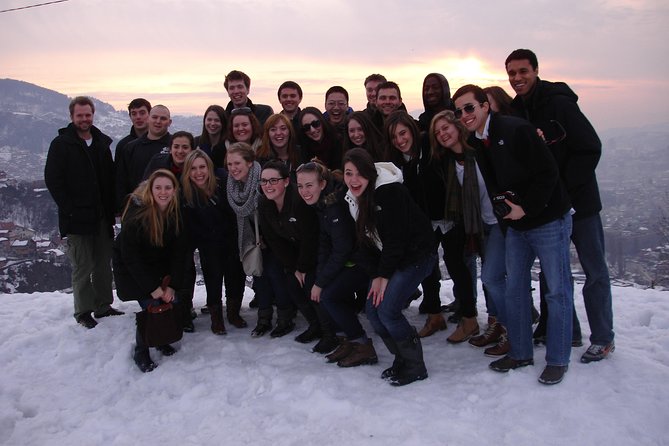
The first major stop is Yellow Fortress, where you get an introduction to the siege with a view across Sarajevo. This is a smart opening point. From above, you can begin to see the city as a long, enclosed urban corridor surrounded by higher ground.
The view helps make the military situation less abstract. Instead of hearing only that Sarajevo was surrounded, you can look outward and consider how the surrounding hills affected movement and visibility. The guide uses the stop to explain the basic shape of the siege before taking you to places connected with specific events.
You spend about 15 minutes here. That is enough for an orientation and a few photographs, but not a long sightseeing break. The stop is most valuable for context, so listen before reaching for your camera.
This is also where the emotional tone of the tour begins. Sarajevo is attractive and full of life today, yet the view asks you to remember that the same city was once cut off and under fire. The contrast can be striking without needing dramatic presentation.
Sniper Alley and the danger of crossing town
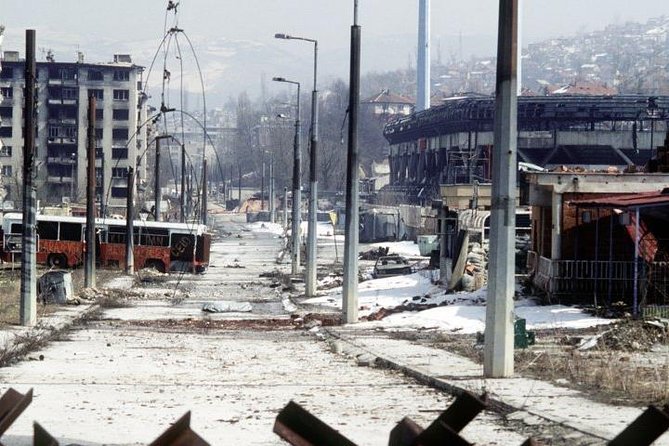
The route continues to Sniper Alley, the name given to one of the most dangerous streets during the siege. The tour does not list a separate long stop here, so you may spend much of this part looking from the vehicle while the guide explains what happened.
That limited time is a drawback if you want to study the area closely. It is also understandable in a tour that must connect several sites in one morning. The value comes from placing the street within the route through Sarajevo. You begin to understand that danger was not confined to a distant front line. Crossing an ordinary road could be a life-threatening act.
Ask the guide about how the street functioned during the siege and how the Sarajevo Roses fit into the city’s memorial story. The roses mark mortar strikes that caused deaths, using red resin to fill the scars in the pavement. The tour’s explanation helps you read these markings as memorials rather than unusual street decorations.
A few more Sarajevo days to weigh up
- Sarajevo: Mostar, Konjic, Blagaj Tekke, Pocitelj & Waterfall
★ 4.9 · 1,335 reviews - Sarajevo: Mostar, Konjic, Sufi House, Pocitelj & Kravice Falls
★ 5.0 · 1,179 reviews - Sarajevo: Mostar, Konjic, Počitelj, Sufi House, & Waterfalls
★ 4.9 · 572 reviews - Sarajevo: 2 Hours Old Town Walking Tour With Local Guide
★ 5.0 · 505 reviews
Asim Ferhatovic Hase Stadium and the lost Olympic image
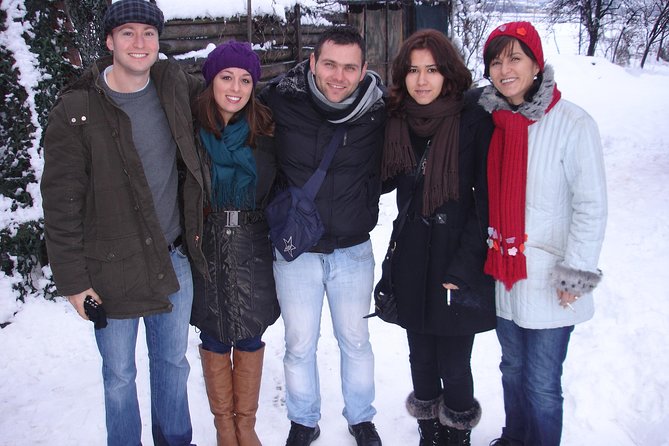
At Asim Ferhatovic Hase Stadium, the guide connects Sarajevo’s 1984 Winter Olympics with the years that followed. You hear what happened to the stadium where the opening ceremony took place and how the site was affected by the war.
The stop lasts about 15 minutes. It is brief, but the contrast is important. Sarajevo had hosted an international celebration only a few years before the siege. The stadium represents the city’s modern, outward-looking image, while the damage and wartime use of Olympic sites show how quickly daily life changed.
This stop also keeps the tour from becoming only a sequence of military locations. It reminds you that Sarajevo had civic pride, sport, music, and international attention before the conflict. Understanding what was lost is just as important as knowing where the fighting occurred.
If you have a strong interest in the Olympics, you will probably want more time than this tour provides. For most people, though, the stadium works well as a compact link between Sarajevo’s prewar identity and the crisis that followed.
The Sarajevo War Tunnel and the city’s only lifeline
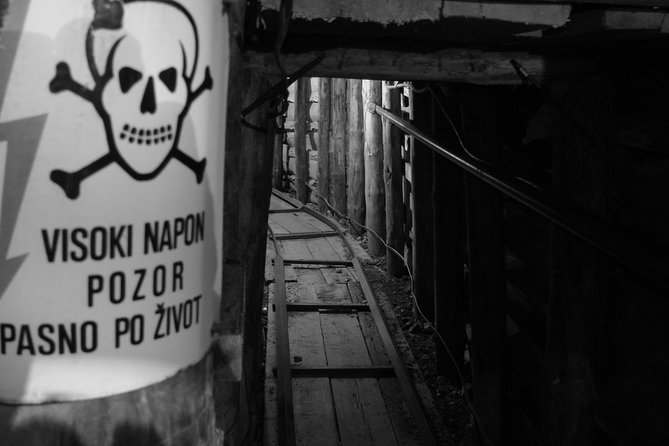
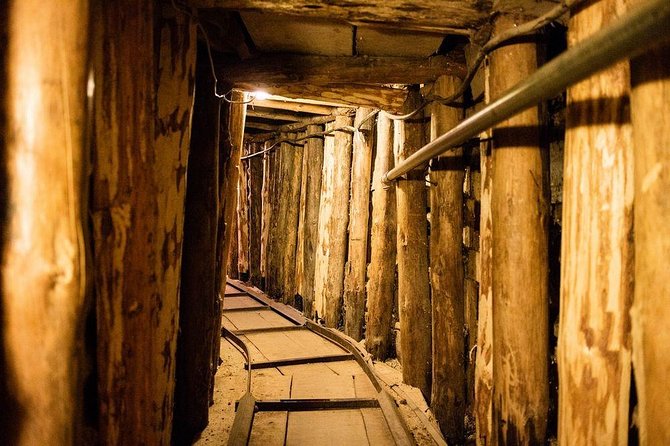
The War Tunnel is the heart of the experience. It was dug during the Bosnian War beneath the airport area and served as Sarajevo’s only connection with the rest of the world during the siege. You spend about 50 minutes at the museum, and admission is included.
This is where the tour’s earlier explanations become concrete. The tunnel was not a symbolic project. It was a practical route through which supplies and people could move when normal roads were closed or too dangerous. The museum gives you a physical sense of the narrow passage and the difficult conditions behind the city’s survival.
I consider the included entrance especially useful here. The tunnel is the one stop where an admission charge is involved, and visiting it without context can leave you with only a quick impression of a cramped corridor. A guide can explain why it was built, what role it played, and how it changed the city’s chances of holding on.
Fifty minutes is a reasonable amount of time for this visit, though you should not expect a full museum day. The stop focuses on the tunnel and the siege. It does not replace a visit to a larger war museum if you want a broad collection of documents, photographs, and personal objects.
The subject can be upsetting. That is not a flaw, but you should know what you are choosing. This is a place of survival, sacrifice, and severe hardship. The guide’s personal perspective can make the story more human, while also making it harder to keep an emotional distance.
Jewish Cemetery and Sarajevo’s divided geography
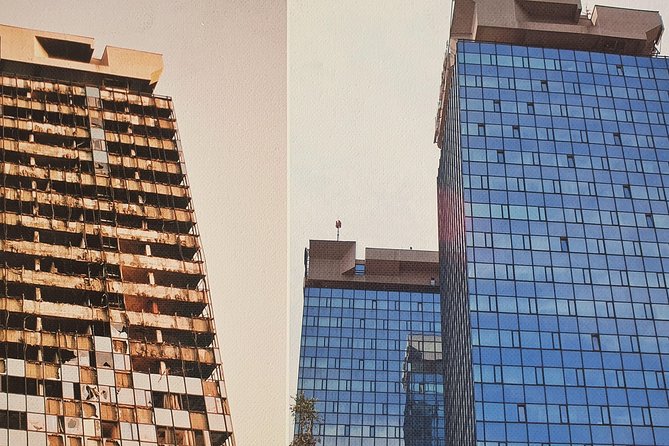
The Jewish Cemetery is another short stop, lasting about 15 minutes. Here the guide explains its role during the siege and adds another layer to the city’s religious and cultural story.
The stop matters because Sarajevo cannot be reduced to a two-sided conflict. The city’s Jewish heritage is part of the larger picture of coexistence, displacement, and danger. Visiting the cemetery after the tunnel also changes the pace of the tour. You move from a place built for wartime access to a memorial site shaped by the city’s longer story.
As with Sniper Alley and the stadium, the available time is limited. You will receive an explanation and see the setting, but you may want to return later if you prefer quiet reflection or photography. The tour gives you the reason to notice the site, which is often the hardest part when exploring a city on your own.
Dayton, Bosnia today, and the value of a guide
A strong feature of this experience is its attention to the Dayton peace accords. The guide tries to explain the agreement’s complexity and what life is like in Bosnia and Herzegovina today.
That is valuable because the end of fighting did not produce a simple political arrangement. The Dayton agreement helped stop the war, but it also created a complicated system of governance. You will not master every institution in one tour, yet you should leave with a clearer idea of why Bosnia’s present-day politics can be difficult to understand.
This portion separates the tour from a basic war-sites drive. You are not only shown damaged buildings or famous locations. You are asked to consider how a country moves forward after a war, how memories remain in daily life, and why political solutions can be both necessary and imperfect.
Adnan’s past guiding style, described as friendly and fun as well as well informed, would suit this part of the experience. A good conversation can make political material easier to follow. Safet’s praised personal approach would also fit the tour’s focus on individual lives, though the guide assigned to your booking may be different.
Is $45.38 a fair price?
At $45.38 per person, the tour offers fair value if you want the War Tunnel and several city sites covered in one outing. Transport, the guide, and the entrance fee are included. Meals are not, though the tour lasts only about three and a half hours and starts in the morning.
The price also reflects the convenience of joining the stops in one route. You do not need to arrange separate transport to the tunnel or work out how to combine Yellow Fortress, the stadium, Sniper Alley, and the cemetery. For a first visit to Sarajevo, that can save both time and mental energy.
I would not book it solely as a cheap sightseeing ride. The value depends on your interest in the subject and on your willingness to listen. Much of the experience is explanation rather than entertainment, and the short stops mean you are paying for a connected story as much as for time at each location.
The maximum group size of 10 improves the value. You have a better chance to ask about a place that catches your attention, and the guide can keep the discussion more direct. If you prefer a private experience, the provider has also offered private guiding in the past, but this specific option is capped at 10 rather than advertised as private.
Who should book this experience?
I would choose this tour if you are visiting Sarajevo for the first time and want a firm understanding of the siege before exploring alone. It is also a good fit if you want the War Tunnel but would rather not arrange transport and research the route yourself.
The tour suits adults and older teenagers who can handle serious wartime material. It may be less suitable if you want only architecture, food, or light sightseeing. The experience is built around conflict, loss, survival, and the political problems that followed.
You should also book it if you enjoy asking questions. The guide is the main source of value, especially at the shorter stops. A quiet passenger can still follow the route, but an engaged conversation may help you get more from the limited time at Sniper Alley, the stadium, and the Jewish Cemetery.
Allow for the full three and a half hours. The start time is 10:30 a.m., and the activity returns to the central meeting point. Since the tour includes transport and multiple sites, it is not designed for you to leave early and rejoin later.
My verdict on the Sarajevo Under Siege tour
I would book this experience when I wanted a clear, human explanation of Sarajevo’s wartime years in a single morning. The War Tunnel, the view from Yellow Fortress, and the guide’s discussion of the Dayton agreement give the tour a useful arc: how the city was trapped, how it survived, and what came after.
The drawbacks are simple. Some stops are short, the subject is heavy, and the tour cannot answer every question about Yugoslavia or modern Bosnia. Still, the small group, included transport, and $45.38 price make it a practical choice for a first look at Sarajevo’s siege.
Cancel at least 24 hours before the 10:30 a.m. start for a full refund. Changes or cancellations made less than 24 hours before departure are not accepted for a refund.
FAQ
How long does the Sarajevo Under Siege tour last?
The tour lasts approximately 3 hours and 30 minutes.
What time does the tour start?
The tour starts at 10:30 a.m. local time.
Where do I meet the guide?
You meet the guide in front of the Toureedoo Sarajevo City Tours office at Muvekita 7, Sarajevo 71000, Bosnia and Herzegovina.
Where does the tour end?
The activity ends back at the meeting point on Muvekita 7.
What sites are included?
The tour includes Yellow Fortress, Sniper Alley, Asim Ferhatovic Hase Stadium, the Sarajevo War Tunnel, and Jewish Cemetery Sarajevo.
Is admission to the War Tunnel included?
Yes. The entrance fee is included, along with transportation and the tour guide.
Are meals included?
No. Meals are not included in the tour price.
How many people can join the tour?
The tour has a maximum of 10 participants.
Just added around Sarajevo
- Private Full Day Safari Tour★ 5.0 · 8 reviews
- Walking Tour in Sarajevo★ 5.0 · 3 reviews
- Sarajevo Under Siege: A War History Tour★ 5.0 · 10 reviews
- Mysterious Visoko Pyramids Driving and Walking Tour★ 5.0 · 7 reviews
- Secret Tito’s Bunker/Konjic Tour★ 5.0 · 4 reviews
- Travnik, Jajce, Pliva Lakes & Mills –Medieval & Ottoman Bosnia Full Day Tour★ 5.0 · 3 reviews
- Sarajevo to/from Zagreb Transfer Day Tour (North-central Bosnia)★ 5.0 · 4 reviews
- Tour of Herzegovina – From Sarajevo★ 5.0 · 3 reviews
War & Siege Tours, compared.
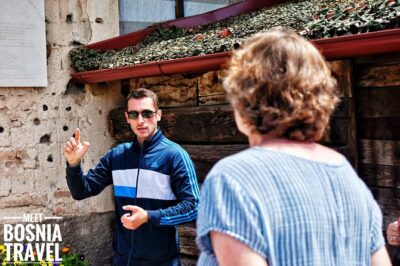
Fall of Yugoslavia, Sarajevo War Tour with Tunnel of Hope Museum and Frontlines
Read our review →
ROSES OF SARAJEVO (Official WAR + CITY tour)- Story of a Survivor
Read our review →
Tunnel Museum: Bosnian & Yugoslav Wars Tour with War Veteran
Read our review →
Sarajevo War Tour: A Veteran’s Story of the Siege (fees included)
Read our review →
Break-up of Yugoslavia & The War in Mostar: Life Under Siege
Read our review →
Sarajevo to Srebrenica: Genocide Study Tour with War Veteran
Read our review →
Sarajevo Grand Tour: Old Town, War Tunnel, Olympic Sites & More
Read our review →Browse the lists this tour appears in