
Reviewed · WAR & SIEGE TOURS
Sarajevo 1425 days under the siege – War Tour
Sarajevo’s 1,425-day siege is difficult to understand from city streets alone. This tour connects the facts to the places where civilians hid, ran for water, crossed sniper fire, and used a hand-dug tunnel to keep the city alive. Guides such as Emina Koso and Enes have shared personal memories of growing up during the war, though your guide will vary.
I like the visit to the Tunnel of Hope, especially the short film, siege map, museum, and 25-meter section you can walk through. I also like the way the tour moves beyond the tunnel to Trebević, the Olympic bobsleigh track, the Jewish Cemetery, and the memorial to Sarajevo’s murdered children. The main consideration is emotional weight: this is serious history, not a light sightseeing outing, and the €10 tunnel admission is extra.
Key points to know before you book
- The Tunnel of Hope is the central experience: You watch a 17-minute film, study a map of wartime Sarajevo, see museum displays, and walk through part of the original tunnel.
- Personal stories may shape the tour: Some guides, including Emina Koso and Enes, have spoken about living through the war as children.
- You see Sarajevo from several angles: Sniper Alley, Trebević at 1,230 meters, the bobsleigh track, the Jewish Cemetery, and a children’s memorial are all included.
- Hotel pickup and drop-off are free: You can also meet at the Spirit Tours office on Ferhadija 19, beside the Cathedral of Jesus’s Sacred Heart.
- The price is $48.39 per person: Transport, bottled water, and the guide are included, but the Tunnel of Hope Museum ticket costs €10.
- Allow 3 to 4 hours: The tour includes driving between sites, short walks, photos, and time for the tunnel visit.
Why Sarajevo’s siege is best understood outside the old center
The old center gives you Sarajevo’s Ottoman streets, Austro-Hungarian buildings, cafés, and market life. But the war is easier to grasp when you leave the central streets and see the routes, hills, and exposed neighborhoods that shaped daily survival.
The siege lasted 1,425 days, one of the longest sieges in modern warfare. Serbian forces held positions around the city, while civilians inside Sarajevo faced shelling, sniper fire, shortages, and dangerous movement through streets that had once been ordinary parts of town.
This tour is useful because it does not treat the war as a distant chapter in a museum. You go to the airport area, look toward the surrounding hills, see the route known as Sniper Alley, and hear how geography affected ordinary life. The guide explains what happened at each place, rather than leaving you to connect the sites yourself.
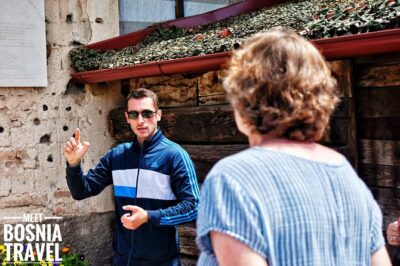
That human element matters. One guide described in the supplied material was 11 during the war, and another guide, Emina Koso, was praised for sharing personal memories alongside wider historical information. You cannot assume your particular guide will have the same story, but Spirit Tours uses professional local guides, and personal wartime experience may be part of the conversation.
More tours about the siege and the war:
- Fall of Yugoslavia, Sarajevo War Tour with Tunnel of Hope Museum and Frontlines
★ 5.0 · 1,314 reviews - ROSES OF SARAJEVO (Official WAR + CITY tour)- Story of a Survivor
★ 5.0 · 770 reviews - Tunnel Museum: Bosnian & Yugoslav Wars Tour with War Veteran
★ 5.0 · 551 reviews
The Tunnel of Hope: the tour’s most important stop
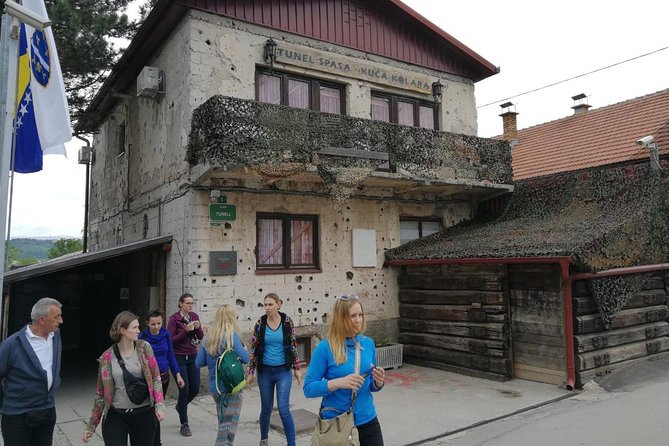
The first major stop is the Tunnel of Hope Museum, located near the former airport. The entrance ticket is not included, so budget an additional €10 per person. That extra charge is small compared with the importance of the site, but you should know about it before booking.
Inside, you begin with a large map showing Sarajevo during the siege and the positions held around the city. This gives you the basic military picture before the guide turns to civilian life. You also watch a 17-minute film and see an exhibition about the tunnel and the people who built and used it.
The tunnel was dug by determined Sarajevo residents as a lifeline under the airport area. The section open to visitors is about 25 meters long. It is not a full journey through the original route, but walking through the narrow passage gives you a physical sense of the conditions. You are not simply looking at a photograph or reading a plaque. You bend into a confined space and move through the same kind of passage that carried people and supplies during the siege.
The visit lasts about 1 hour and 30 minutes, including the museum portion and time at the site. You can request a short break for photographs and look around independently after the main explanation.
I would give this stop your full attention. It is the point where the scale of the siege becomes personal. The tunnel was not a dramatic military monument. It was a practical answer to isolation, built so that people could move supplies and maintain a connection with the outside world.
The drawback is that the museum can feel brief if you want a large, detailed collection. The focus is on the map, film, exhibition, and tunnel section, not on spending half a day with extensive archives. The guide’s explanation is therefore important.
Sniper Alley and the memorial to Sarajevo’s children
On the way to the tunnel, the guide introduces wartime locations, including Sniper Alley and a memorial dedicated to 1,621 children killed during the siege. These are not just quick photo stops. They help show how ordinary routes became dangerous.
The children’s memorial uses bronze and glass. Its sculpture represents a mother trying to protect her children, while a bronze ring represents a strong circle of defense. The design asks you to stop and think about the people behind the numbers.
This part of the tour can be especially hard. The memorial is not presented as a decorative city sight, and it should not be treated like one. You may have only a short stop, but the guide’s explanation gives the monument meaning.
The tour also puts the war into the setting of the modern city. Buildings, roads, and hills are not isolated objects. They form the backdrop to stories about civilians trying to find water, move through the city, and avoid exposed streets. That is why I think a guided visit is far more useful here than simply taking a taxi to the tunnel on your own.
Trebević at 1,230 meters: seeing the city from above
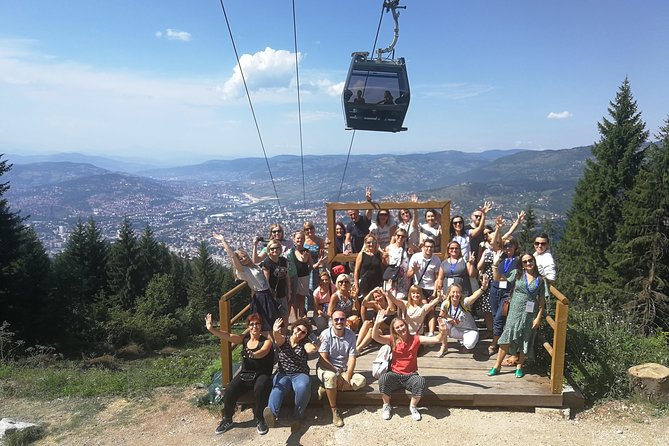
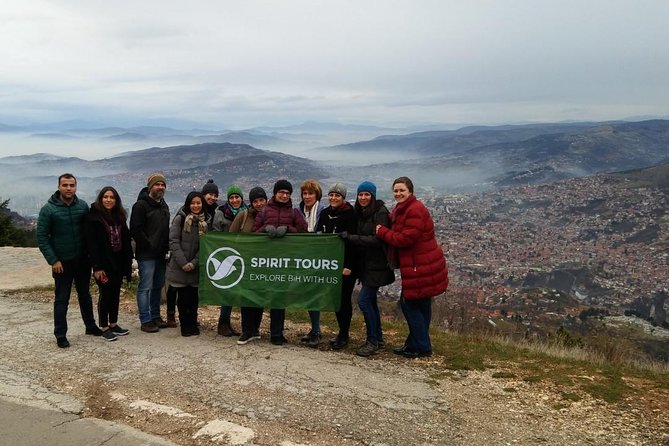
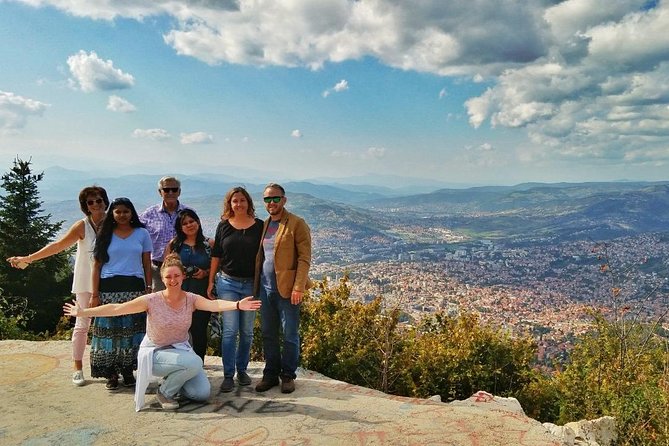
After the tunnel, the vehicle crosses from the Federation entity into Republika Srpska and climbs toward Trebević. The viewpoint is about 1,230 meters above sea level and gives you a broad view over Sarajevo.
The stop lasts around 20 minutes. Your guide points out enemy lines and explains how the surrounding heights affected the siege. From above, the city’s enclosed position becomes clear. You can see why the hills mattered so much, and why movement through Sarajevo was so exposed.
This is also the tour’s best photography stop. The view gives you a pause after the tunnel and memorial. You can take pictures of the city and orient yourself geographically, which helps make the earlier explanations easier to follow.
Still, the stop is short. If you want a long mountain visit, a meal, or a full walk on Trebević, this tour is not designed for that. You get the viewpoint as part of a historical route, not a separate mountain excursion.
The border crossing between entities is also part of the story. The guide uses the drive to explain wartime lines and the divided political geography of modern Bosnia and Herzegovina. You do not need to know the country’s administrative structure before the tour, but listening closely will help.
A few more Sarajevo days to weigh up
- Sarajevo: Mostar, Konjic, Blagaj Tekke, Pocitelj & Waterfall
★ 4.9 · 1,335 reviews - Sarajevo: Mostar, Konjic, Sufi House, Pocitelj & Kravice Falls
★ 5.0 · 1,179 reviews - Sarajevo: Mostar, Konjic, Počitelj, Sufi House, & Waterfalls
★ 4.9 · 572 reviews - Sarajevo: 2 Hours Old Town Walking Tour With Local Guide
★ 5.0 · 505 reviews
Sarajevo’s Olympic bobsleigh track after the war
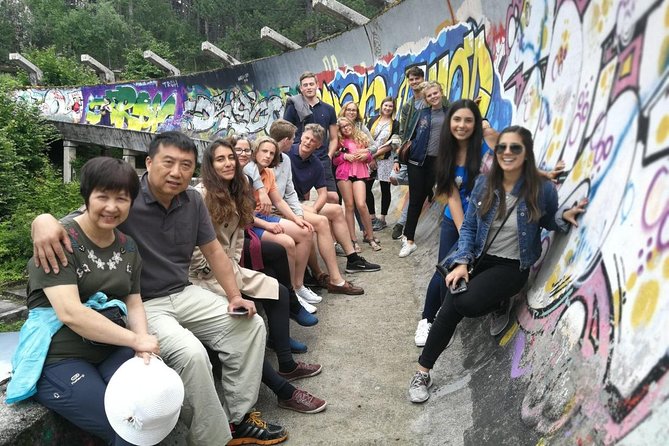
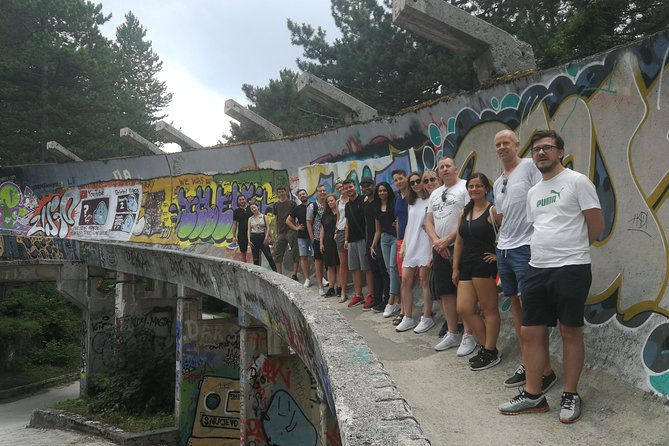
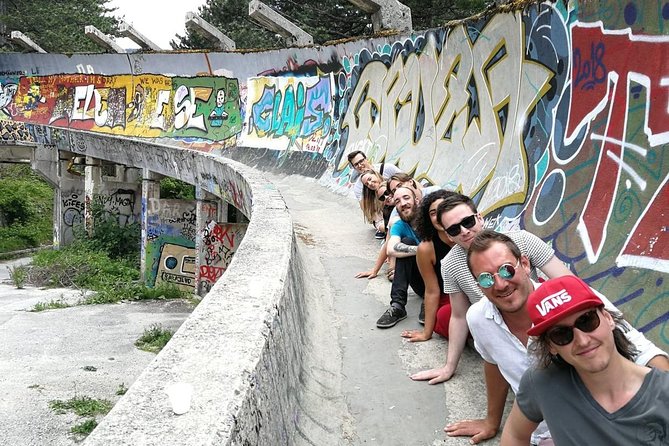
Trebević also holds one of Sarajevo’s most striking reminders of the 1984 Winter Olympics: the Olympic bobsleigh and luge track. The tour allows about 30 minutes here.
You walk along part of the track and see why it has become one of the city’s most unusual abandoned places. The concrete curves, overgrown sections, and mountain setting contrast sharply with the cheerful international event Sarajevo hosted before the war. The guide is ready to take photographs as you walk.
The track adds a different layer to the tour. Sarajevo was not only a besieged city. It was also an Olympic host with a modern sporting identity. Seeing the track lets you consider both versions of Sarajevo, the confident city of 1984 and the damaged city of the early 1990s.
The stop is free, with no extra admission listed. Wear shoes that are comfortable for walking, since the experience involves moving along the track rather than viewing it only from the vehicle. The exact condition of an abandoned site can vary, so take care and follow your guide’s directions.
The bobsleigh track is also the lightest part of the outing. You can take photographs and enjoy the unusual setting, but the guide keeps it connected to the wider story. It is not an unrelated sightseeing detour.
The Jewish Cemetery and the final wartime view
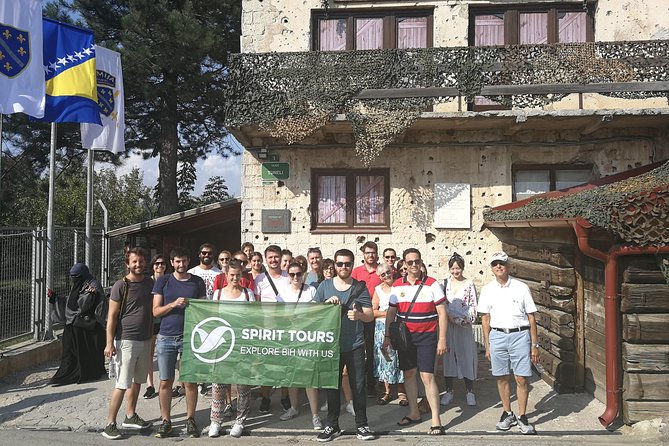
The Jewish Cemetery is the last main stop and takes about 15 minutes. It is described as the second-largest Jewish cemetery in Europe and a candidate for UNESCO World Heritage status.
During the siege, the cemetery became a battleground between Bosnian Army forces and Serbian forces. That history gives the site a harsh importance. A cemetery, already a place of memory, was drawn into the fighting because of its position on the hills above Sarajevo.
The short visit is enough to hear the wartime explanation and take in the setting. Do not expect a long cemetery tour or a detailed study of Jewish history in Sarajevo. The emphasis here is the cemetery’s role during the siege.
Its inclusion improves the tour because it shows how many kinds of places were affected by the conflict. You see a transport route, a tunnel, a mountain viewpoint, an Olympic facility, and a cemetery. Together, they show that the siege touched daily life, sport, religion, movement, and family memory.
What the $48.39 price includes
At $48.39 per person, the tour is fairly priced if you want transport to several locations and a guide to connect them. The package includes an air-conditioned vehicle, private transportation, bottled water, a professional guide, and hotel pickup and drop-off.
The value is strongest for visitors who would otherwise need to arrange several separate rides. The tunnel is outside the central sightseeing area, Trebević is uphill, and the other locations are spread across the city and its surrounding heights. Having one route organized saves time and makes it easier to understand how the sites relate to each other.
The main extra cost is the €10 entrance fee for the Tunnel of Hope Museum. The other listed stops do not carry an admission fee. Confirm the local currency and payment method for the tunnel ticket before leaving, since the published price is given in euros.
The tour is listed as lasting approximately 3 to 4 hours. That is enough time for a serious introduction, but not enough for lengthy museum visits or long independent walks at every stop. Think of it as a focused half-day history tour.
The maximum group size is listed as 50 people. That is a potentially large group, although actual departures may be smaller. Some bookings have resulted in a much more personal experience, including hotel pickup in the guide’s car, but you should not book expecting a private tour unless your reservation specifically says so.
Guides, language, and the tone of the experience
The tour is offered in English. The guide’s storytelling will shape much of your experience because several stops are meaningful through explanation rather than visual spectacle.
Emina Koso and Enes are two guide names associated with especially strong experiences, but they are not guaranteed for every departure. If you are assigned a different guide, you can still expect professional commentary, but the amount of personal wartime testimony may vary.
The best guides balance personal memories with clear facts. A first-person account from someone who was a child during the war can make the history immediate, but the broader timeline and military context are also needed. You want both, not only an emotional story.
The tone is serious. You will hear about murdered children, civilian hardship, sniper fire, and a city cut off for years. There is room for friendly conversation and photographs, especially at Trebević and the bobsleigh track, but this is not a comedy-focused sightseeing ride.
I would choose this tour early in your Sarajevo stay if you want the rest of the city to make more sense. Afterward, places in the old center may carry extra meaning, and you will better understand why Sarajevo’s geography matters.
Pickup, timing, and practical details
You can meet at the Spirit Tours office at Ferhadija 19, in the passage beside the Cathedral of Jesus’s Sacred Heart. Free hotel pickup is also offered, followed by drop-off at the end.
The tour uses an air-conditioned vehicle and includes bottled water. Since you will leave the central area and climb to Trebević, the vehicle is more than a convenience. It lets you cover several locations in a single morning or afternoon.
Wear comfortable shoes for the tunnel and bobsleigh track. The tour includes short walks, and the abandoned track may not provide the smooth footing of a normal city pavement. Bring a camera, but give the guide your attention during the memorial and cemetery stops.
Most people can participate, and service animals are allowed. The tour is near public transportation, though the listed service focuses on organized transport and hotel pickup. Confirmation is received at booking.
Free cancellation is available up to 24 hours before the start time. Cancellations within 24 hours are not refunded, and changes inside that period are not accepted. The tour may also be rescheduled or refunded if poor weather prevents operation or if the minimum number of participants is not reached.
Who should book this Sarajevo war tour?
I recommend it for first-time visitors who want a clear introduction to the siege and do not want to arrange transport themselves. It is also a good choice if you care more about personal testimony and real locations than a long indoor museum visit.
History-minded visitors will appreciate the range of stops. Photographers will like Trebević and the bobsleigh track, while anyone interested in Sarajevo’s modern identity will benefit from seeing the Olympic site alongside the war memorials.
I would think twice if you want a relaxed sightseeing outing with plenty of free time. The subject is painful, the schedule is fairly full, and the tunnel admission costs extra. It may also feel too intense for young children, although the supplied information says most participants can take part.
Should you book it?
Book this tour if you want Sarajevo’s siege explained through places rather than dates alone. The Tunnel of Hope is the essential stop, but the tour earns its price by adding the children’s memorial, Sniper Alley, Trebević, the Olympic bobsleigh track, and the Jewish Cemetery.
The strongest reason to go is the chance of hearing a local guide’s personal account, particularly if you are led by someone such as Emina Koso or Enes. Since guides vary, treat that as a possibility rather than a promise.
For a half-day and $48.39, with transport and hotel pickup included, this is a solid choice. Add the €10 tunnel ticket, bring comfortable shoes, and set aside the mood for serious history. If you only have time for one organized activity in Sarajevo, this is a sensible one.
FAQ
How long does the Sarajevo war tour last?
The tour lasts approximately 3 to 4 hours.
How much does the tour cost?
The listed price is $48.39 per person.
Is hotel pickup included?
Yes. Free hotel pickup and drop-off are offered. You can also meet at the Spirit Tours office at Ferhadija 19.
Is the Tunnel of Hope ticket included?
No. Admission to the Tunnel of Hope Museum costs €10 per person.
What happens at the Tunnel of Hope Museum?
You see a map of Sarajevo during the siege, watch a 17-minute film, view museum displays, and walk through a 25-meter section of the tunnel.
Is the tour offered in English?
Yes. English is one of the offered languages.
Which places are visited?
The tour includes the Tunnel of Hope, Sniper Alley on the route, Trebević viewpoint, the Sarajevo Olympic bobsleigh and luge track, the Jewish Cemetery, and a memorial to 1,621 children killed during the siege.
Is transportation provided?
Yes. The tour includes an air-conditioned vehicle and private transportation.
How many people can join the tour?
The maximum group size is listed as 50 people.
Can I cancel for a full refund?
Yes, if you cancel at least 24 hours before the experience begins. Cancellations within 24 hours are not refunded.
Just added around Sarajevo
- Private Full Day Safari Tour★ 5.0 · 8 reviews
- Walking Tour in Sarajevo★ 5.0 · 3 reviews
- Sarajevo Under Siege: A War History Tour★ 5.0 · 10 reviews
- Mysterious Visoko Pyramids Driving and Walking Tour★ 5.0 · 7 reviews
- Secret Tito’s Bunker/Konjic Tour★ 5.0 · 4 reviews
- Travnik, Jajce, Pliva Lakes & Mills –Medieval & Ottoman Bosnia Full Day Tour★ 5.0 · 3 reviews
- The last day of Franz Ferdinand Walking Tour★ 5.0 · 10 reviews
- Sarajevo to/from Zagreb Transfer Day Tour (North-central Bosnia)★ 5.0 · 4 reviews
War & Siege Tours, compared.
Fall of Yugoslavia, Sarajevo War Tour with Tunnel of Hope Museum and Frontlines
Read our review →
ROSES OF SARAJEVO (Official WAR + CITY tour)- Story of a Survivor
Read our review →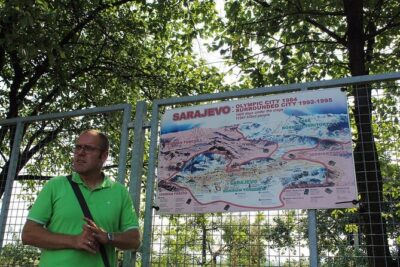
Tunnel Museum: Bosnian & Yugoslav Wars Tour with War Veteran
Read our review →
Sarajevo War Tour: A Veteran’s Story of the Siege (fees included)
Read our review →
Break-up of Yugoslavia & The War in Mostar: Life Under Siege
Read our review →
Sarajevo to Srebrenica: Genocide Study Tour with War Veteran
Read our review →
Sarajevo Grand Tour: Old Town, War Tunnel, Olympic Sites & More
Read our review →
War Times Experience in Sarajevo – Half Day Tour
Read our review →Browse the lists this tour appears in