
Reviewed · TUNNEL OF HOPE TOURS
Times of Misfortune – Life Under Siege and the Tunnel of Hope
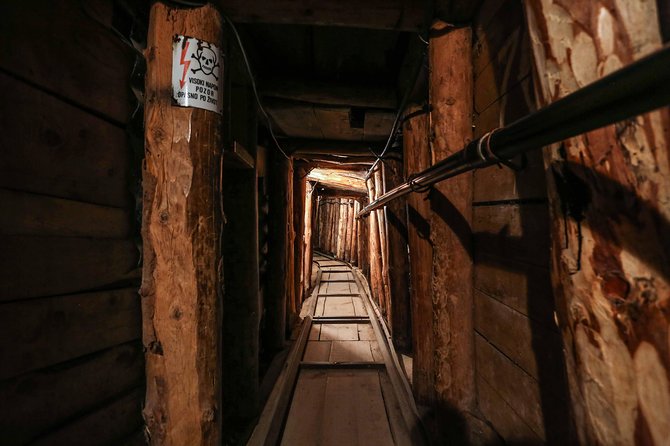
Sarajevo’s Tunnel of Hope is the heart of this experience. The narrow passage linked the besieged city with the outside world during the 1992 to 1995 Siege of Sarajevo, and the museum gives the story a physical, human scale. You also pass the places where the war was reported, fought, endured, and remembered.
I like the way the tour joins major sights with firsthand stories, especially when the guide has personal experience of the siege. I also like the route’s range: you get hilltop views, memorials, Olympic sites, wartime buildings, and the tunnel itself in one outing.
The main consideration is that the Tunnel of Hope ticket is not included. Adults pay 20 BAM, while students pay 8 BAM, so add that cost to the $32.58 tour price.
Key things to know before you book
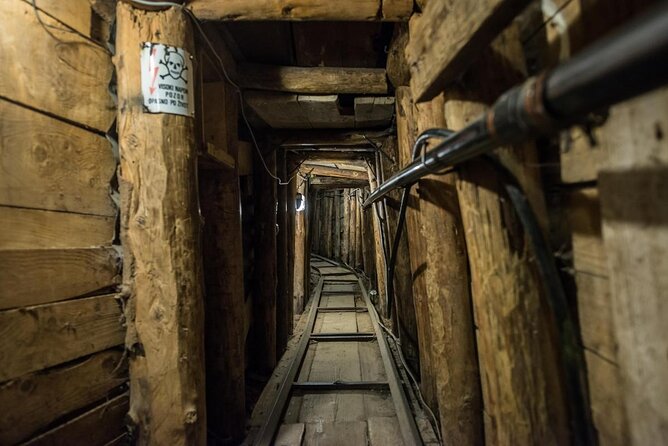
- The Tunnel of Hope gets 1 hour and 15 minutes: This is the longest and most important stop, with a film and explanations of the tunnel’s purpose.
- Guides can bring personal experience: Nermin, named in several accounts, worked as a police officer and lived through the war.
- You see Sarajevo through several lenses: The route covers Ottoman-era viewpoints, national memorials, Olympic venues, hospitals, media buildings, and government sites.
- Transport is included: You are driven between the city stops and the tunnel area rather than walking the entire route.
- The tour lasts about 3.5 hours: It ends back at the Sarajevo Insider office on Zelenih beretki Street.
- The group can reach 20 people: That is still a manageable size, though the quality of the experience depends partly on how well you can hear the guide.
Why the Tunnel of Hope gives this tour its focus
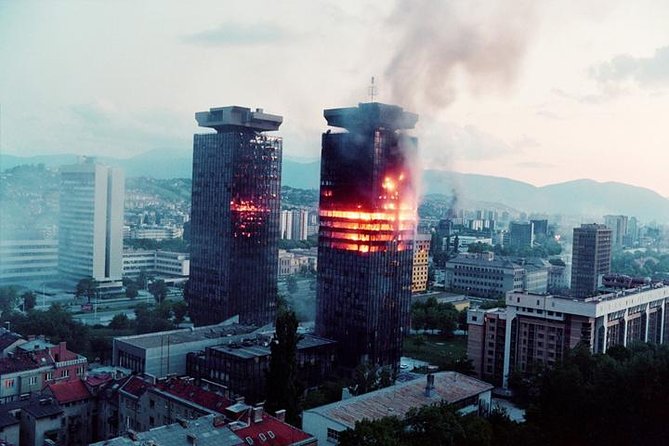
The Siege of Sarajevo can feel hard to grasp from dates and photographs alone. The Tunnel of Hope helps make the city’s isolation clear. This underground route offered a connection between Sarajevo and the outside world when roads, airports, and normal supply lines were cut off.
You do not spend the whole tour underground. The museum visit lasts about 75 minutes, and the wider route supplies the setting that makes the tunnel matter. You see the city center, the hills, the Olympic district, hospitals, media sites, and roads linked with sniper fire before reaching the museum.
That order works well. By the time you arrive at the tunnel, you have already seen several places tied to the siege. The film and guide’s explanation then give those locations a common thread.
The strongest element is the human account. A guide such as Nermin can explain events from the position of someone who lived through them. Accounts describe him as a former police officer who shared personal memories and helped connect the war’s major events with daily life in Sarajevo.
That kind of storytelling is especially useful if your knowledge comes mainly from news reports or books. You may already know the broad outline, but personal details can help you understand how a long siege affected ordinary routines, movement, medical care, communication, and fear.
More visits to the Tunnel of Hope:
- Fall of Yugoslavia, Sarajevo War Tour with Tunnel of Hope Museum and Frontlines
★ 5.0 · 1,314 reviews - Tunnel Museum: Bosnian & Yugoslav Wars Tour with War Veteran
★ 5.0 · 551 reviews - Tunnel of Hope Tour – Survival and Resilience
★ 5.0 · 118 reviews
Starting at Zelenih beretki Street
The tour begins at Sarajevo Insider, at Zelenih beretki 30. You meet the guide there, and the activity returns to the same point at the end.
The starting office sits in the central part of Sarajevo and is near public transportation. That makes the meeting point fairly practical if you are already exploring the old center. Confirmation is sent when you book, so keep the meeting information handy and allow enough time to reach the office.
Transportation is included, which matters here. The route covers several separate parts of Sarajevo, including the Olympic venues and the tunnel museum. Walking the full route would take much longer and would not offer the same view of how the sites relate to one another.
The group size can be as large as 20 people. That is small enough for a guided outing to remain personal, though I would position yourself where you can hear clearly during outdoor stops and inside the museum.
Yellow Fortress and Kovači Cemetery
The first substantial stop is the Yellow Fortress, where you get a wide view over Sarajevo. The lookout is useful for more than photographs. From above, you can see the city’s bowl-like setting and understand why the surrounding hills mattered so much during the siege.
The stop lasts about 20 minutes. That is enough time for the guide to explain the wartime defenses and point out the city below, though it is not a long sightseeing pause. Bring a camera if you want the view, but listen closely too, since this is one of the places where geography helps explain the conflict.
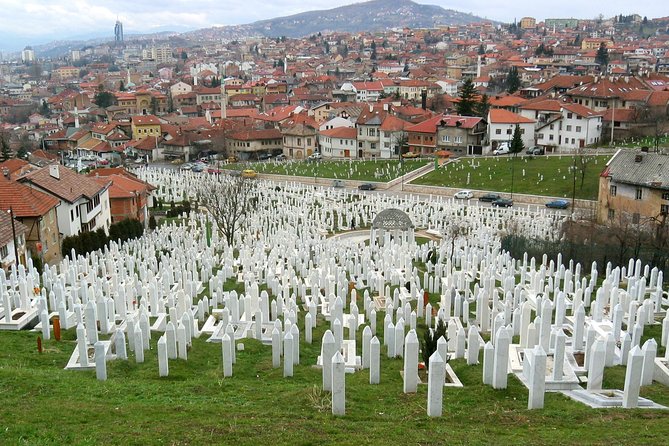
The tour then continues to Kovači Cemetery. The stop lasts about five minutes, so expect a brief and respectful visit rather than a long cemetery tour.
Kovači is a national memorial for Bosnia’s defenders from the 1992 to 1995 war. Its location gives the tour a quiet pause after the hilltop explanation. You are not simply looking at buildings connected with the siege. You are also confronted with the people who died defending the city.
This part of the route may feel solemn, and it should. The guide’s tone matters here. The strongest accounts of the experience point to guides who explain the events with care rather than treating the cemetery as a quick photo stop.
Sarajevo landmarks viewed from the vehicle
Several central sites are passed rather than visited in depth. That is an important distinction when deciding if this tour suits you.
You pass Sarajevo City Hall, a distinctive building with a wartime story and a symbolic restoration. You also pass Markale City Market, the Square of Sarajevo Children, and the Presidency Building. Each location connects the city’s daily life with the political and military pressure of the siege.
The route also passes Parliament and the Holiday Inn Hotel. The Holiday Inn became closely linked with journalists covering the war, while Parliament was tied to political decisions during the conflict. RTV Dom, the national television building, is another drive-by stop connected with wartime broadcasting.
This format gives you context without turning the tour into a long series of interior visits. You will not have the same time at these places as you would on a dedicated city architecture walk. Still, seeing them in sequence helps you understand how the siege affected government, news, public gatherings, and ordinary city spaces.
Markale City Market and the Square of Sarajevo Children carry particular emotional weight. They are not presented as abstract war sites. They are places associated with civilians and public life, which helps explain why Sarajevo’s wartime story is also a story of survival in the middle of a functioning city.
More tours about the siege and the war:
- ROSES OF SARAJEVO (Official WAR + CITY tour)- Story of a Survivor
★ 5.0 · 770 reviews - Sarajevo War Tour: A Veteran’s Story of the Siege (fees included)
★ 5.0 · 326 reviews - Sarajevo 1425 days under the siege – War Tour
★ 5.0 · 170 reviews - Sarajevo to Srebrenica: Genocide Study Tour with War Veteran
★ 5.0 · 131 reviews
Olympic Sarajevo at Asim Ferhatović Hase Stadium
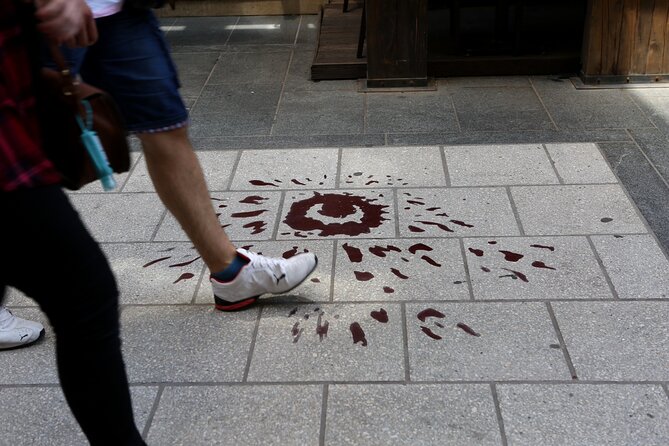
The next main stop is Asim Ferhatović Hase Stadium, part of Sarajevo’s Olympic story. The tour also addresses Hall Zetra, helping you see the contrast between Sarajevo as an Olympic host and Sarajevo as a city under siege.
The visit lasts about 10 minutes. That is brief, but the point is not to attend a sporting event or take a full stadium tour. Instead, the stop shows how the same city carried two very different identities: an international winter sports center and a war zone.
This contrast is one of the route’s useful features. Sarajevo was not defined only by the siege. The Olympic sites remind you of the city’s recent prewar ambitions and its place on the world stage. The war then damaged and repurposed places associated with celebration and international attention.
If you enjoy sports history, this stop will add another layer. If your main interest is the siege, it remains relevant because it shows how quickly a modern civic setting can be transformed by war.
The maternity hospital and medical survival
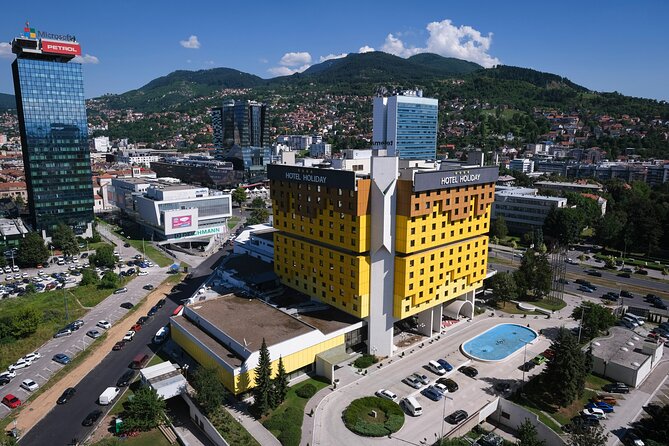
At the Sarajevo maternity hospital, the guide explains the work of medical staff during the siege. The stop lasts about 10 minutes.
This is a valuable inclusion because military history can sometimes focus too heavily on commanders, weapons, and political events. A maternity hospital brings the story back to patients, babies, medical workers, and the difficult task of keeping essential care going under attack.
The visit is primarily an explanatory stop. The information provided does not indicate an interior hospital tour, so expect to learn about the site from outside and from the guide rather than explore hospital wards.
For me, this is one of the route’s most important human details. It shows that the siege was not only about front lines. Hospitals had to continue their work, and medical staff had to make decisions in conditions no hospital should face.
Sniper Alley and the city seen from the road
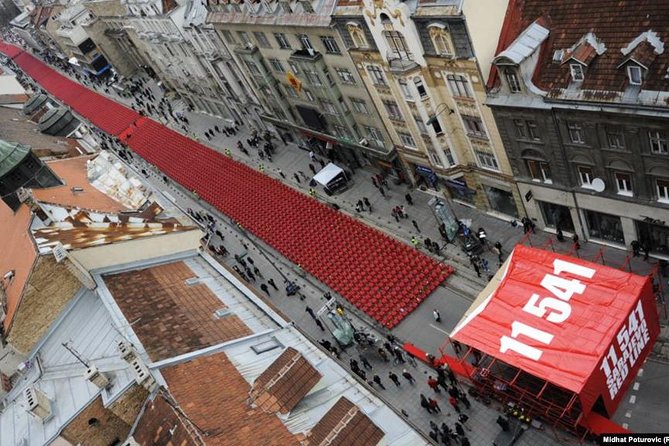
You then drive along Sniper Alley, the name given to one of the most dangerous streets in Sarajevo during the siege. This is a pass-by experience, not a walking tour or a recreated combat scene.
Seeing the street from a vehicle gives you a sense of its role in the city’s movement network. It also prevents the stop from becoming theatrical. The value comes from the guide’s explanation and from recognizing that this was once a normal urban route made perilous by gunfire from the surrounding hills.
The experience does not turn the place into an attraction. That is appropriate. Sarajevo’s wartime sites carry real grief, and the best approach is direct, calm, and respectful.
The guide’s personal background can make this stretch particularly effective. The strongest descriptions of Nermin focus on his ability to connect major events with what it meant to live and work in the city. His earlier work as a police officer gives him a direct connection to the period, though you should remember that the assigned guide may vary.
The Tunnel of Hope Museum
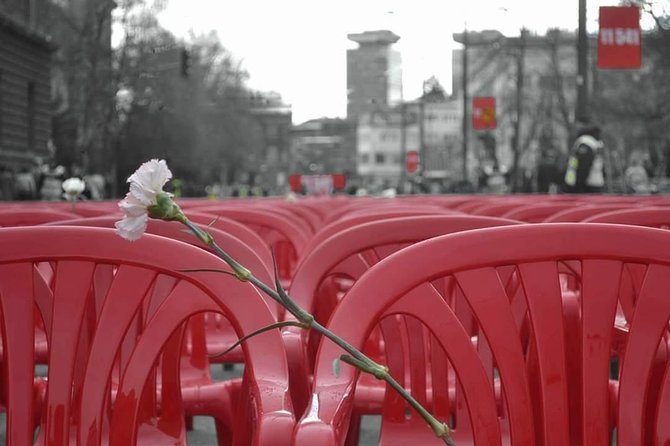
The final major stop is the Tunnel of Hope Museum, with about 75 minutes set aside for the visit. Museum admission is separate from the tour price: adults pay 20 BAM, listed as 10.50 euros, and students pay 8 BAM, listed as 4.50 euros.
The tunnel is the tour’s clearest physical reminder of Sarajevo’s isolation. You learn how it was built, why it was needed, and how it connected the besieged city with the outside world. A film is also part of the museum experience.
This is where the earlier stops come together. The city center sites show the public and political face of the war. The hospital shows the pressure on essential services. Sniper Alley shows the danger of movement. The tunnel explains how people and supplies could still reach Sarajevo despite the siege.
The museum visit may be emotionally heavy. It is not a light sightseeing stop, and you should allow yourself time to process what you see and hear. The tunnel itself is the central object, but the guide’s explanation gives it meaning. Without context, it is simply a narrow passage. With context, it becomes a record of planning, labor, risk, and survival.
Several accounts single out the Tunnel of Hope as the most moving part of the experience. That makes sense, but it is still worth keeping expectations measured. The museum is not a full reconstruction of the entire war. It gives you a focused look at one extraordinary response to the siege.
What the $32.58 price includes
The tour costs $32.58 per person and includes a licensed guide and transportation. For about 3.5 hours, that is a useful value if you want several widely separated sites explained in one outing.
The extra museum fee is the main cost to remember. An adult pays 20 BAM, while a student pays 8 BAM. The price is not all-inclusive, but the added admission is clear and relatively easy to budget for.
I see the value in the combination of transport and interpretation. You could visit some of these places independently, but you would need to plan the route, arrange transport, and supply your own historical background. The guide also gives the stops a shared narrative instead of leaving you with disconnected buildings and memorials.
The tour is less useful if you want long visits at each central landmark. Several sites are passed by, and the stops at the Yellow Fortress, cemetery, stadium, and hospital are short. You are paying for a guided overview with a substantial museum visit, not a detailed interior tour of every building.
Who will get the most from this experience
I would choose this tour if you want a clear introduction to Sarajevo’s recent past and prefer to learn through places rather than lectures alone. It suits you especially well if the Siege of Sarajevo is unfamiliar or if you know the broad events but want to understand how they affected the city.
It is also a good fit for anyone interested in personal testimony. A guide such as Nermin can add details that a standard historical summary cannot provide. You should not assume he will lead every departure, but his accounts show the value of a guide with direct experience of the war.
The route works for most people, and the tour is near public transportation. It is listed as suitable for most participants. Still, remember that it involves several vehicle transfers, outdoor stops, and a museum visit focused on painful wartime events.
You may prefer a different activity if you want a gentle introduction to Sarajevo, a food-focused outing, or a longer architectural tour. This experience asks you to pay attention and accept a serious subject for most of the morning or afternoon.
Cancellation is free up to 24 hours before the start time. Changes or cancellations made less than 24 hours ahead do not receive a refund. The activity may also be canceled for poor weather or if the minimum number of participants is not reached, with another date, another experience, or a full refund offered.
Should you book Times of Misfortune?
Book it if you want the Tunnel of Hope placed in its full city context, not treated as a quick standalone attraction. The route covers enough ground to explain Sarajevo’s wartime geography, while the personal accounts, especially those associated with Nermin, can make the subject feel direct and understandable.
The $32.58 price is reasonable for a licensed guide and included transportation, but add the museum admission and expect several landmarks to be viewed from the vehicle. If you accept that tradeoff, this is a focused and worthwhile way to learn about Sarajevo’s siege, its civilians, and the city’s long effort to endure.
FAQ
How long does the tour last?
The tour lasts approximately 3 hours and 30 minutes.
Where does the tour start?
It starts at Sarajevo Insider, City Tours and Excursions, at Zelenih beretki 30 in Sarajevo.
Where does the tour finish?
The activity ends back at the original meeting point.
Is transportation included?
Yes. Transportation and a licensed guide are included.
Is Tunnel of Hope Museum admission included?
No. Museum admission costs 20 BAM for adults and 8 BAM for students.
What language is the tour offered in?
The tour is offered in English.
How many people can join the tour?
The maximum group size is 20 people.
Can I cancel for a full refund?
Yes, if you cancel at least 24 hours before the scheduled start time. Cancellations made less than 24 hours in advance are not refunded.
Just added around Sarajevo
- Private Full Day Safari Tour★ 5.0 · 8 reviews
- Walking Tour in Sarajevo★ 5.0 · 3 reviews
- Sarajevo Under Siege: A War History Tour★ 5.0 · 10 reviews
- Travnik, Jajce, Pliva Lakes & Mills –Medieval & Ottoman Bosnia Full Day Tour★ 5.0 · 3 reviews
- Mysterious Visoko Pyramids Driving and Walking Tour★ 5.0 · 7 reviews
- Secret Tito’s Bunker/Konjic Tour★ 5.0 · 4 reviews
- The last day of Franz Ferdinand Walking Tour★ 5.0 · 10 reviews
- Sarajevo to/from Zagreb Transfer Day Tour (North-central Bosnia)★ 5.0 · 4 reviews
Tunnel of Hope Tours, compared.
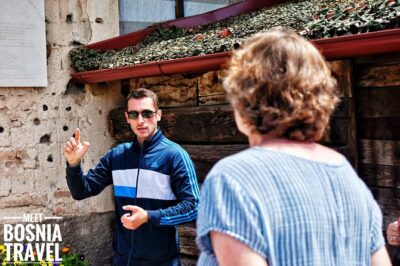
Fall of Yugoslavia, Sarajevo War Tour with Tunnel of Hope Museum and Frontlines
Read our review →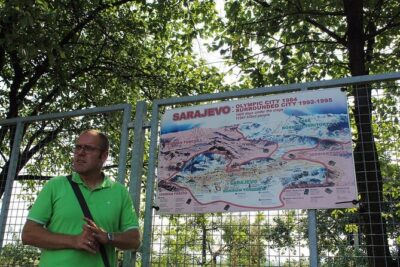
Tunnel Museum: Bosnian & Yugoslav Wars Tour with War Veteran
Read our review →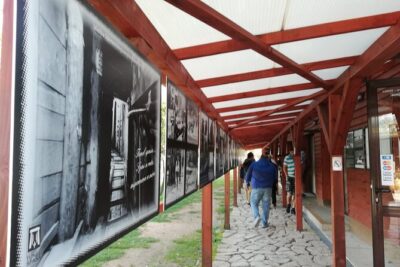
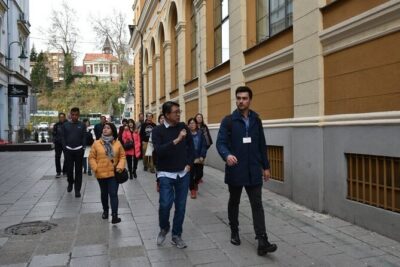
Sarajevo Grand Tour: Old Town, War Tunnel, Olympic Sites & More
Read our review →

WAR TUNNEL – Sarajevo’s only way of a communication during the WAR – Top secret
Read our review →
SARAJEVO SIEGE TIMES ’92-’95 / Sarajevo Roses & Tunnel of Hope /
Read our review →
Browse the lists this tour appears in