
Reviewed · TUNNEL OF HOPE TOURS
SARAJEVO SIEGE TIMES ’92-’95 / Sarajevo Roses & Tunnel of Hope /
Sarajevo’s siege becomes easier to understand when you see the city from the hills that surrounded it. This private tour links the Yellow Fortress, Tunnel of Hope, sniper positions, and Olympic bobsleigh track into one clear story, showing how Sarajevo’s geography shaped daily life and military strategy.
I like two things right away: Faruk shares his memories of living through the war as a young teenager, and the route gives you both human stories and useful views of the city. The main consideration is the extra €10 entrance fee for the Tunnel of Hope, which is not included in the tour price.
Key points
- Faruk’s personal account: The guide lived through the war as a teenager and explains events in a direct, personal way.
- Five important sites in one morning: You visit the Yellow Fortress, Tunnel of Hope, Trebević viewpoint, Olympic bobsleigh track, and Jewish Cemetery.
- Strong geographic context: Hillside viewpoints help you see how Sarajevo was surrounded during the siege.
- A private experience: Only your own group takes part, with hotel or private-accommodation pickup available.
- A useful mix of history and walking: Expect short stops, a longer visit to the tunnel, and about 50 minutes at the bobsleigh track.
- Good value for a focused tour: The price is $47.66 per person, but you should add €10 per person for tunnel admission.
Why Sarajevo’s hills matter to this tour
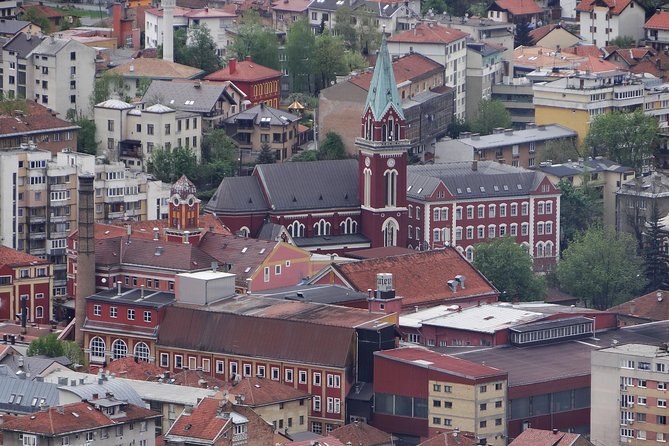
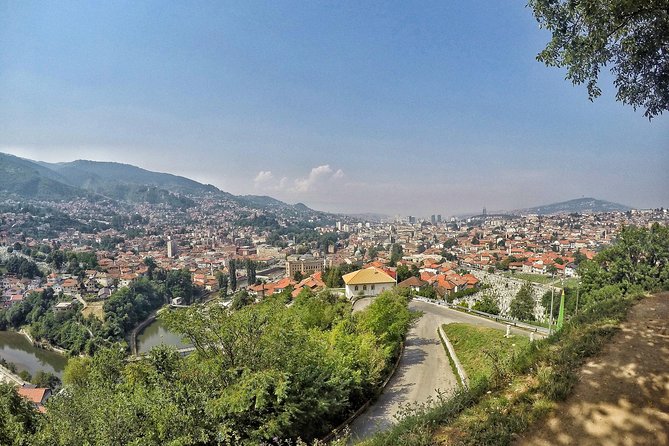
Sarajevo is a city shaped by its valley. The surrounding slopes are not just scenic lookouts. During the siege, they helped explain how the city could be surrounded, watched, and attacked.
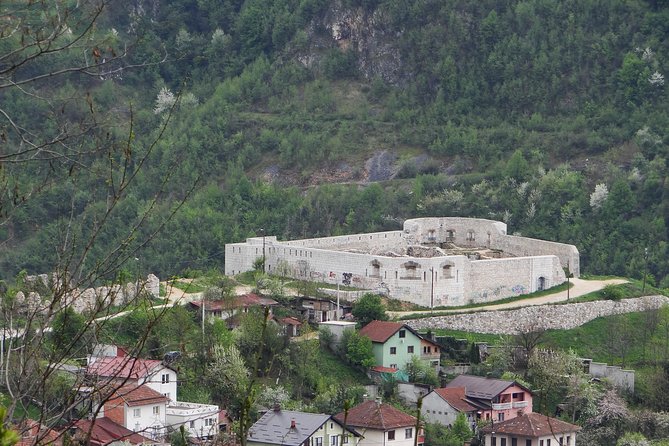
That is why the Yellow Fortress makes a useful first stop. From here, you look across Sarajevo and get an introduction to the city, Bosnia and Herzegovina, and the breakup of Yugoslavia. The view gives you a quick sense of scale before the tour moves into the harder details of wartime life.
You spend about 20 minutes here. That is enough time for an overview without using the whole morning before the main sites. I would pay close attention to the direction of the valley and the surrounding high ground, since those views become more meaningful later at Trebević and the Jewish Cemetery.
The tour’s opening discussion covers the first attacks on Sarajevo, sniper street crossings, and the experience of civilians trying to move through a city under fire. This is practical history, not just a list of dates. You begin to see why an ordinary walk across a street could become a serious risk.
More visits to the Tunnel of Hope:
- Fall of Yugoslavia, Sarajevo War Tour with Tunnel of Hope Museum and Frontlines
★ 5.0 · 1,314 reviews - Tunnel Museum: Bosnian & Yugoslav Wars Tour with War Veteran
★ 5.0 · 551 reviews - Tunnel of Hope Tour – Survival and Resilience
★ 5.0 · 118 reviews
Faruk’s Sarajevo, told from personal experience
The most distinctive part of this experience is Faruk himself. He lived through the war as a young teenager, so his explanations are tied to personal memory rather than only military summaries.
That matters in Sarajevo. A war tour can easily become a tour of ruins, maps, and statistics. Personal memories bring the civilian experience closer, especially when the subject is food, movement, fear, and the challenge of crossing exposed streets. The supplied account of Faruk describes him as friendly, humorous, and intelligent, which is useful here. The subject is painful, but the guide’s warmth keeps the morning from becoming unrelentingly grim.
You should expect serious discussion, including the siege’s effect on civilians and the international failure to stop people from being killed. At the same time, Faruk’s sense of humor adds some breathing room. That balance is one of the reasons I would choose a private guide for this subject instead of a large group moving quickly from one stop to the next.
Because this is a private tour, your group can focus on questions that matter to you. The available information does not promise a fixed level of discussion or a special route for every group, but a private format usually makes the experience more personal and easier to follow.
The Tunnel of Hope and Sarajevo’s wartime lifeline
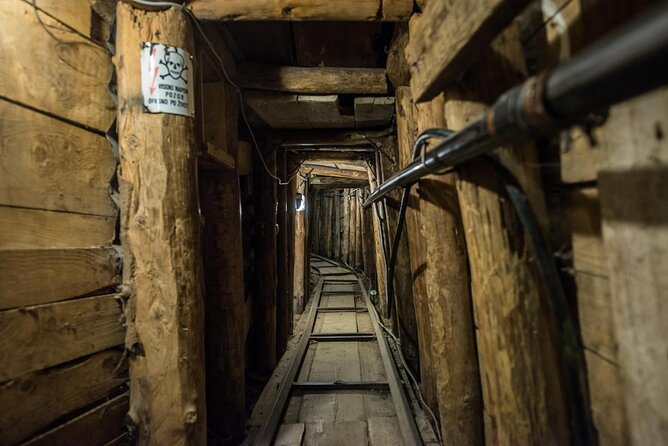
The Sarajevo War Tunnel is the central visit. It is described as the only connection from the besieged city to the rest of Bosnia and the wider world during the siege period from 1993 to 1995.
You spend about an hour here, making it the longest stop on the route. That extra time is important. The tunnel is not simply another place to photograph. Its value comes from understanding why it existed and what it meant to people inside a city cut off by fighting.
The tunnel is presented as a lifeline for Sarajevo. It offered a way out of the city and a connection with areas beyond the siege lines. The tour explains how the tunnel fit into everyday survival, rather than treating it as an isolated engineering curiosity.
The entrance costs €10 per person and is not included in the $47.66 tour price. Factor that into your budget before booking. Even with the extra charge, the tunnel is likely to be the most important paid part of the morning because it turns the larger story into a physical place.
You should also note that the tour information uses both included-admission and extra-fee language. In practical terms, treat the Tunnel of Hope entrance as an additional €10 charge. The tour price covers the guiding service and listed admission arrangements, but not this tunnel ticket.
Trebević viewpoint and the geography of the siege
Trebević Vidikovac is a brief stop, about 15 minutes, but it plays an important role. From this viewpoint, you see Sarajevo from the direction of the wartime lines and gain another broad view of the valley.
I like the way this stop works with the Yellow Fortress. One gives you an early orientation, while Trebević helps you understand the surrounding heights from another position. The tour is strongest when it connects these views to the explanation of how the city was surrounded.
The stop is short, so do not expect a long walk or extended sightseeing session here. It is mainly a visual pause and a chance to connect the guide’s explanation with the ground in front of you. If you enjoy history through maps and geography, this may be one of the most useful moments of the day.
The viewpoint also keeps the tour from staying indoors for several hours. You move between difficult historical material and open views of Sarajevo, which gives the morning a sensible rhythm.
More tours about the siege and the war:
- ROSES OF SARAJEVO (Official WAR + CITY tour)- Story of a Survivor
★ 5.0 · 770 reviews - Sarajevo War Tour: A Veteran’s Story of the Siege (fees included)
★ 5.0 · 326 reviews - Sarajevo 1425 days under the siege – War Tour
★ 5.0 · 170 reviews - Sarajevo to Srebrenica: Genocide Study Tour with War Veteran
★ 5.0 · 131 reviews
Walking the Olympic bobsleigh track
The Sarajevo Olympic bobsleigh and luge track is one of the tour’s most unusual locations. Built for the 1984 Winter Olympics, it later became part of the war line during the siege.
You spend about 50 minutes walking here. That makes it a proper stop rather than a quick photo break. The contrast is striking in a purely historical sense: a venue built for international sport later became connected with armed conflict.
The stop combines light adventure with a sobering story. You get to walk along an Olympic structure while learning how the site was used during the siege. This is likely to suit you if you prefer history that happens in real places rather than in a museum room.
Wear sensible shoes. The tour information calls this an adventure walk, and the stop lasts nearly an hour. No special equipment is listed, but you should be prepared for walking rather than standing beside the vehicle.
The track may also be the most memorable location for visitors who already know Sarajevo through the 1984 Olympics. It gives the city’s recent past two very different chapters in one place: international celebration and wartime division.
The Jewish Cemetery and the first sniper attacks
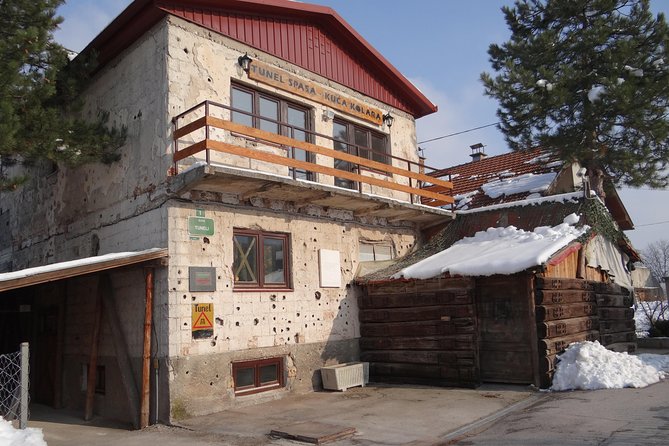
The Jewish Cemetery is included for about 20 minutes. Here, the tour focuses on sniper positions and the first sniper shots aimed at civilians.
This stop adds detail to the earlier discussion of dangerous street crossings. From a high or exposed position, the idea of a sniper line can sound abstract. At the cemetery, the guide connects those positions with specific risks faced by people moving through Sarajevo.
The stop is short but serious. You may find it emotionally heavier than the scenic viewpoints because the subject turns directly to civilians being targeted. Faruk’s personal memories are especially relevant here, since the tour is not limited to military movements or political decisions.
The cemetery also adds another layer to Sarajevo’s identity. The route is not only about famous military sites. It includes a place tied to the city’s Jewish community and to the wartime experience of ordinary people. That broader focus makes the tour more useful than a simple battlefield drive.
A clear explanation of civilian life during the siege
The tour covers the first days of the attacks, the ways civilians moved through sniper-exposed streets, and the long civilian resistance against the war in Bosnia and Yugoslavia.
One of the stated themes is the large number of days in which civilians protested against the war. The important point for you is that the experience does not frame Sarajevo only as a military contest. It also explains how people continued to live, protest, and try to maintain daily life under extreme conditions.
The discussion also addresses a single explosion whose consequences drew worldwide attention while the killing continued. This section deals with the gap between seeing an event on television and understanding what it meant for people in the city.
Expect a direct account rather than a polished political lecture. Faruk’s personal connection gives the subject a human scale, while the stops provide the physical setting. If you want only a broad introduction to Sarajevo, the material may feel intense. If you want to understand how the siege affected civilians, this is the point of the tour.
Time, transport, and the value of a private morning
The experience begins at 8:30 in the morning and lasts roughly three to four hours. That timing leaves you much of the day for Sarajevo’s old town, museums, or other activities.
Pickup is offered from hotels and private accommodations. You need to provide the hotel name or accommodation address so the morning pickup can be organized. This is especially useful because several stops are outside the central walking area, including the Tunnel of Hope, Trebević viewpoint, and Olympic track.
A private tour changes the value calculation. At $47.66 per person, the price is not the cheapest way to see one Sarajevo sight. But you are paying for transport, a focused route, a guide, and the ability to explore the subject with only your own group.
The price makes the most sense for two or more people who want a serious historical experience without arranging several separate taxi rides. Add the €10 tunnel fee, and you have the full cost to consider. The admission charge is clear enough, but it would be wise to have the extra amount ready.
The route involves walking at the Olympic track and short periods outside at the viewpoints and cemetery. The tour information says most people can participate and that it is near public transportation, though pickup makes public transport less important for this particular experience.
Who should book this Sarajevo war tour
I would recommend it most strongly if you want to understand the siege through both geography and personal memory. The combination of Faruk’s experience, the city views, the tunnel, and the wartime sites gives you more context than a single museum visit.
It also suits you if you have a limited stay in Sarajevo. In one morning, you visit five significant locations and finish with plenty of time for other plans. The private format is a good fit for couples, families, or small groups who prefer to ask questions at their own pace.
You may want to choose another activity if you are looking for a light sightseeing outing. The subject includes civilian deaths, sniper attacks, and the failure of the outside world to stop the violence. The guide brings friendliness and humor, but the history itself remains difficult.
The tour requires good weather. If poor weather causes cancellation, you are offered another date or a full refund. You can also cancel for a full refund up to 24 hours before the start time. Changes or cancellations inside that 24-hour window are not accepted.
Should you book it?
Book this tour if you want a personal, place-based explanation of Sarajevo’s siege and you are willing to spend a morning with difficult history. Faruk’s experience as a young teenager gives the tour an unusual human quality, while the Yellow Fortress, Tunnel of Hope, Trebević, bobsleigh track, and Jewish Cemetery show how the city’s terrain shaped the war.
The main drawbacks are the extra €10 tunnel fee, the serious subject matter, and the walking required at the Olympic track. For most people interested in Sarajevo’s recent past, those are reasonable trade-offs for a private experience at $47.66 per person.
FAQ
How long does the Sarajevo siege tour last?
The tour lasts approximately three to four hours.
What time does the tour start?
The scheduled start time is 8:30 am.
Is hotel pickup available?
Yes. Pickup is offered from hotels and private accommodations. You need to provide the hotel name or accommodation address.
Is this a private tour?
Yes. Only your own group takes part in the activity.
Which places are included on the tour?
The route includes the Yellow Fortress, Sarajevo War Tunnel, Trebević Vidikovac, Sarajevo Olympic Bobsleigh and Luge Track, and Jewish Cemetery.
Is the Tunnel of Hope entrance included in the price?
No. Entrance to the Tunnel of Hope costs €10 per person and is not included.
Is the tour offered in English?
Yes. The tour is offered in English.
Can I cancel for a full refund?
Yes, if you cancel at least 24 hours before the experience starts. Cancellations made less than 24 hours before the start time are not refunded.
What happens if bad weather cancels the tour?
You will be offered a different date or a full refund.
Just added around Sarajevo
- Private Full Day Safari Tour★ 5.0 · 8 reviews
- Walking Tour in Sarajevo★ 5.0 · 3 reviews
- Sarajevo Under Siege: A War History Tour★ 5.0 · 10 reviews
- Secret Tito’s Bunker/Konjic Tour★ 5.0 · 4 reviews
- Travnik, Jajce, Pliva Lakes & Mills –Medieval & Ottoman Bosnia Full Day Tour★ 5.0 · 3 reviews
- Mysterious Visoko Pyramids Driving and Walking Tour★ 5.0 · 7 reviews
- The last day of Franz Ferdinand Walking Tour★ 5.0 · 10 reviews
- Sarajevo to/from Zagreb Transfer Day Tour (North-central Bosnia)★ 5.0 · 4 reviews
Tunnel of Hope Tours, compared.
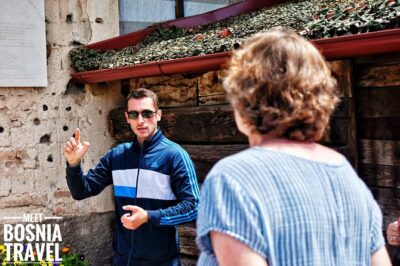
Fall of Yugoslavia, Sarajevo War Tour with Tunnel of Hope Museum and Frontlines
Read our review →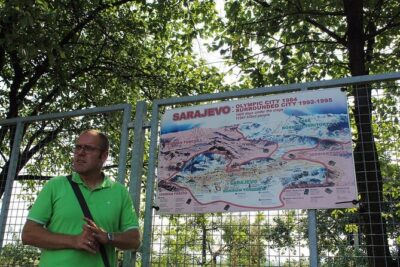
Tunnel Museum: Bosnian & Yugoslav Wars Tour with War Veteran
Read our review →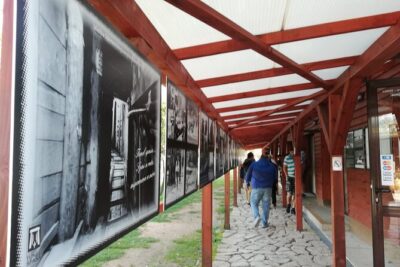
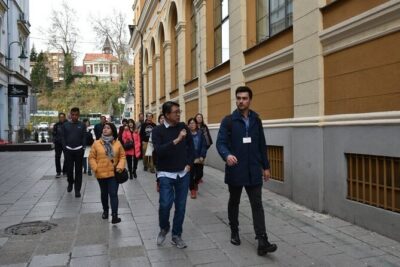
Sarajevo Grand Tour: Old Town, War Tunnel, Olympic Sites & More
Read our review →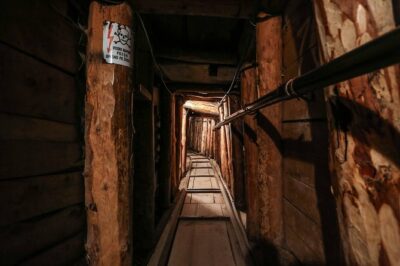
Times of Misfortune – Life Under Siege and the Tunnel of Hope
Read our review →
WAR TUNNEL – Sarajevo’s only way of a communication during the WAR – Top secret
Read our review →
Browse the lists this tour appears in