
Reviewed · WAR & SIEGE TOURS
Inside the Siege: Sarajevo’s Story of Survival
Sarajevo’s wartime story becomes far clearer when you see the city from the Yellow Fortress, trace the former sniper corridor, and enter the cramped Tunnel of Hope. This tour links those places with the human cost of the siege, not just dates and military terms.
I like the local perspective and the small-group format, which make it easier to ask hard questions. I also like the route’s range: one afternoon takes you from an Olympic stadium and city-center political buildings to cemeteries, memorials, and the airport tunnel.
The main drawback is comfort. A group can reach 16 people, and a small vehicle may feel tight, especially if your group is larger than the four-person groups that have sometimes booked this experience. The Tunnel of Hope entrance fee is also separate.
Key points to know before booking
- The Yellow Fortress gives you the best opening view: You can see Sarajevo’s bowl-shaped setting and understand why the surrounding hills mattered during the siege.
- The Tunnel of Hope is the central visit: Allow about 50 minutes, and bring €10 in local currency for entry.
- You cover major wartime sites by air-conditioned vehicle: This saves time and effort on a route spread across the city.
- Adis and his team focus on people, not only battles: Expect personal stories, political context, and room for questions.
- The tour is short but serious: In roughly two to three hours, you get a concentrated introduction rather than a full study of the Bosnian War.
- The maximum group size is 16: Ask about the expected group size if vehicle space matters to you.
Why Sarajevo makes more sense from the hills
Begin at 1 pm from Mula Mustafe Bašeskije 65, near Sarajevo’s central area. The air-conditioned vehicle matters here because the route moves between elevated viewpoints, city streets, memorial sites, and the tunnel museum outside the old center.
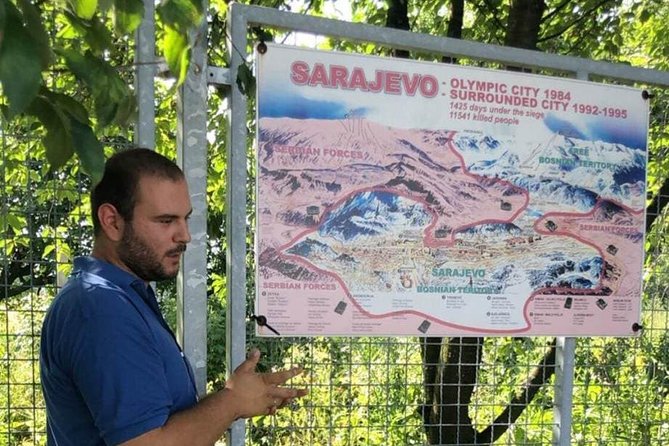
The first major stop is the Yellow Fortress, where you get a wide view over Sarajevo. The city sits in a long valley surrounded by hills, and that view gives you the basic geography needed for the rest of the afternoon.
From up here, your guide can point out the city and the former front lines. You begin to see why streets and neighborhoods could be exposed to fire from the slopes. It is a short stop, about 15 minutes, but it does useful work before the tour gets into heavier material.
I like starting here because Sarajevo’s wartime story is easier to follow once you understand the city’s shape. You are not simply hearing about Sniper Alley or the siege from inside a vehicle. You are looking at the terrain that made movement so dangerous.
The view is also one of the few lighter moments in an otherwise grave tour. Do not expect a long photo stop or a quiet sightseeing session. The emphasis is on orientation and explanation.
More tours about the siege and the war:
- Fall of Yugoslavia, Sarajevo War Tour with Tunnel of Hope Museum and Frontlines
★ 5.0 · 1,314 reviews - ROSES OF SARAJEVO (Official WAR + CITY tour)- Story of a Survivor
★ 5.0 · 770 reviews - Tunnel Museum: Bosnian & Yugoslav Wars Tour with War Veteran
★ 5.0 · 551 reviews
Cemeteries and the cost of defending the city
The route continues to places connected with people who fought to protect Sarajevo, along with sites linked to civilian massacres during the siege. These stops are not presented as detached monuments. They help connect military events with the names, families, and neighborhoods affected by them.
The exact length of each brief stop can vary, but you should expect short visits rather than extended time at every site. That is a fair trade for seeing more of the city in one afternoon, though visitors who want time for reflection may find the pace brisk.
This section is where the guide’s tone matters. Adis and his team are known for clear English, a friendly manner, and a balanced account of Sarajevo’s past. The guide is not there to turn suffering into entertainment. The occasional light touch can make difficult information easier to absorb, but the subject remains serious.
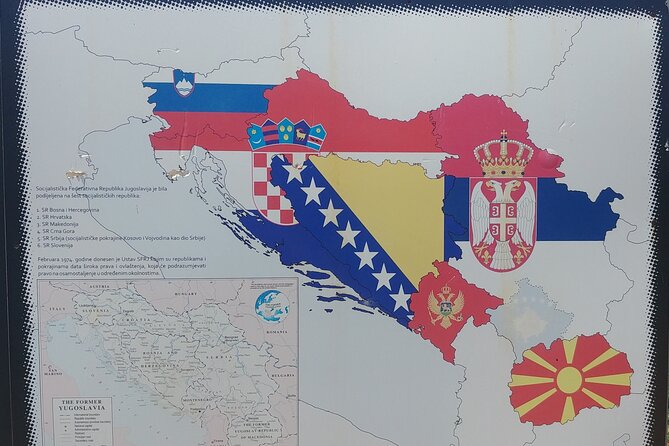
You can ask about the end of the Tito era, the political changes that led into war, and the years that followed. The experience is particularly useful if you know the basic outline of the conflict but struggle to connect national events with Sarajevo’s daily life.
Asim Ferhatovic Hase Stadium and the 1984 Olympic memory
At Asim Ferhatovic Hase Stadium, the tour shifts briefly from wartime Sarajevo to the city’s Olympic past. The stadium hosted events during the 1984 Winter Olympics, a period that still carries strong meaning for the city.
The same site later had parts used as a cemetery during the war. That contrast is hard to miss. A place built for international celebration became tied to mourning and loss only a few years later.
The stop lasts about 10 minutes, so you will not have a long stadium visit. Its value comes from the contrast between the Olympic city and the besieged city. That change helps you understand how sharply Sarajevo’s public life was broken by war.
You may find the stop more affecting if you already know something about the Olympics. If you do not, the guide’s explanation supplies the needed context without making you study the subject in advance.
Remembering the 1,601 children killed
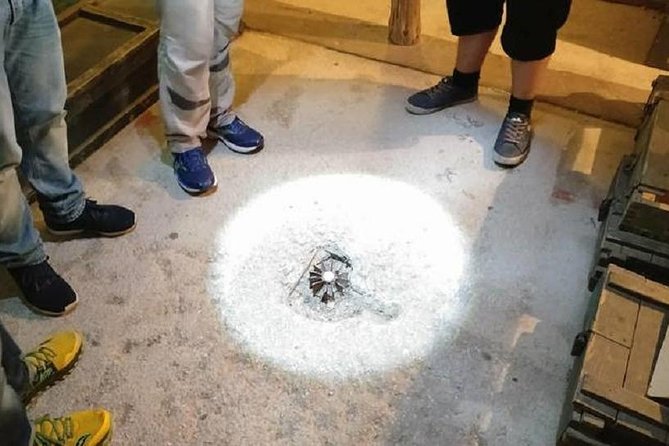
The tour also pauses at a memorial honoring the 1,601 children killed during the siege. This is one of the most important stops for understanding the civilian cost of the conflict.
The number is large, but the memorial keeps the figure from becoming just a statistic. Your guide can place the loss within Sarajevo’s daily wartime experience, alongside the dangers faced by families trying to move through the city, attend school, find food, or reach medical care.
Expect this part of the route to be quiet and emotionally heavy. The tour does not offer a simple or tidy version of the past. It asks you to consider what the siege meant for people who had no role in military decisions.
If you are planning a family visit, use your judgment about how much detail younger children can handle. The tour is open to most participants, but its subject includes massacres, civilian deaths, and wartime trauma.
A few more Sarajevo days to weigh up
- Sarajevo: Mostar, Konjic, Blagaj Tekke, Pocitelj & Waterfall
★ 4.9 · 1,335 reviews - Sarajevo: Mostar, Konjic, Sufi House, Pocitelj & Kravice Falls
★ 5.0 · 1,179 reviews - Sarajevo: Mostar, Konjic, Počitelj, Sufi House, & Waterfalls
★ 4.9 · 572 reviews - Sarajevo: 2 Hours Old Town Walking Tour With Local Guide
★ 5.0 · 505 reviews
Sniper Alley and the Presidency Building
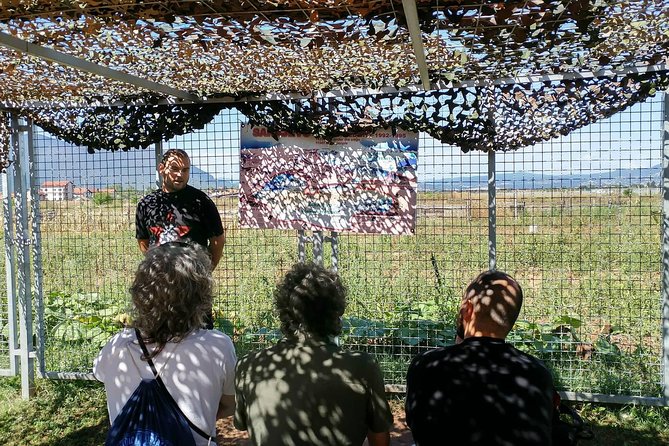
Sniper Alley was one of the most dangerous streets in Sarajevo during the war. From the vehicle, you can see the route as part of the modern city, but the guide’s explanation changes how you read it.
Today, an ordinary street can hide the fear that once shaped every crossing. The value of seeing it with a guide is not that the road looks dramatically different. It is that you learn how its position and exposure affected daily movement.
The Presidency Building adds a political layer. It was an important center during the war, and its presence helps connect the street-level story to the decisions made inside government buildings.
I like this pairing because it keeps the tour from becoming only a sequence of memorials. You move between civilian danger and political power, then return to the practical question of how people survived in the middle.
The guide’s willingness to answer questions is useful here. You can ask about the breakup of Yugoslavia, the siege, or the path from the end of the Tito era to present-day Sarajevo. The afternoon is not designed as a university lecture, but it gives you a strong framework for further reading or museum visits.
The Tunnel of Hope, Sarajevo’s wartime lifeline
The Tunnel of Hope Museum is the tour’s main destination and the longest stop, at about 50 minutes. Entrance costs €10 per person, paid separately on-site in local currency, so budget for that in addition to the $54.22 tour price.
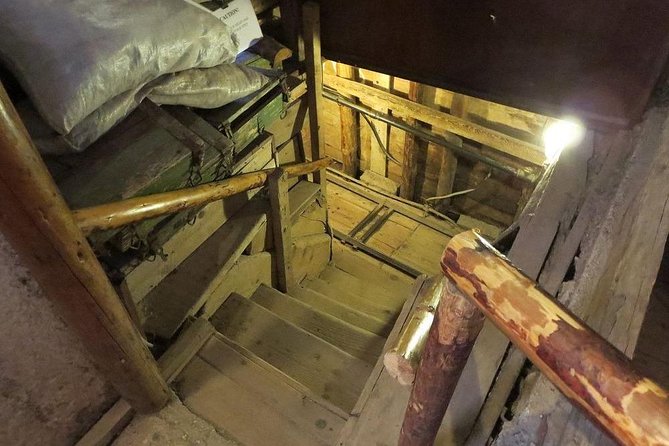
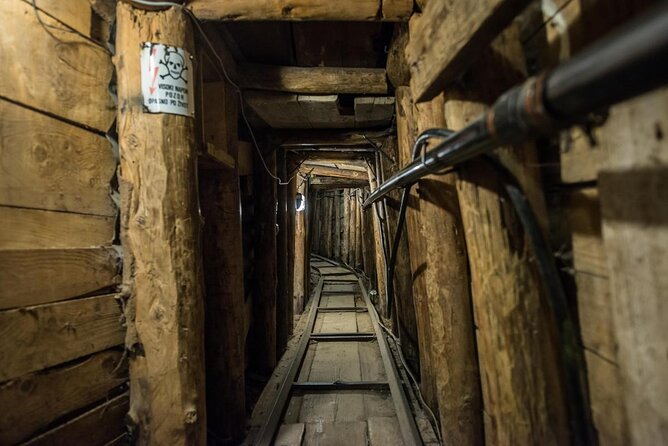
The tunnel was Sarajevo’s secret lifeline during the siege. It was used to move supplies and support survival when normal routes were cut off. Its importance is easy to understand once you see the narrow space and hear how it fit into the city’s wartime story.
This is not a polished attraction built for spectacle. The museum’s power comes from the practical problem it represents: how do you keep a city alive when roads and air links are threatened? The tunnel gives that question a physical form.
You should expect the space to be confined. If you dislike tight areas, ask the guide what portion of the visit involves entering the tunnel itself. The supplied tour details do not specify the exact walking distance inside, so it is best not to assume you will spend the full 50 minutes underground.
The museum entry is not included, but the extra cost is reasonable when set against the central role of the site. If you only have time for one wartime museum in Sarajevo, this is a strong candidate because it connects logistics, fear, and ordinary survival.
The guide’s storytelling adds the human layer. Adis and his team do not simply point out an engineering project. They explain why the tunnel mattered to residents and how it fitted into the wider siege.
A panoramic return through Sarajevo
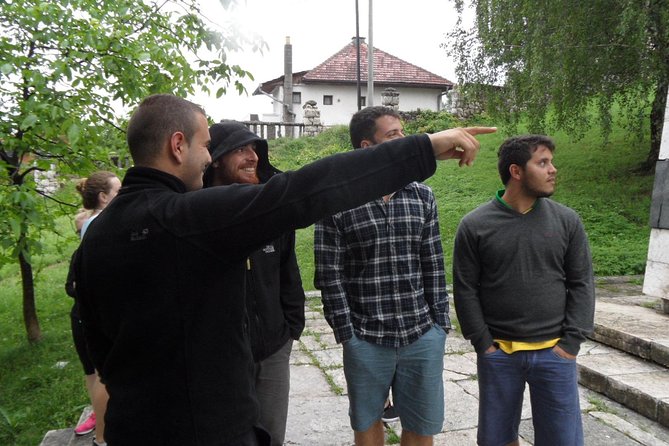
After the museum, the vehicle returns by a scenic route with a final broad view over Sarajevo. This gives you a chance to process the afternoon before returning to the original meeting point.
The return is not a separate sightseeing tour, and you should not expect long stops at every viewpoint. Its main benefit is seeing more of the city while your guide continues to connect neighborhoods and wartime events.
Because the whole experience lasts about two to three hours, the final drive also keeps the schedule practical. You can book an evening meal or another central activity afterward, though it is sensible to leave some flexibility since exact timing can vary.
How the guides shape the experience
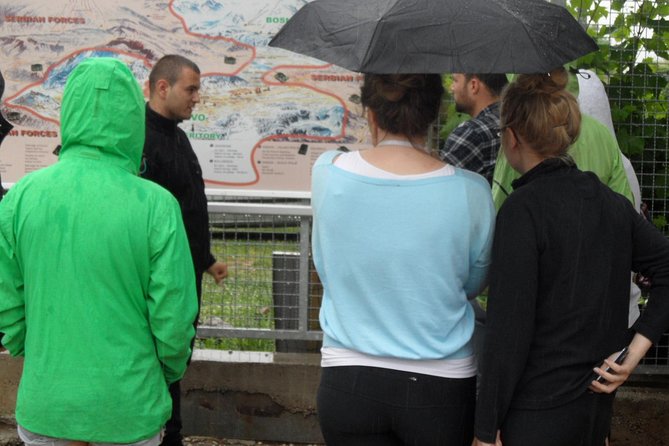
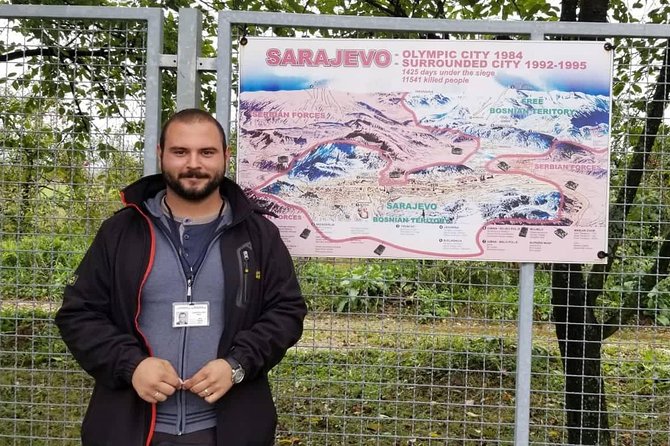
The guide is the most important variable on a tour about recent conflict. Adis is the named guide connected with the experience, and his team also leads the route. An assistant has been praised for offering a younger person’s perspective alongside strong historical detail.
You can expect English-language guiding and time for questions. The guides are described as friendly, engaging, and able to explain the subject without losing the thread of the story. Their style includes humor in suitable moments, which can help keep a three-hour history lesson from becoming exhausting.
I would especially recommend this tour if you already enjoy walking tours. Adis also leads a free walking tour, and doing that first can help you decide if his approach suits you. The paid outing then adds transportation and the wartime sites beyond the central streets.
A guide cannot remove every uncertainty from such a difficult subject. Accounts of war can carry a personal viewpoint, even when the guide aims for balance. The practical answer is to ask questions and listen for context rather than expecting a single afternoon to explain every side of the Bosnian War.
Price, group size, and practical value
At $54.22 per person, this is not the cheapest way to see Sarajevo. You are paying for a local guide, an air-conditioned vehicle, a route that covers widely separated sites, and focused explanation over two to three hours.
The value is strongest if you want to understand the siege rather than merely photograph locations. Reaching the Yellow Fortress, stadium, memorials, Sniper Alley, Presidency Building, and Tunnel of Hope on your own would take more planning, and you would lose the links between them.
The maximum group size is 16, which is intimate compared with a large coach tour but not necessarily tiny. Some outings may have only a handful of participants. Others could feel fuller, and a small vehicle may be cramped when the group grows.
That point matters if you are tall, dislike close seating, or want an easy view out of every window. The air conditioning is helpful, but it does not change the amount of space available.
The €10 tunnel entry is the only required extra cost listed. Tips are optional but appreciated. Free cancellation is available up to 24 hours before the 1 pm start, while cancellations or changes inside that window are not refunded or accepted. The tour also requires a minimum number of participants, so a cancellation for that reason brings a different date, another experience, or a full refund.
Who will get the most from this tour
This is a good fit if you want a clear introduction to Sarajevo’s siege, prefer a guide to explain sensitive subjects, and have only one afternoon available. It suits adults and older teens who can handle serious wartime material.
It also works well for anyone who has already walked Sarajevo’s old center and wants to see the wider city. The route adds hills, suburbs, memorials, and the tunnel, giving you a broader sense of how the city functioned during the war.
You may want a different format if you need long periods at each memorial, prefer a walking-only tour, or want an in-depth military history course. The pace is designed to cover ground, not to provide an hour at every stop.
Service animals are allowed, the tour is near public transportation, and most people can participate. The listing does not give detailed information about tunnel access, vehicle dimensions, or accommodations for every mobility need, so contact the provider if those points are important to you.
Should you book Inside the Siege?
Book it if you want human stories tied to real places and a practical route through Sarajevo’s wartime past. The Tunnel of Hope, the children’s memorial, Sniper Alley, and the Yellow Fortress give the afternoon a strong shape, while Adis or his team supplies the explanation that connects them.
I would book this early if your schedule is fixed, since the experience is often reserved well ahead of time. Check the likely group size, bring €10 in local currency for the tunnel, and set aside enough emotional energy for a serious afternoon.
Skip it if your interest is limited to architecture, food, or the Olympic story. For anyone trying to understand why Sarajevo matters, this is one of the more efficient and personal ways to begin.
FAQ
Where does the tour start?
It starts at Mula Mustafe Bašeskije 65, Sarajevo 71000, Bosnia and Herzegovina.
What time does the tour begin?
The scheduled start time is 1:00 pm.
How long does Inside the Siege last?
The experience lasts approximately two to three hours.
Is the Tunnel of Hope entrance included?
No. The Tunnel of Hope Museum costs €10 per person, paid separately on-site in local currency.
What language is the tour offered in?
The tour is offered in English.
What is the maximum group size?
The maximum group size is 16 participants.
Where does the tour end?
The activity ends back at the original meeting point.
Just added around Sarajevo
- Private Full Day Safari Tour★ 5.0 · 8 reviews
- Walking Tour in Sarajevo★ 5.0 · 3 reviews
- Sarajevo Under Siege: A War History Tour★ 5.0 · 10 reviews
- Mysterious Visoko Pyramids Driving and Walking Tour★ 5.0 · 7 reviews
- Secret Tito’s Bunker/Konjic Tour★ 5.0 · 4 reviews
- Travnik, Jajce, Pliva Lakes & Mills –Medieval & Ottoman Bosnia Full Day Tour★ 5.0 · 3 reviews
- The last day of Franz Ferdinand Walking Tour★ 5.0 · 10 reviews
- Sarajevo to/from Zagreb Transfer Day Tour (North-central Bosnia)★ 5.0 · 4 reviews
War & Siege Tours, compared.
Fall of Yugoslavia, Sarajevo War Tour with Tunnel of Hope Museum and Frontlines
Read our review →
ROSES OF SARAJEVO (Official WAR + CITY tour)- Story of a Survivor
Read our review →
Tunnel Museum: Bosnian & Yugoslav Wars Tour with War Veteran
Read our review →
Sarajevo War Tour: A Veteran’s Story of the Siege (fees included)
Read our review →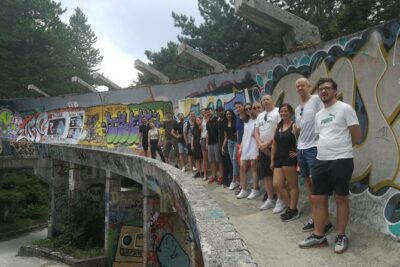
Break-up of Yugoslavia & The War in Mostar: Life Under Siege
Read our review →
Sarajevo to Srebrenica: Genocide Study Tour with War Veteran
Read our review →
Sarajevo Grand Tour: Old Town, War Tunnel, Olympic Sites & More
Read our review →Browse the lists this tour appears in