
Reviewed · WAR & SIEGE TOURS
Utopia of Tito’s Yugoslavia, Tito’s Bunker & Siege of Sarajevo
Sarajevo’s most powerful stories sit beyond its old town. This full-day trip links Tito’s enormous nuclear bunker near Konjic with the Sarajevo War Tunnel, the route that helped keep a besieged city alive. You also reach Olympic ruins, mountain battle sites, and lookout points that show how the 1990s war was fought from the hills above Sarajevo.
I like the small group of no more than eight, which gives you room to ask questions and hear personal stories. I also like the unusual mix: Cold War secrecy, Olympic optimism, wartime survival, and abandoned military sites all fit into one carefully packed day.
The drawback is the pace. Ten hours on the road with several stops leaves little time to linger, and lunch is not included. If you want a slow museum day or a relaxed mountain outing, this tour may feel busy.
Key points before you book
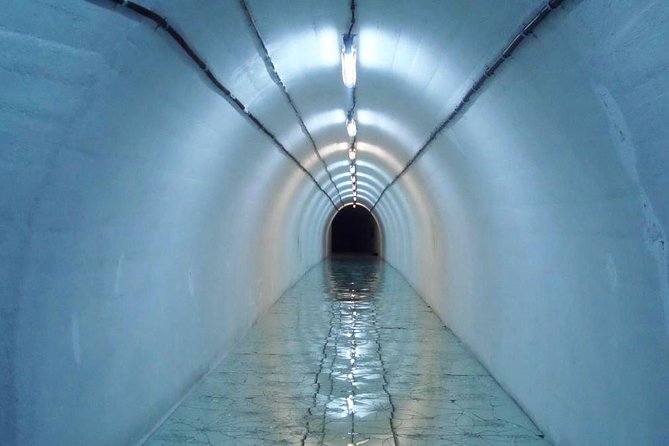
- Tito’s bunker is the day’s strangest stop: The 6,500-square-meter ARK D-0 was built over 26 years to shelter 350 Yugoslav leaders and army officers during a nuclear war.
- The War Tunnel puts Sarajevo’s siege into human terms: You see the museum, watch a short film, and walk through part of the narrow underpass.
- Eight people is the maximum: Hotel pickup in Sarajevo, an air-conditioned vehicle, and an English-speaking guide keep the long day manageable.
- Olympic sites meet wartime ruins: Igman, Trebević, Dobrinja, and the bobsleigh track show how the 1984 Winter Games sites were later damaged by war.
- The views explain the siege: From Trebević, you can see why the surrounding mountains mattered so much to the forces surrounding Sarajevo.
- The price covers the main admissions: At $101.85 per person, the cost includes the bunker, War Tunnel, transport, guide, and taxes, but not lunch.
Why this day makes sense in Sarajevo
Sarajevo can be confusing if you try to understand its recent past from a city walk alone. The old town tells one part of the story, but the siege unfolded through tunnels, mountain roads, Olympic facilities, cemeteries, and military positions spread across the region.
This tour gives you that wider view. You leave Sarajevo for Konjic, then return through the mountains and suburbs connected to the 1984 Olympics and the 1992 to 1995 siege. The result is not just a collection of museums. You see how geography shaped politics, warfare, escape routes, and daily life.
The outing runs about 10 hours and begins at 8:00 a.m. You can meet the group at the Funky Tours office on Besarina čikma in the old town, or arrange pickup from your Sarajevo hotel. Since the route covers a lot of ground, the included vehicle matters. An air-conditioned car or van is more useful here than a standard walking tour, especially on the drive to Konjic and up the mountains.
The group limit of eight is another real benefit. Long historical explanations can become tiring in a large coach, while a small group makes it easier to stop for a question, take photos, or hear a guide’s own account. Guides named in past tours include Hamza, Emir, Ahmed, Salem, Mustafa, Amir, and Agnar, though your guide will depend on the day.
More tours about the siege and the war:
- Fall of Yugoslavia, Sarajevo War Tour with Tunnel of Hope Museum and Frontlines
★ 5.0 · 1,314 reviews - ROSES OF SARAJEVO (Official WAR + CITY tour)- Story of a Survivor
★ 5.0 · 770 reviews - Tunnel Museum: Bosnian & Yugoslav Wars Tour with War Veteran
★ 5.0 · 551 reviews
Konjic Bridge and the road to the bunker
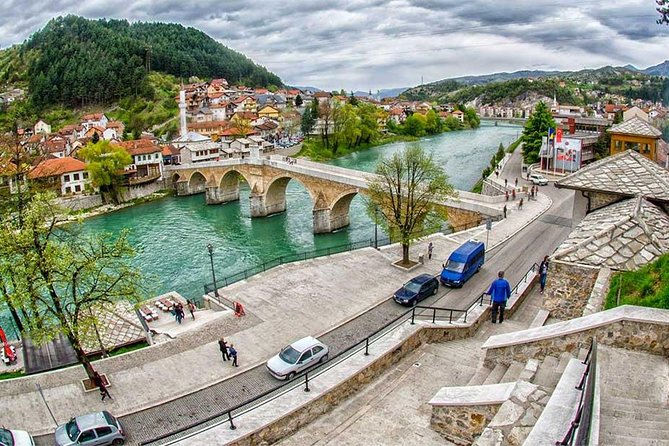
Your first stop is Konjic, a town beside the turquoise Neretva River. You get about 30 minutes in the old part of town, including a view of the 17th-century six-arch bridge.
This is a short stop, not a full Konjic sightseeing tour. That distinction matters. You have time to take photographs, look at the bridge, and get a sense of the town before heading to the bunker. If you want an extended visit to Konjic, you will need a separate plan.
The stop works well as an introduction because Konjic looks sunny and open, while the facility nearby was designed around fear, secrecy, and survival. That contrast is one of the day’s recurring themes. Yugoslavia presented itself as a modern, united state, yet its leaders spent enormous sums preparing for nuclear destruction.
Inside ARK D-0, Tito’s nuclear bunker
The bunker, also called Facility D-0 or the Atomic War Command, is the centerpiece for many people. It took 26 years to build and covers roughly 6,500 square meters. Its purpose was to shelter and protect about 350 senior political and military figures while allowing the armed forces to be commanded during a nuclear conflict.
The scale is hard to grasp until you walk through it. You move along corridors and through rooms built for a government that might have needed to function underground for months. The bunker was one of the Yugoslav army’s most expensive military projects, with reported spending of about $4.6 billion.
The atmosphere is plain rather than theatrical. Concrete, pipes, old equipment, and enclosed rooms do the work. The building itself reveals the tension of the Cold War: a country promoting unity and independence while preparing for a catastrophe that might wipe out its cities.
The site is also used for a biennial of contemporary art, so you may see artwork placed among the old rooms and military structures. That combination can be striking, though it may not suit anyone expecting a preserved historical site with every room restored exactly as it was.
Admission to the bunker is included. The adult entrance fee is listed as 10 euros, so the inclusion makes the $101.85 price easier to assess. You are not paying extra for one of the main reasons to take the tour.
Igman and the broken Olympic dream
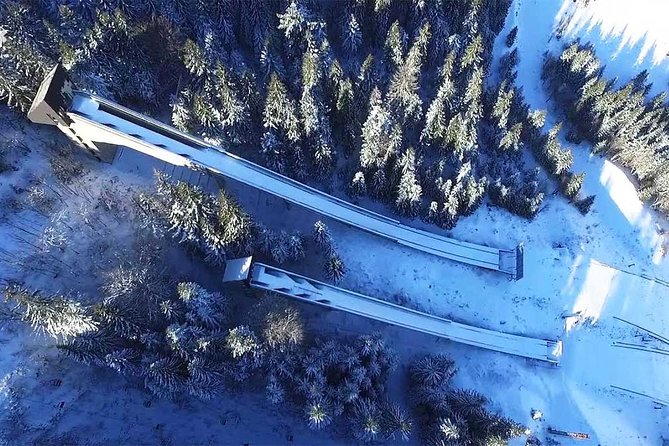
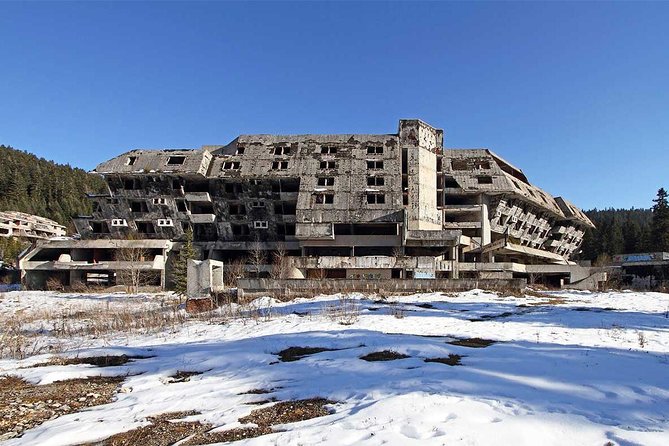
After Konjic, the route turns toward Sarajevo and Igman Mountain. The stop lasts about an hour and focuses on the 1984 Winter Olympics, especially the ski jumps and the Igman Olympic Hotel.
You can take photographs from the Olympic podium or climb the ski jumps and picture the excitement of the Games. The setting once represented optimism, cooperation, and international attention. A few years later, many of the same facilities were caught in the violence that tore apart Yugoslavia.
The Igman Hotel gives the contrast a sharper edge. Built for mountain luxury during the Olympics, it was badly damaged during the Balkan War and the siege of Sarajevo. Its ruined condition is not a polished museum display. You see the damage as part of the physical record, which can be more affecting than a collection of photographs.
This stop also breaks up the bunker visit. After enclosed corridors and Cold War planning, you get open mountain air and a clearer sense of the terrain. The trade-off is that conditions can affect how much time you spend outside. The tour includes the stop, but it does not promise a long mountain hike or a full Olympic history program.
A few more Sarajevo days to weigh up
- Sarajevo: Mostar, Konjic, Blagaj Tekke, Pocitelj & Waterfall
★ 4.9 · 1,335 reviews - Sarajevo: Mostar, Konjic, Sufi House, Pocitelj & Kravice Falls
★ 5.0 · 1,179 reviews - Sarajevo: Mostar, Konjic, Počitelj, Sufi House, & Waterfalls
★ 4.9 · 572 reviews - Sarajevo: 2 Hours Old Town Walking Tour With Local Guide
★ 5.0 · 505 reviews
The Sarajevo War Tunnel and the Tunnel of Hope
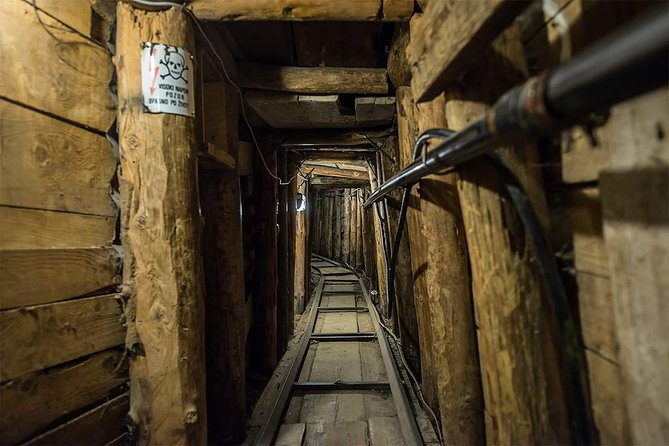
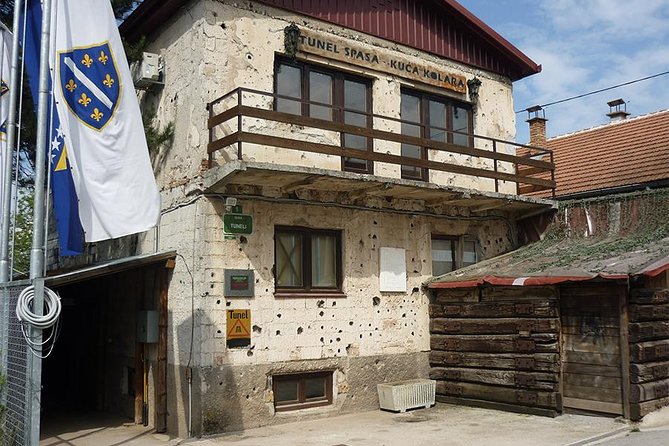
Back near Sarajevo, you visit the War Tunnel museum. You see exhibits connected to the siege, watch a short film about why the tunnel had to be built, and walk through the remaining section of the passage.
The tunnel was vital because Sarajevo was surrounded and many normal routes into the city were cut off. The underpass gave people and supplies a way through or beneath the airport area. Even a short walk through the surviving section helps you understand the physical limits of life during the siege.
This is a more personal stop than the bunker. The bunker tells you how leaders prepared for a possible nuclear war. The tunnel shows how ordinary people tried to keep a city functioning during an actual one.
The museum entrance is included, with an adult fee listed as 5 euros. You should expect the space to be modest and the visit to be serious. It is not a large national museum with endless exhibits. Its value comes from the direct link between the objects, the film, the tunnel itself, and Sarajevo’s recent past.
The tour’s strongest guides add a great deal here. Ahmed, for example, was praised for explaining the war with passion and for drawing on his own experience of living through it. That kind of first-hand connection can change the visit, but guide assignments vary, so you should not assume a particular person will lead your group.
Dobrinja, Trebević, and the mountains above Sarajevo
After the tunnel, the vehicle passes through Dobrinja, an Olympic village that also became a besieged neighborhood. This part of the route connects the 1984 Games to the war in a direct way. Buildings and streets designed for international sport became part of a city under fire.
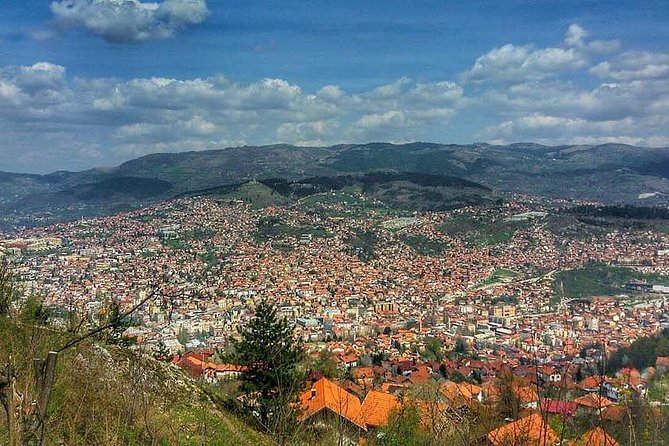
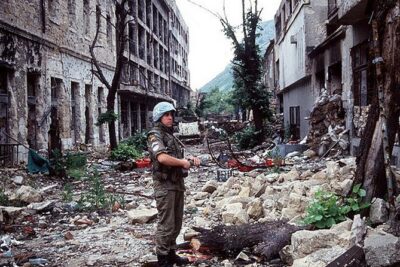
The route continues to Trebević, one of the most important mountain areas around Sarajevo. During the siege, much of the mountain served as a front line. From higher points, you can look across the city and see why the surrounding ridges had such military value.
The view is not just scenic. It explains the cat and mouse nature of the fighting described by the tour. Forces on the heights had a commanding position, yet taking Sarajevo was not simple. The city, its defenders, and its difficult terrain prevented the conflict from becoming a quick military victory.
At Trebević, you may see remains of bunkers, trenches, minefields, tank tracks, and bullet or grenade damage. Some facilities remain unrestored. That raw condition gives the stop weight, but it also means you should not expect a tidy heritage site with signs at every point.
The mountain stop is one of the most visually useful parts of the day. You can look at the city from above, then connect the view with the streets and neighborhoods you have already passed. If you care about photography, this is a good place to keep your camera ready. If you prefer a gentle day with minimal walking, ask your guide about the walking involved at each site, since the itinerary includes a walk on the bobsleigh track.
Walking the Sarajevo Olympic bobsleigh track
The old Olympic bobsleigh and luge track on Trebević gets about 45 minutes. You walk down part of the famous concrete course, now known for its abandoned condition and street art.
The track is unusual because it carries two very different identities. In 1984, it was a purpose-built Olympic venue. During the siege, Trebević became a military zone. Today, the damaged track and graffiti create a place that feels part sports relic, part war ruin, and part open-air art site.
This is one of the lighter stops emotionally, but it still fits the day’s theme. Sarajevo’s Olympic facilities were not erased from memory. They remain in altered form, showing both what the city hoped to become and what happened soon after.
Wear shoes suitable for walking on an old track. The tour data does not promise a fully restored or even surface, so you should treat the site as an atmospheric ruin rather than a conventional attraction.
The Jewish Cemetery and Sarajevo’s front line
The final stop is the Jewish Cemetery, one of the largest Jewish cemeteries in Europe. You spend about 20 minutes there, looking across an area that became a front line and sniper position during the siege.
Its historical importance reaches beyond the cemetery itself. From this high ground, the site overlooked Sarajevo and Sniper Alley. Seeing the location helps you understand how ordinary roads, religious sites, and city neighborhoods became part of the war’s military geography.
Twenty minutes is enough for a short visit and explanation, but not for a long cemetery tour. The stop works best as a final viewpoint before returning to the city. It leaves you with the reminder that Sarajevo’s history is layered rather than neatly divided into old town, Olympic city, and war zone.
Is $101.85 a fair price?
At $101.85, this is not a budget day out, but the value is solid if you want all these locations in one trip. The cost includes hotel pickup or meeting at the office, an English-speaking guide and driver, an air-conditioned vehicle, taxes, the 10-euro bunker entrance, and the 5-euro War Tunnel entrance.
Lunch is not included, so plan for that cost separately. The supplied information does not set out a lunch stop, and the schedule is full, so bring your own plan rather than expecting a long restaurant break.
The best value comes from the combination of distance and interpretation. Reaching Konjic, Igman, the War Tunnel, Trebević, the bobsleigh track, and the Jewish Cemetery independently would require more planning and transport. You also get a guide who can connect the places instead of leaving you to piece the story together.
The published score is 5 from 35 ratings, with 100 percent recommending the experience. The strongest praise focuses on the bunker, the War Tunnel, the balance between mountain sites and history, and guides such as Hamza, Ahmed, Salem, and Emir. Those points match what the tour is designed to do well.
Who should take this tour?
You should consider booking if you want a serious look at Sarajevo’s Cold War and wartime past, especially if you have only one free day beyond the city center. It suits history-focused visitors, photographers, and anyone interested in abandoned Olympic sites.
It also works well for solo visitors. A group capped at eight makes it easier to meet people without the feel of a large coach trip. The personal accounts shared by some guides can add meaning to the War Tunnel and siege sites.
Think twice if you dislike long days, mountain roads, enclosed spaces, or emotionally heavy subjects. The tour includes walking at several locations, though most travelers can participate according to the supplied information. Service animals are allowed.
Free cancellation is available up to 24 hours before the 8:00 a.m. start time. Confirmation is sent within 48 hours of booking, subject to availability, and the experience is often reserved about 37 days ahead, so early planning is sensible during busy periods.
Should you book it?
Book this tour if you want Sarajevo’s recent history explained through real places rather than a string of dates. The bunker and War Tunnel are the essential pair, while Trebević, Igman, the bobsleigh track, and the Jewish Cemetery show how war and Olympic ambition shaped the city around them.
Skip it if you want a relaxed day with long meals and unhurried stops. For everyone else, the small group, included admissions, hotel pickup, and range of sites make this one of the most useful full-day history trips from Sarajevo.
FAQ
How long does the tour last?
The tour lasts approximately 10 hours. It starts at 8:00 a.m. and ends back at the meeting point in Sarajevo.
Where does the tour start?
You can meet at the Funky Tours office at Besarina čikma 5 in Sarajevo’s old town. Pickup can also be arranged from any hotel in Sarajevo.
Is the tour offered in English?
Yes. The tour includes a professional English-speaking guide and driver.
What is the maximum group size?
The tour has a maximum of eight participants.
Are the bunker and War Tunnel entrance fees included?
Yes. The Tito’s Bunker entrance fee and Sarajevo War Tunnel entrance fee are included, along with all listed taxes and fees.
Is lunch included?
No. Lunch is not included in the tour price.
Is transportation provided?
Yes. The tour includes an air-conditioned vehicle, with hotel pickup available in Sarajevo.
Can I cancel for a full refund?
Yes. You can cancel at least 24 hours before the experience starts for a full refund. Changes or cancellations made less than 24 hours before the start time are not accepted for a refund.
Just added around Sarajevo
- Private Full Day Safari Tour★ 5.0 · 8 reviews
- Walking Tour in Sarajevo★ 5.0 · 3 reviews
- Sarajevo Under Siege: A War History Tour★ 5.0 · 10 reviews
- Travnik, Jajce, Pliva Lakes & Mills –Medieval & Ottoman Bosnia Full Day Tour★ 5.0 · 3 reviews
- Mysterious Visoko Pyramids Driving and Walking Tour★ 5.0 · 7 reviews
- Secret Tito’s Bunker/Konjic Tour★ 5.0 · 4 reviews
- The last day of Franz Ferdinand Walking Tour★ 5.0 · 10 reviews
- Sarajevo to/from Zagreb Transfer Day Tour (North-central Bosnia)★ 5.0 · 4 reviews
War & Siege Tours, compared.
Fall of Yugoslavia, Sarajevo War Tour with Tunnel of Hope Museum and Frontlines
Read our review →
ROSES OF SARAJEVO (Official WAR + CITY tour)- Story of a Survivor
Read our review →
Tunnel Museum: Bosnian & Yugoslav Wars Tour with War Veteran
Read our review →
Sarajevo War Tour: A Veteran’s Story of the Siege (fees included)
Read our review →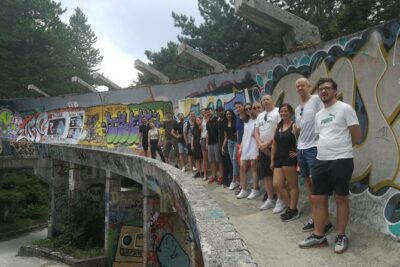
Break-up of Yugoslavia & The War in Mostar: Life Under Siege
Read our review →
Sarajevo to Srebrenica: Genocide Study Tour with War Veteran
Read our review →
Sarajevo Grand Tour: Old Town, War Tunnel, Olympic Sites & More
Read our review →Browse the lists this tour appears in