
Reviewed · 1984 OLYMPICS TOURS
Sarajevo Full Day Tour: History, Culture, Nature, War & Olympics
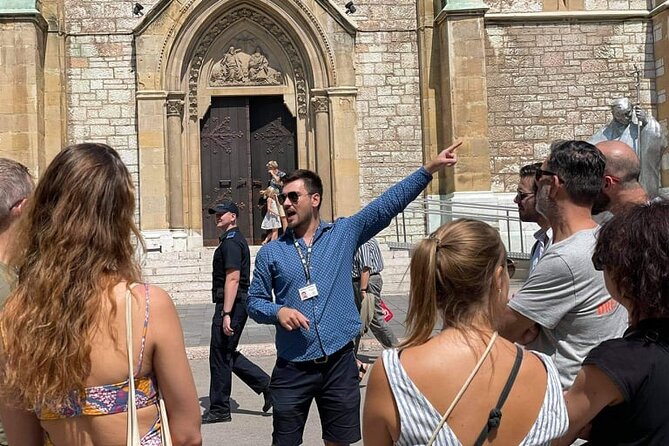
Sarajevo’s story is unusually concentrated. In one day, you can move from the source of the Bosna River to a wartime tunnel, an abandoned Olympic track, a hilltop fortress, and an Old Town where mosque, cathedral, synagogue, and Orthodox church sit within a short walk. The tour’s best feature is this sharp change of scene, made easy by a small group and an air-conditioned vehicle.
I like the way the day joins nature and difficult history, rather than treating Sarajevo as only an open-air museum. I also like the guides’ personal connection to the 1990s siege. Ahmed, Enes, Elvis, Edis, and Adnan have all been praised for clear explanations, humor, and, in some cases, childhood memories of wartime Sarajevo.
The drawback is pace. Eighteen stops in 6 to 7 hours leaves little time at most places, and the Old Town portion involves plenty of walking. Lunch is included, but you should confirm when it will happen so the afternoon does not become a hungry race from landmark to landmark.
Key points to know before booking
- The day covers Sarajevo’s biggest themes: Ottoman trade, Austro-Hungarian rule, religious coexistence, the 1984 Winter Olympics, and the 1992 to 1995 siege.
- Vrelo Bosne and the Olympic bobsleigh track provide the most appealing change from city streets, with springs, mountain air, and a striking abandoned sports venue.
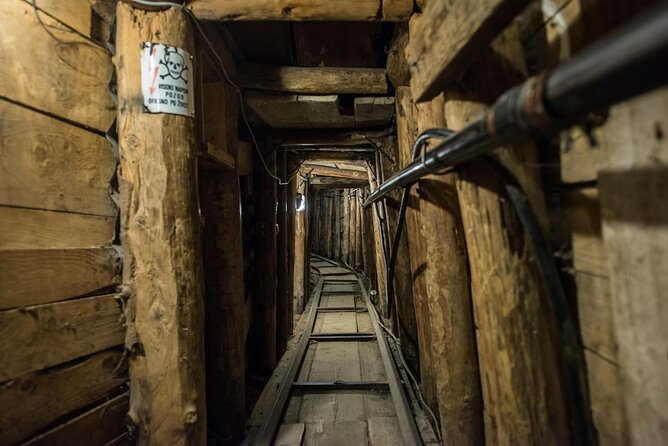
- The War Tunnel and Sniper Alley give the tour its emotional weight, especially when your guide explains how ordinary life continued during the siege.
- The Old Town walk is dense with landmarks: Sebilj, Kazandziluk, Morica Han, Gazi Husrev-beg Mosque, Latin Bridge, and the Meeting of Cultures all come in quick succession.
- The small-group limit is 15 people, a useful middle ground between a private tour and a large coach outing.
- Lunch, bottled water, Bosnian coffee, hotel pickup, and entry to Vrelo Bosne and the Tunnel Museum are included, but some other museum and building admissions are not.
Why this is a strong first day in Sarajevo
I would choose this tour early in a Sarajevo stay if you want the city’s basic map and story before exploring on your own. It does not merely circle the center. The vehicle takes you outside town to the springs, the tunnel, and the hills, then returns you to the historic core for a walking tour.
That range matters. Sarajevo can be confusing at first because its Ottoman, Austro-Hungarian, Yugoslav, and modern layers sit close together. The guide helps connect them instead of leaving you to decode each building separately.
The tour starts at 9 a.m. with pickup from your hotel lobby or another location in Sarajevo. The group can have up to 15 people, so it is not a private experience, but the size still allows questions and conversation. Guides have included Enes, Elvis, Edis, Ahmed, Adnan, and Alan, and the strongest praise centers on their ability to make complex events understandable without turning the day into a lecture.
Several guides also share personal family stories from the war years. That can make the siege feel immediate, but the tone is handled best when you remember that this is living memory, not just a chapter in a textbook.
More History Tours in Sarajevo
- Sarajevo genuine walking tour: Steps through history
★ 5.0 · 22 reviews - SARAJEVO STREET ART TOUR (art, history & mystery) – sARTajevo!
★ 5.0 · 18 reviews - BOSNIAN PYRAMIDS TOUR (nature, history & archeology)
★ 5.0 · 17 reviews
Vrelo Bosne: Sarajevo begins at the river springs
The first stop is Vrelo Bosne, the source area of the Bosna River. You get about 40 minutes here, with admission included.
This is a sensible opening. The name Bosnia is connected with the river, and the park gives you a calm introduction to the country before the tour turns to war and politics. Expect water, trees, and a more open setting than central Sarajevo. It is also a good place for photographs and a breath of fresh air.
The time is enough to see the main area, but not enough for a long wander. If you want a slow nature outing, this tour will feel too brief. If you want a well-placed taste of Sarajevo’s natural setting, it works very well.
The War Tunnel and Sarajevo’s siege
The Sarajevo War Tunnel Museum is one of the most important stops, with about 40 minutes inside and admission included. The tunnel connected the besieged city with the area beyond the airport and helped carry people and supplies during the siege.
You will learn about the practical side of survival: how the tunnel functioned, why it mattered, and what the city’s isolation meant. The space is modest, and the visit is not long, but its force comes from the clear link between an ordinary-looking passage and the survival of a city under attack.
This is where guide quality matters most. Enes, Edis, Ahmed, and Adnan have been singled out for explaining the war in plain language, including the Dayton Agreement and its effect on Bosnia and Herzegovina. Some guides have also spoken about being children during the siege, which adds a personal layer that a museum label cannot provide.
Give this stop your attention. It is not a quick photo opportunity, and some of the material may be upsetting. The tour treats it as a central part of Sarajevo’s identity, not a side note.
The 1984 Olympic bobsleigh track
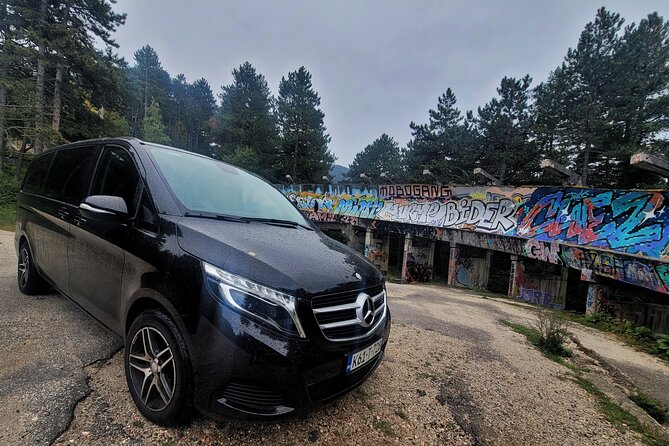
The abandoned Sarajevo Olympic bobsleigh and luge track gets another 40 minutes. Built for the 1984 Winter Olympics, it later sat on the front line during the war.
The contrast is striking: a venue created for international sport, then left scarred and unused. You can picture the optimism of the Olympics and the later military reality in the same place. The track also brings you into the hills above the city, so the stop gives you a change in air and outlook after the museum.
Admission is free. The site is not a polished sports attraction, and that is part of its character. Expect a rough, atmospheric place rather than a fully restored Olympic venue. The tour gives you enough time to understand why it matters, though not enough for a long independent exploration.
More of the 1984 Olympic sites:
- Sarajevo Grand Tour: Old Town, War Tunnel, Olympic Sites & More
★ 5.0 · 73 reviews - Sarajevo: Olympic Mountains and Spring of Bosna River Tour
★ 5.0 · 25 reviews - Cable Car Olympic Tour With Museum
★ 5.0 · 17 reviews - Trebevic Mountain Biking Tour from Sarajevo – Bobsleigh Track
★ 5.0 · 16 reviews
Yellow Fortress and the wartime hills
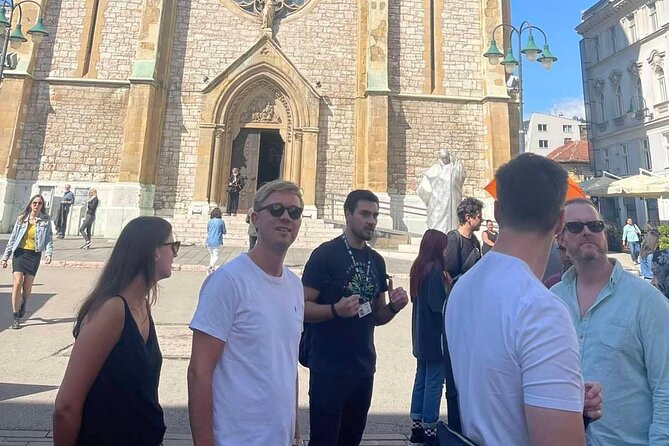
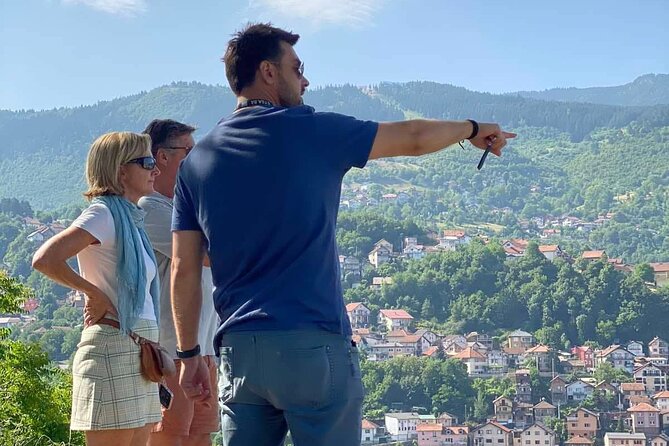
At Yellow Fortress, you get about 30 minutes for one of Sarajevo’s main city views. From above, you can see the long valley and the close hills that surround the city.
The view is useful beyond photography. It helps explain why the surrounding heights mattered during the siege and why movement through the city was so dangerous. Your guide can place the later stops, including Sniper Alley, into a physical setting you can understand.
The stop is short, so bring your camera before you arrive and listen while the guide points out the city below. This is one of the tour’s best moments for getting your bearings quickly.
Jewish Cemetery and Sniper Alley
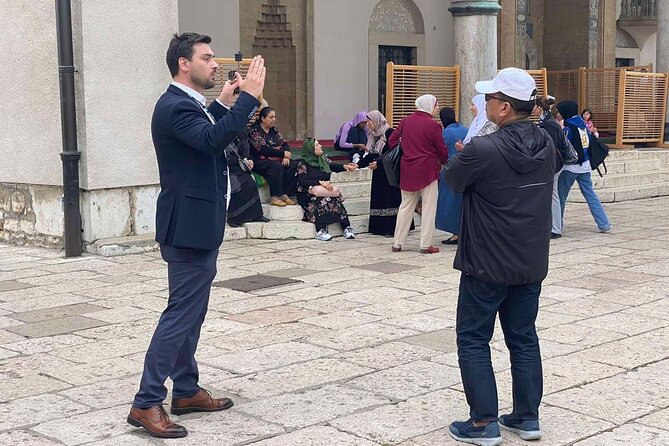
The Jewish Cemetery stop lasts about 30 minutes and combines Sarajevo’s Jewish heritage with the military history of the hills. The cemetery also served as a sniper position during the siege, a reminder that religious sites and ordinary public spaces could be drawn into the conflict.
The following hour on Sniper Alley adds street-level context. Your guide points out the wartime hotel, the Bosnian Rome and Juliette Bridge, and places connected with United Nations forces, journalists, and international supporters of Sarajevo.
This part of the tour is especially useful because it links names and stories to actual roads and buildings. You are not only hearing about the siege in a museum room. You are seeing the routes where residents, aid workers, reporters, and soldiers had to move.
The stop is not designed as a formal walking tour of every wartime site. Much of the explanation comes from the vehicle and brief stops. That keeps the day moving, but you may want to return later if you have a particular interest in the siege.
Sarajevo City Hall and the bridge that changed Europe
The tour visits Sarajevo City Hall inside for about 30 minutes. The building is one of the city’s key architectural landmarks and helps show the Austro-Hungarian chapter of Sarajevo’s past.
The detailed admission information says the City Hall entry is not included, so ask your guide how the visit will be handled and budget for a possible extra charge. The supplied tour information specifically includes admission to Vrelo Bosne and the Tunnel Museum, while some other museums and interiors have separate admission arrangements.
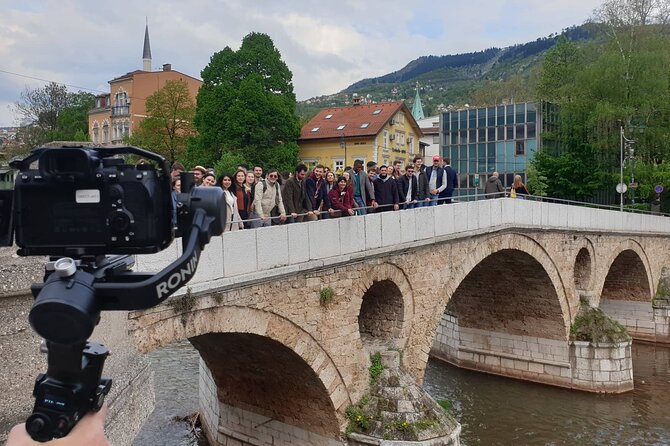
At Latin Bridge, you spend about 15 minutes at the place linked with the assassination of Archduke Franz Ferdinand in 1914. That event helped trigger World War I. The stop is brief, but the guide’s explanation can turn a familiar textbook date into a location you can place on the city map.
The Old Town walk: copper, coffee, and caravan trade
The Old Town portion is compact but busy with meaning. At Kazandziluk, you see the copper smiths’ street, one of the most traditional craft lanes in Sarajevo. Ten minutes is enough for an introduction, though not for a long shopping session.
Bascarsija Square and Sebilj are the center of the old Ottoman market district. The fountain is one of Sarajevo’s best-known meeting points, and the square gives you a feel for the commercial heart of the old city. Your guide explains the role of trade and daily life rather than treating the area as a backdrop for photographs.
Morica Han is a former caravanserai, a stopping place for merchants during the Ottoman period. You spend about 20 minutes here and drink Bosnian coffee, which is included. This is one of the tour’s most enjoyable pauses because it slows the pace and gives you a chance to ask questions.
Bosnian coffee is strong, finely prepared, and served as a small ritual rather than a large takeaway drink. If you prefer coffee with milk or sugar, ask what is available. The important point is the setting: you are taking a break in a former merchants’ inn, not simply stopping at a modern café.
Mosques, clock time, and the East-West meeting point
Gazi Husrev-beg Mosque is the largest mosque in the Old Town and is linked with Gazi Husrev-beg, a major Ottoman benefactor who invested heavily in Sarajevo. The scheduled visit is only about 10 minutes, so expect a quick introduction rather than a long architectural study.
Admission is listed as not included. Dress and entry rules can vary, so follow your guide’s instructions and treat the mosque as an active religious place.
The Old Sarajevo Clock Tower receives only five minutes, but its lunar time system is an unusual detail. It shows how local religious practice shaped the rhythm of the city. The adjacent Gazi-Husrev Beg’s Bezistan, a covered Ottoman market, gets about 10 minutes and adds another piece to the old commercial district.
At the Sarajevo Meeting of Cultures, the route reaches one of the city’s clearest visual ideas: East meets West. The change in architecture is close enough to notice on foot, which makes the guide’s explanation more useful than a general statement about Sarajevo’s mixed identity.
Sarajevo’s three major Christian and Jewish landmarks
The Jewish Museum of Bosnia and Herzegovina receives about 15 minutes. It traces Jewish life from the 16th century to the present, adding an important part of Sarajevo’s story that can be easy to miss on a short city visit.
Admission is not included, so allow for an extra ticket if you want to enter. The time is brief, making this more of an introduction than a full museum visit.
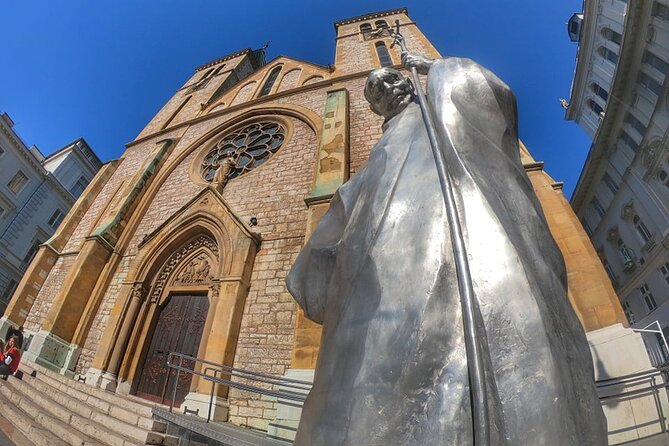
The route then passes Sarajevo’s Catholic Cathedral and the Serbian Orthodox Cathedral, with about 10 minutes at each. Together with the mosque and Jewish sites, they show how several faiths shaped the city. The value here is not simply the number of buildings. It is the close distance between them and the way the guide explains Sarajevo as a meeting point of communities, empires, and traditions.
Price, inclusions, and the pace of the day
At $114.45 per person, this is not the cheapest way to see Sarajevo. The value comes from the amount of ground covered and the services bundled into the day: hotel pickup, an air-conditioned vehicle, bottled water, a guide, lunch, Bosnian coffee, admission to Vrelo Bosne, and admission to the Tunnel Museum.
A private taxi-based day with separate guides and entrance tickets could cost more, while a self-guided visit would cost less but require planning transport to the springs, tunnel, and Olympic track. For a first day, the tour earns its price if you want the city’s major themes explained as you move between them.
Lunch is included in the current tour details, but timing deserves attention. One earlier experience found the afternoon difficult because lunch came too late, while the provider later added lunch as an included feature. Ask at pickup when and where you will eat. You may also want to confirm the cost of entry for City Hall, the Jewish Museum, and Gazi Husrev-beg Mosque, since those are not listed as included.
The cancellation policy allows a full refund when you cancel at least 24 hours before the start time. Poor weather or failure to reach the minimum group size can lead to a different date or a full refund. The tour is offered in English and requires good weather.
Who will get the most from this Sarajevo day tour
I would recommend it most strongly to first-time visitors with one full day, or to anyone who wants the war, Olympic, religious, and Ottoman stories in one organized route. It also suits people who prefer asking a guide questions rather than piecing together Sarajevo’s complicated past alone.
It is a good fit if you enjoy moving between short stops and do not mind a full schedule. The small group limit of 15 keeps it more personal than a big coach tour, and the air-conditioned vehicle makes the outlying stops easier.
I would hesitate if your priority is slow museum time, long meals, or detailed photography at every location. Eighteen stops in one day means sampling many places. You will understand the city better, but you will not study every interior.
Should you book it?
Book this tour if you want a strong first look at Sarajevo, especially if the War Tunnel, the 1984 Olympics, and the mix of Ottoman and Austro-Hungarian landmarks all interest you. The guides’ clear storytelling and personal wartime connections add real value, and the springs provide a welcome pause from heavy subjects.
Skip it if you already know Sarajevo well or prefer designing a slow, self-guided day around one theme. For most first-time visitors, though, the combination of transport, lunch, key admissions, and a guide who can explain both public history and personal memory makes the $114.45 price reasonable.
FAQ
How long does the Sarajevo Full Day Tour last?
The tour lasts approximately 6 to 7 hours and begins at 9 a.m.
Where does pickup take place?
Pickup is offered from the lobby of your hotel or another location in Sarajevo.
Is lunch included?
Yes. Lunch is included in the tour. Since the day has a full schedule, ask your guide at the start when the meal will take place.
Is the War Tunnel Museum admission included?
Yes. Admission to the Tunnel Museum is included.
Is entry to Vrelo Bosne included?
Yes. The entrance fee to Vrelo Bosne is included.
Are all museum and building admissions included?
No. Admission to Sarajevo City Hall, the Jewish Museum of Bosnia and Herzegovina, and Gazi Husrev-beg Mosque is listed as not included. The detailed tour information specifically includes Vrelo Bosne and the Tunnel Museum.
How many people can join the tour?
The maximum group size is 15 travelers. The tour is offered in English and includes an air-conditioned vehicle, bottled water, a guide, Bosnian coffee, and hotel pickup.
More Full-Day in Sarajevo
- From Sarajevo: Full-Day Hike to Lukomir Village
★ 5.0 · 59 reviews - Sarajevo to Belgrade Full Day Tour one-way
★ 4.5 · 9 reviews - Private Full Day Safari Tour
★ 5.0 · 8 reviews - Best of Sarajevo – Ultimate Full-Day Experience
★ 5.0 · 7 reviews
More Tours About the Siege and the War
- Fall of Yugoslavia, Sarajevo War Tour with Tunnel of Hope Museum and Frontlines
★ 5.0 · 1,314 reviews - ROSES OF SARAJEVO (Official WAR + CITY tour)- Story of a Survivor
★ 5.0 · 770 reviews - Tunnel Museum: Bosnian & Yugoslav Wars Tour with War Veteran
★ 5.0 · 551 reviews - Sarajevo War Tour: A Veteran’s Story of the Siege (fees included)
★ 5.0 · 326 reviews
Just added around Sarajevo
- Private Full Day Safari Tour★ 5.0 · 8 reviews
- Sarajevo Under Siege: A War History Tour★ 5.0 · 10 reviews
- Walking Tour in Sarajevo★ 5.0 · 3 reviews
- Travnik, Jajce, Pliva Lakes & Mills –Medieval & Ottoman Bosnia Full Day Tour★ 5.0 · 3 reviews
- Mysterious Visoko Pyramids Driving and Walking Tour★ 5.0 · 7 reviews
- Secret Tito’s Bunker/Konjic Tour★ 5.0 · 4 reviews
- The last day of Franz Ferdinand Walking Tour★ 5.0 · 10 reviews
- Sarajevo to/from Zagreb Transfer Day Tour (North-central Bosnia)★ 5.0 · 4 reviews
1984 Olympics Tours, compared.
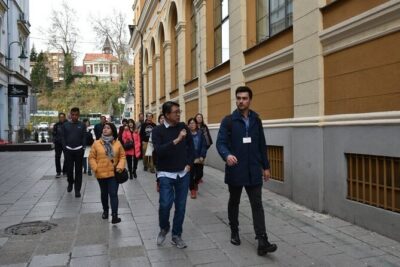
Sarajevo Grand Tour: Old Town, War Tunnel, Olympic Sites & More
Read our review →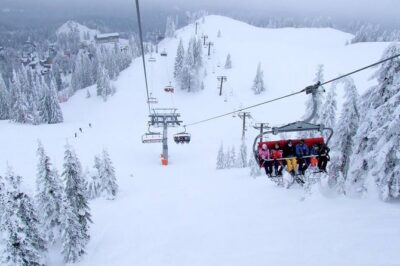
Olympic Mountains and Spring of Bosna River Tour
Read our review →
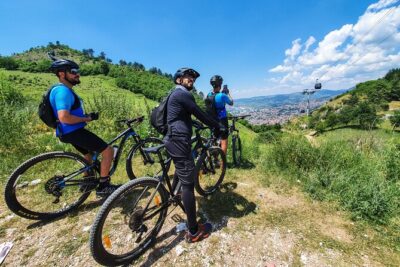
Trebevic Mountain Biking Tour from Sarajevo – Bobsleigh Track
Read our review →
Experience Snowshoeing in Olympic Mountain Bjelašnica
Read our review →
Browse the lists this tour appears in