
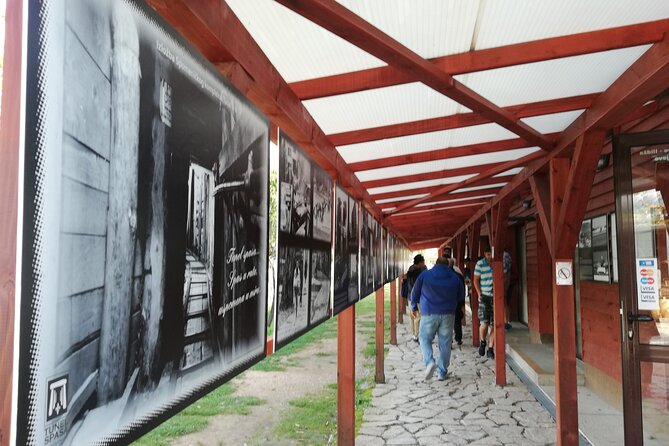
Reviewed · TUNNEL OF HOPE TOURS
Tunnel of Hope Tour – Survival and Resilience
Sarajevo’s Tunnel of Hope is a narrow, sobering reminder that survival can depend on a passage dug beneath an airport runway. This tour pairs the museum with a drive through Sniper Alley and past places marked by the Siege of Sarajevo, giving you context before you reach the tunnel.
I like two things here: the guides often bring personal experience of the siege, and the short city drive turns a museum visit into a wider lesson about Sarajevo. Nermin, a former police officer, Safet, and Haris are among the guides praised for clear, personal storytelling. The main drawback is that the original tunnel cannot be fully entered, and the 20 BAM museum ticket is not included in the tour price.
Key points to know before booking
- The tunnel visit lasts about 1 hour and 15 minutes, including the museum and reconstructed section.
- The drive adds important context, passing Markale Market, the Presidency, the Holiday Inn, RTV Dom, and Sniper Alley.
- Personal wartime accounts are a major strength, with some guides having lived through the siege or served during it.
- The $25.40 price covers transport and a licensed guide, but adult museum admission costs 20 BAM.
- The group can reach up to 20 people, though some departures may be smaller.
- The tour returns to the central meeting point on Zelenih beretki Street after about two and a half hours.
Why the Tunnel of Hope matters in Sarajevo
The Siege of Sarajevo lasted from 1992 to 1995. During that time, residents faced shortages of food, water, electricity, and gas while the city remained under attack.
The tunnel was built beneath the airport runway to connect Sarajevo with the outside world. It gave people a way to move supplies and maintain a lifeline when ordinary roads were blocked or dangerous. The passage was narrow, low, and difficult to use. Even the reconstructed section gives you a physical sense of the cramped conditions.
I find this setting more powerful than a simple display of photographs. You are not only hearing about shortages and danger. You are seeing the route that helped a trapped city keep going.
The subject is painful, and the tour does not turn the siege into light entertainment. Expect a serious afternoon, with stories about civilian life, shelling, fear, and endurance. If you want only cheerful sightseeing, this is not the right choice. If you want to understand modern Sarajevo, it is hard to skip.
More visits to the Tunnel of Hope:
- Fall of Yugoslavia, Sarajevo War Tour with Tunnel of Hope Museum and Frontlines
★ 5.0 · 1,314 reviews - Tunnel Museum: Bosnian & Yugoslav Wars Tour with War Veteran
★ 5.0 · 551 reviews - Sarajevo Grand Tour: Old Town, War Tunnel, Olympic Sites & More
★ 5.0 · 73 reviews
Starting in central Sarajevo and getting your bearings
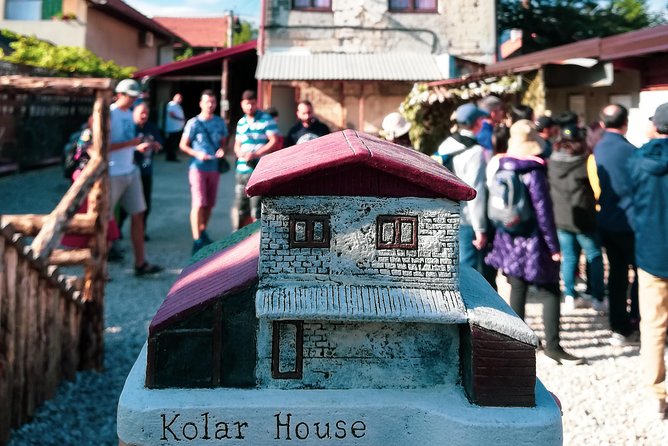
The tour begins at Insider Sarajevo, City Tours and Excursions, at Zelenih beretki 30. The meeting point is central and near public transportation, making it a practical choice if you are staying in the old city or nearby.
You join a guide and group before setting out by vehicle. The transport matters because the tunnel is outside the central sightseeing area, and reaching it independently takes more planning. You could arrange a car, taxi, or public transport, but the direct historical explanation would be missing.
The group size can be as large as 20 people. Some departures have been much smaller, and a few have operated almost like private tours when only a handful of people booked. A smaller group gives you more room to ask questions, though the exact size depends on the departure date.
The tour is offered in English. Guides may vary, but names that appear repeatedly in the experience details include Nermin, Safet, and Haris. Nermin is described as a former police officer who lived through the siege, while Safet is praised for patient answers and local food and café suggestions. Haris has also led the tour in Spanish.
Do not expect every departure to have the same guide or exactly the same personal stories. That variation is part of the experience, but the guide’s ability to explain the places along the route is central to the tour’s value.
Markale Market and the wartime city center
The first part is a drive through Sarajevo rather than a series of long walking stops. You pass Markale City Market, a place closely linked with the wartime experience of the city.
You may not spend time inside the market, but seeing it from the vehicle helps connect Sarajevo’s ordinary daily life with the violence that reached civilian spaces. The guide explains what happened here and why the market remains a serious place in the city’s memory.
You also pass Trg Djece Sarajeva, or the Square of Sarajevo Children. Its name points to the civilian cost of the siege, especially the children who lived through it. This is one reason the driving portion should not be treated as filler. The guide gives you a map of the city’s wartime scars before the museum supplies the larger story.
The tour also passes the Presidency Building, an important political center during the war. You see Parliament and the Holiday Inn, locations connected with political decisions and international journalism. The Holiday Inn became especially familiar through the reporters who covered the siege from Sarajevo.
You do not necessarily stop at each of these sites. If you want detailed visits inside the buildings, you will need a separate city tour. Here, the benefit is speed and context. In a short period, you learn how the siege touched markets, government offices, media centers, sports venues, and residential areas.
Driving through Sniper Alley
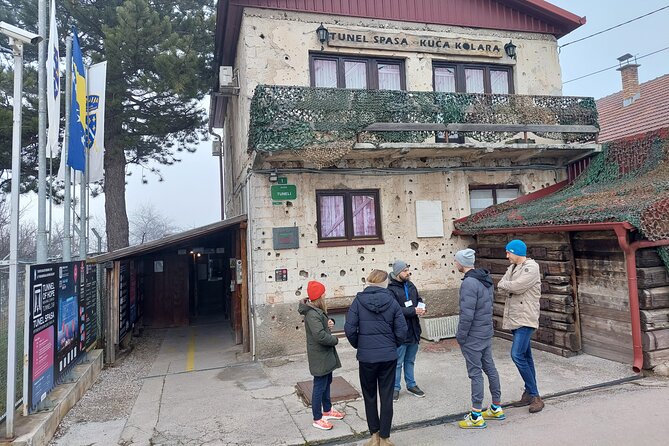
One of the most memorable parts of the route is the drive along the street known as Sniper Alley. During the siege, this road was among the most dangerous routes in Sarajevo.
The name is blunt, and the guide explains why crossing or driving along this corridor was so frightening. From the vehicle, you see a normal city street. That contrast can be unsettling. Modern traffic and repaired buildings do not erase what the road meant to people trying to move around the city.
The tour also passes RTV Dom, the television building that broadcast during the war. Television and radio were vital sources of information, and the building became part of the conflict’s physical and political story.
These drive-by sights work best when you listen closely. Since the tour does not promise extended stops at every landmark, you should not book it expecting a full walking inspection of each location. Instead, think of this section as a guided orientation that makes the rest of your Sarajevo visit more meaningful.
A few more Sarajevo days to weigh up
- Sarajevo: Mostar, Konjic, Blagaj Tekke, Pocitelj & Waterfall
★ 4.9 · 1,335 reviews - Sarajevo: Mostar, Konjic, Sufi House, Pocitelj & Kravice Falls
★ 5.0 · 1,179 reviews - ROSES OF SARAJEVO (Official WAR + CITY tour)- Story of a Survivor
★ 5.0 · 770 reviews - Sarajevo: Mostar, Konjic, Počitelj, Sufi House, & Waterfalls
★ 4.9 · 572 reviews
The cemetery and daily life during the siege
The wider tour plan includes a cemetery where victims of the war are buried. This provides a quieter counterpoint to Sniper Alley and the city-center landmarks.
The cemetery visit helps put names and human lives behind the statistics. The guide also explains how people coped with basic shortages. Food, water, electricity, and gas were all difficult to obtain, and daily routines had to be rebuilt around danger and scarcity.
This is where a guide with personal experience can add something a standard audio guide cannot. Several guides connected with the tour lived through the siege, and Nermin is described as having served as a police officer during that period. Another guide was a child in Sarajevo during the war.
Personal memory does not replace historical evidence, but it can explain what statistics feel like at street level. You can ask questions about daily life, movement around the city, and the choices people faced. The best guides answer directly without trying to make the story more dramatic than it already is.
Inside the Tunnel of Hope Museum
The main stop is the Tunnel of Hope Museum, where admission is separate from the tour price. Adult entry costs 20 BAM, or about 10.50 euros, while student admission costs 8 BAM, or about 4.50 euros.
The museum explains why the tunnel was built, how it connected Sarajevo to the outside world, and how it supported the city during the siege. Displays cover the conflict and include a video about the role of the United Nations during the siege.
Plan on about 1 hour and 15 minutes at the tunnel museum and its exhibits. That is enough time to understand the basic story without turning the tour into an all-day commitment.
The original tunnel runs beneath an operating airport runway and is not fully accessible for safety reasons. You may see a section of the original passage, but you should expect most of your physical experience to come from a reconstructed section.
This distinction matters. Some people arrive expecting to walk the complete wartime route and leave disappointed when they learn that they cannot. The original passage was also roughly one meter wide and 1.6 meters high, so even a full walk would be physically demanding for many adults.
The reconstruction is wider and taller, but it still gives you a sense of the low roof, tight walls, and difficult movement. It is not the original structure, so you should treat it as an interpretive recreation rather than a complete preserved tunnel.
What the guides add to the museum visit
The museum provides objects, images, and film. The guide supplies the connections between them.
This is the part I value most. Guides such as Nermin and other former police or military personnel can describe Sarajevo during the siege from direct experience. Safet is noted for answering questions carefully, while other guides have used visual files and pictograms to help explain complicated events.
The quality of this section depends on the individual guide, but the experience details point to a strong pattern: the guides are not simply drivers who drop you at the museum. They explain the buildings on the way there and back, discuss the conflict, and connect the tunnel to life in Sarajevo today.
Tours sometimes run longer than the advertised two and a half hours when the group has many questions. That is a welcome possibility, but you should not rely on extra time if you have a fixed evening plan.
The personal accounts also make this a tour for listening rather than rushing. You will get more from it if you ask questions and allow the guide to explain the background. The topic can be emotionally heavy, so give yourself space afterward rather than scheduling an important activity immediately.
Is the $25.40 price good value?
The listed price is $25.40 per person. That includes transportation and a licensed guide, but not the Tunnel of Hope Museum admission.
For about $36 total when you add the adult museum ticket, you receive transport from central Sarajevo, a guided drive through significant wartime locations, and an explanation of the tunnel. That is a fair price, especially if you have only a short stay and do not want to arrange transport to the museum yourself.
The value is strongest when you get a guide with direct experience of the siege. You could reach the tunnel by car, taxi, or public transportation, but you would lose the commentary on Sniper Alley, the Presidency, Markale Market, RTV Dom, and the other sites along the route.
The tour is also shorter than some alternatives that take around four hours and include more stops. If you want a quick but serious introduction, the two-and-a-half-hour format works well. If you want to spend longer at several cemeteries, landmarks, or other war sites, you may prefer a longer excursion.
Students should remember the lower museum admission price. The ticket cost is paid separately, so include it when comparing this tour with other options.
Practical details that affect your day
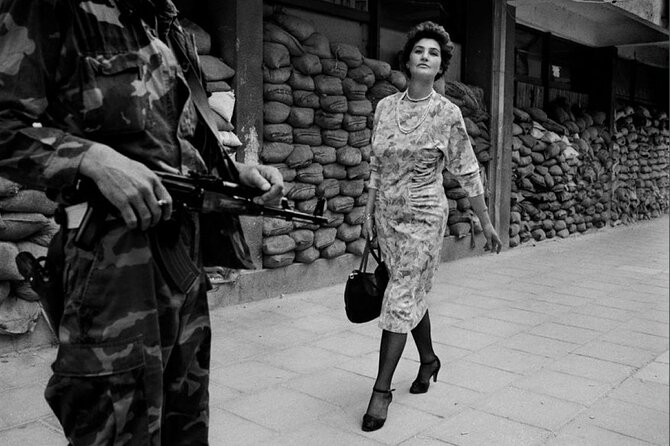
The tour ends back at the original meeting point, which is useful if you are planning another activity in central Sarajevo. The listed duration is approximately two hours and 30 minutes, but discussions can extend the outing.
Most people can participate, and the meeting point is near public transportation. The tour requires good weather, and it may be canceled if the minimum number of participants is not reached. In either case, you are offered another date or experience, or a full refund.
You can cancel for a full refund up to 24 hours before the start time. Cancellations or changes made within 24 hours are not refunded or accepted, so keep your schedule firm once the deadline passes.
Wear comfortable clothes and shoes suitable for a museum visit and a short walk through the reconstructed tunnel. The tunnel section may feel tight, particularly if enclosed spaces make you uncomfortable.
Bring questions. The guide’s personal experience is one of the strongest reasons to book this tour, and you will gain more if you use the driving time to ask about what you are seeing.
Who should book the Tunnel of Hope Tour?
I would choose this tour if you want to understand Sarajevo beyond its Ottoman streets, cafés, and attractive riverfront. It is especially useful early in your stay because the drive gives you landmarks to recognize later.
The tour suits:
- History-focused visitors who want a clear introduction to the Siege of Sarajevo.
- Short-stay visitors who need a compact experience rather than a four-hour excursion.
- People without a car who want transport to the tunnel and back.
- Those interested in oral history, especially stories from people who lived through the siege.
- Repeat visitors who want more context than a self-guided museum visit provides.
It may not suit you if you want a light sightseeing trip, a fully preserved tunnel, or long walking stops at every wartime site. The tunnel is partly reconstructed, the subject is difficult, and much of the city tour is viewed from the vehicle.
Should you book this tour?
Yes, if your aim is to understand how Sarajevo survived the siege rather than simply check off a museum. The best reasons to book are the combination of transport, city landmarks, Sniper Alley, and a guide who may have lived through the events.
At $25.40 before museum admission, it offers solid value for a short, focused introduction. Just arrive prepared for a serious subject, remember that the original tunnel is not fully open, and allow for extra time if your group has many questions.
For most first visits to Sarajevo, I would make room for it. The museum shows the physical solution to a desperate problem. The drive and guide explain the city that needed that solution.
FAQ
How long does the Tunnel of Hope Tour last?
The tour lasts approximately two hours and 30 minutes. Some departures may run longer if the group spends extra time asking questions.
What is included in the tour price?
Transportation and a licensed guide are included. Admission to the Tunnel of Hope Museum is not included.
How much does the museum ticket cost?
Adult admission costs 20 BAM, approximately 10.50 euros. Student admission costs 8 BAM, approximately 4.50 euros.
Where does the tour begin?
The tour begins at Insider Sarajevo, City Tours and Excursions, Zelenih beretki 30, Sarajevo 71000, Bosnia and Herzegovina.
Where does the tour end?
The activity ends back at the original meeting point.
Is the original Tunnel of Hope fully accessible?
No. The original tunnel cannot be fully entered for safety reasons because it runs beneath an operating airport runway. The museum includes a reconstructed section that gives you an impression of the original passage.
What language is the tour offered in?
The tour is offered in English. Spanish guiding may also be available with certain guides, including Haris, but the listed tour language is English.
Just added around Sarajevo
- Private Full Day Safari Tour★ 5.0 · 8 reviews
- Walking Tour in Sarajevo★ 5.0 · 3 reviews
- Sarajevo Under Siege: A War History Tour★ 5.0 · 10 reviews
- Mysterious Visoko Pyramids Driving and Walking Tour★ 5.0 · 7 reviews
- Secret Tito’s Bunker/Konjic Tour★ 5.0 · 4 reviews
- Travnik, Jajce, Pliva Lakes & Mills –Medieval & Ottoman Bosnia Full Day Tour★ 5.0 · 3 reviews
- The last day of Franz Ferdinand Walking Tour★ 5.0 · 10 reviews
- Sarajevo to/from Zagreb Transfer Day Tour (North-central Bosnia)★ 5.0 · 4 reviews
Tunnel of Hope Tours, compared.
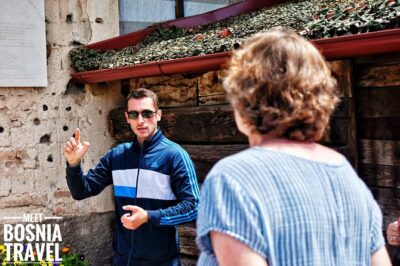
Fall of Yugoslavia, Sarajevo War Tour with Tunnel of Hope Museum and Frontlines
Read our review →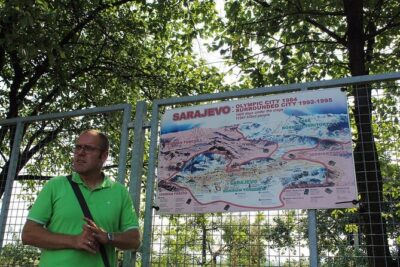
Tunnel Museum: Bosnian & Yugoslav Wars Tour with War Veteran
Read our review →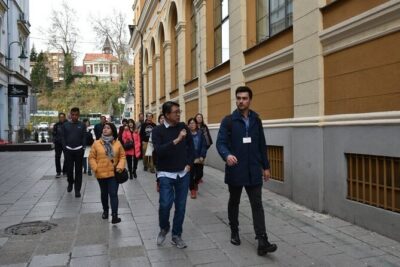
Sarajevo Grand Tour: Old Town, War Tunnel, Olympic Sites & More
Read our review →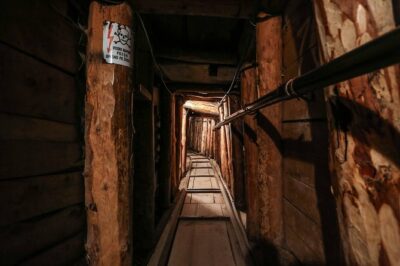
Times of Misfortune – Life Under Siege and the Tunnel of Hope
Read our review →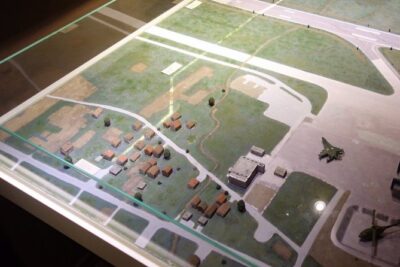

WAR TUNNEL – Sarajevo’s only way of a communication during the WAR – Top secret
Read our review →
SARAJEVO SIEGE TIMES ’92-’95 / Sarajevo Roses & Tunnel of Hope /
Read our review →
Browse the lists this tour appears in